
Sep 21, 2026
MILA.mobility Launched – Moving Together from Pilot Project to Full-Scale Operation
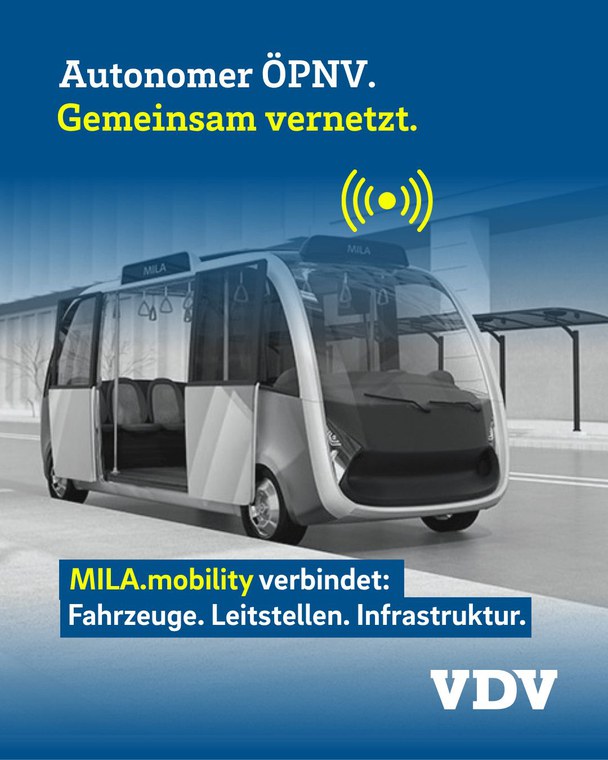
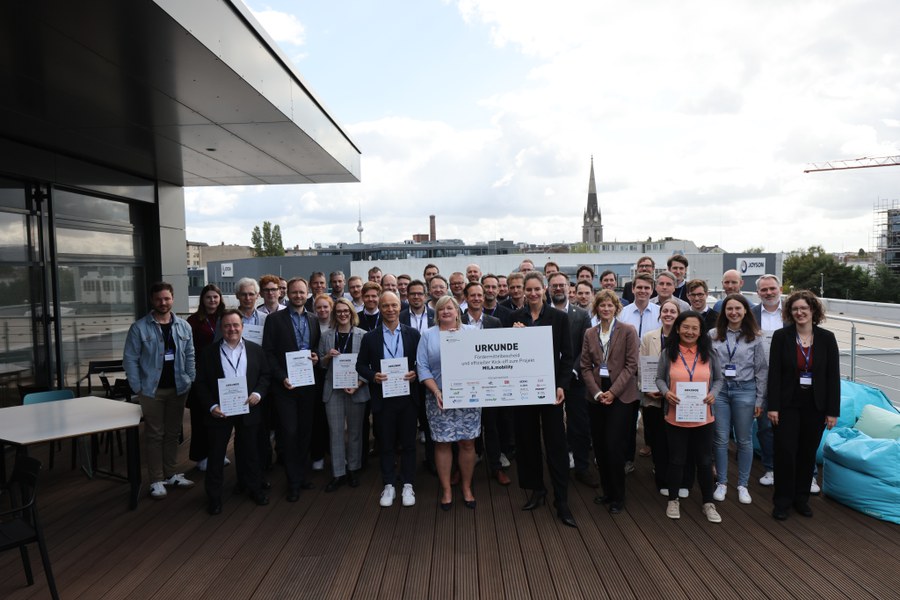
The nationwide research and development project MILA.mobility was launched with an official kickoff event on September 21, 2026, in Berlin. The TUD Dresden University of Technology is also part of the consortium, which comprises 30 partners. Together, partners from transit agencies, industry, academia, and associations are working to integrate autonomous mobility into local public transit beyond individual pilot projects.
Autonomous vehicles alone do not yet constitute autonomous public transit. It is crucial that vehicles from different manufacturers can reliably interact with control centers, dispatch and booking systems, and the existing infrastructure. This is precisely where MILA.mobility comes in. That is why the Association of German Public Transport Companies (VDV) is also focusing on the transition from pilot projects to regular operations at the project’s launch.
MILA stands for “Middleware Integration of Control Centers and Dispatch Systems for Autonomous Mobility.” The project does not involve developing yet another autonomous vehicle. Rather, the goal is to create an open, manufacturer-neutral digital platform that connects autonomous vehicles from different manufacturers with existing public transit systems.
In doing so, MILA addresses a key challenge for scaling autonomous mobility services: Previous pilot projects have often resulted in project-specific solutions. The lack of common interfaces hinders collaboration between vehicles, control centers, and software systems from different providers and increases the effort required for integration. MILA aims to create a transferable technical foundation for this and facilitate the transition to regular operation later on.
From the Virtual Lab to the Road
Development and testing will take place in three sequential cycles. First, components and interfaces will be examined and tested in a virtual lab. Subsequently, the results will be further developed step by step in five test fields under real-world conditions:
- Leipzig
- Hanover region
- Munich region
- Ludwigslust-Parchim
- Rhine-Main region
The test sites simulate a variety of public transportation operating conditions. The goal is, in particular, to demonstrate that vehicles, control centers, and dispatching systems from different providers can work together reliably. The insights gained are continuously incorporated into the further development of architecture, software, and testing procedures.
Research for Scalable Autonomous Mobility
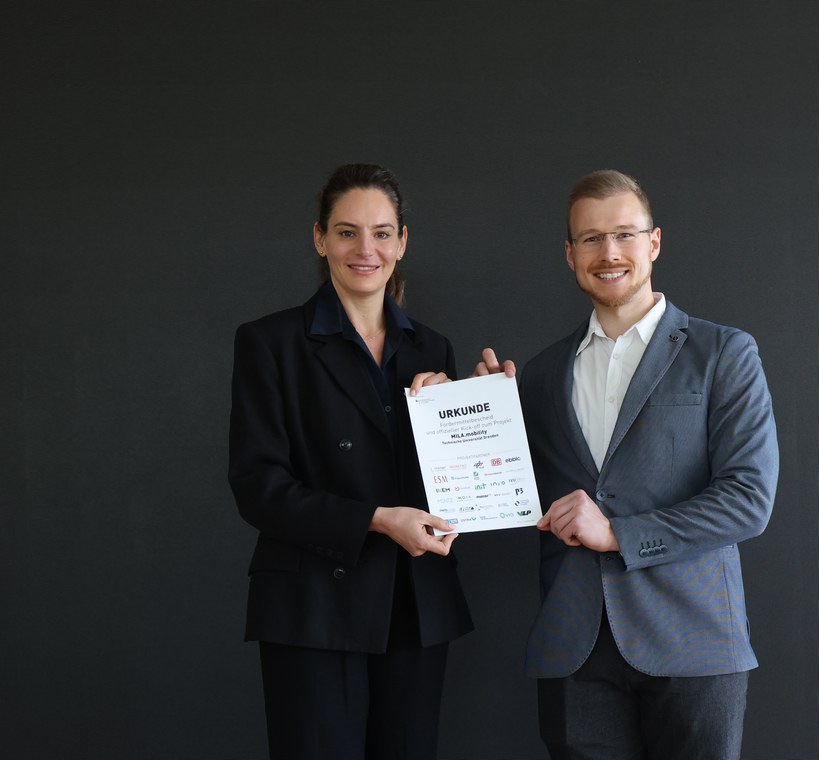
For us at the Chair of Vehicle Mechatronics, the MILA project represents a logical continuation of our ABSOLUT II and SIAS-ÖV projects on the automation of public transportation, as it aims to standardize interfaces and thereby enable the free combination of, among other things, customer apps, control center, vehicle, and automation system. In addition to integrating vehicle-side interfaces into the open-source automation framework Autoware, our work in MILA includes providing a digital twin of our automated VW e-Crafter to the project partners as well as real-world operation in the Leipzig test field.
With MILA, the focus is now particularly on cross-manufacturer integration and scalability: How can different vehicles and existing public transit systems be connected in such a way that solutions are not limited to individual demonstrators but can be transferred to other operators and regions?
MILA.mobility by the Numbers

Thirty project partners are working on MILA.mobility. Leipzig Public Transportation (Leipziger Verkehrsbetriebe) leads the consortium. The project will run for 44 months until March 31, 2030, and has a total budget of approximately 57 million euros. The Federal Ministry of Research, Technology and Space is funding the project with approximately 33.8 million euros.
In addition to technical development and testing, standardization also plays a central role. Planned outcomes include technical references and test procedures, proposals for standards, as well as operational and business models and legal recommendations. The goal is to develop a solution that can be used beyond the individual test sites for the entire public transit system and can be applied to other regions.
Further information
- MILA.mobility at the Association of German Public Transport Companies (VDV): VDV – Autonomous Driving in Public Transit / MILA.mobility
- Post about the project launch on LinkedIn: VDV on LinkedIn – MILA.mobility Launches
- Previous Vehicle Mechatronics Research Project: ABSOLUT II Successfully Completed