
Oct 20, 2026
Digital Participation Takes Center Stage at the 29th GeNeMe
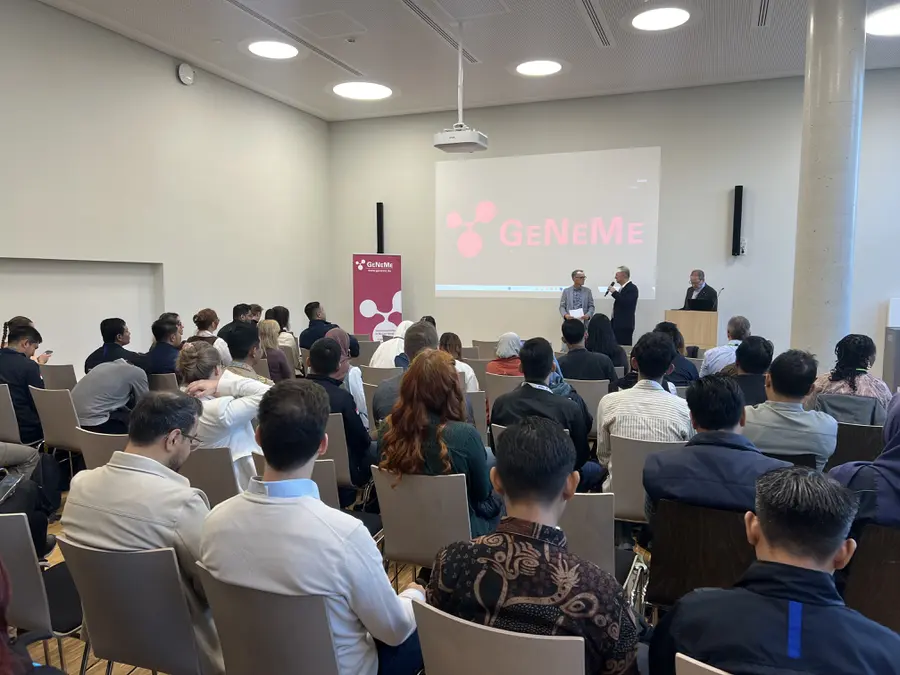
Opening of the 29th GeNeMe by the Dean of the Faculty of Education, Prof. Dr. Rolf Koerber, and the conference organizers
On September 17 and 18, 2026, the 29th edition of the “Communities in New Media” (GeNeMe) conference took place at TU Dresden. This year’s conference focused on the question of how digital participation can be shaped, researched, and reflected upon in light of current technological developments. For more than 25 years, GeNeMe has brought together perspectives from various academic disciplines as well as from research and practice. In 2026, the conference focused in particular on the effects of artificial intelligence, virtual and immersive technologies, and new forms of digital collaboration and co-creation on social and educational participation processes. The thematic scope ranged from participatory research and digital educational processes to digital and hybrid communities, as well as questions of participation and democracy. With 159 participants from 14 countries, 38 presentations across six thematic areas, and two keynote speeches in German and English, the program reflected the thematic and international breadth of GeNeMe.
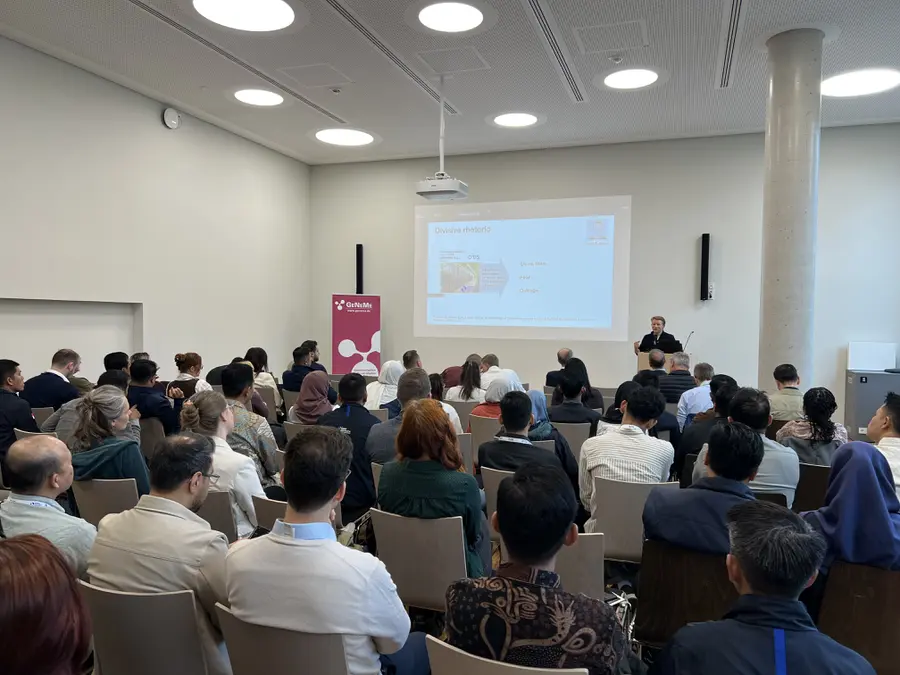
Opening Keynote (in English): Digital Media, Publics & Democracy (Prof. Dr. Philipp Lorenz-Spreen)
The main conference was opened on September 17 by the dean of the Faculty of Education, Prof. Dr. Rolf Koerber, and the conference editors: Prof. Dr. Thomas Köhler, Prof. Dr. Eric Schoop, Prof. Dr. Ralph Sonntag, and Jun.-Prof. Dr. Jacqueline Schmidt. The academic program began with a keynote address by Prof. Dr. Philipp Lorenz-Spreen on the topic “Digital Media, the Public Sphere, and Democracy.” His presentation focused on the transformation of public communication brought about by digital platforms and generative AI, as well as the associated challenges for social participation.

Exchange of Current Research and Practical Perspectives. The Process of Collaborative University Development as an Overarching Strategic Task (Ralph Sonntag)
The subsequent sessions explored the full spectrum of digital participation from various perspectives. Topics included the design of digital learning environments, participatory research at the intersection of inclusion and AI, generative AI and immersive virtual reality in collaboration, virtual and political participation, as well as digital assistance and co-creation in education and healthcare.
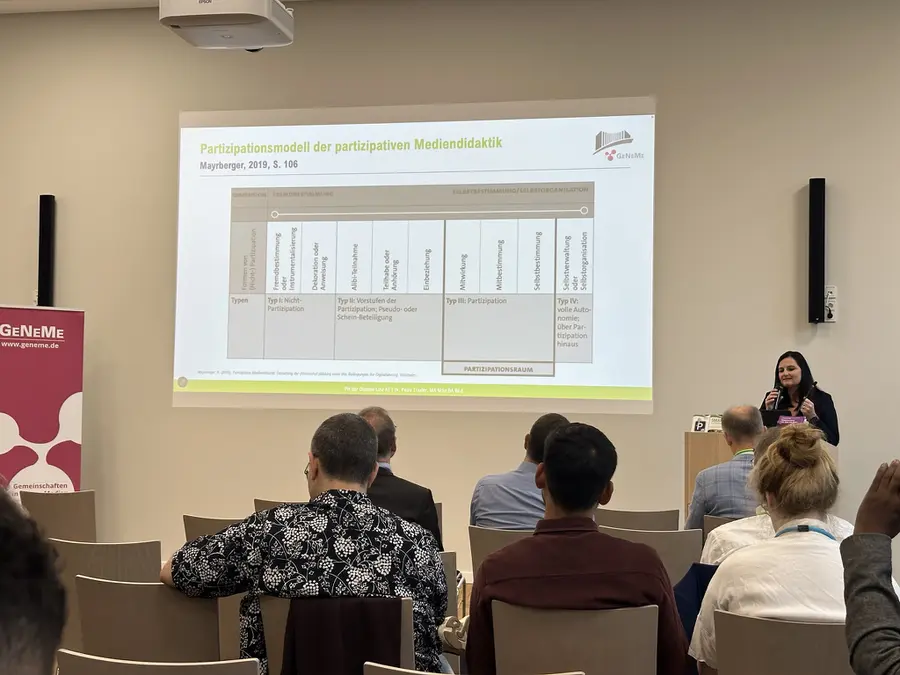
Keynote: “Generation Smartphone Teaches Generation Alpha” (Dr. Petra Traxler)
Dr. Petra Traxler opened the second day of the conference with the educational keynote address “Generation Smartphone Teaches Generation Alpha.” The presentation focused on digital participation from an educational perspective, the findings of a mixed-methods study, and insights into the “SMART aufwachsen” initiative. The program also included follow-up sessions on topics such as participatory educational development, co-creation in digital educational and knowledge spaces, digital infrastructures, and responsive and inclusive participation in the age of AI.
Another connection was established this year with the 19th International PhD Summer School “Education & Technology” (https://tu-dresden.de/codip/zentrum/news/summer-school-education-and-technology-2026), which took place concurrently. Poster sessions, joint discussion periods, and a panel discussion moderated by Dr. Altmann facilitated dialogue between conference participants and international early-career researchers.
GeNeMe 2026 was held as a hybrid conference. The in-person event at the Faculty of Education at TU Dresden was supplemented by opportunities for virtual participation. The conference is organized by the Center for Open Digital Innovation and Participation (CODIP) at TU Dresden.
The accepted academic papers from GeNeMe will be published as open access in the conference proceedings via QUCOSA.
For more information on GeNeMe and the program: GeNeMe (geneme.de)