Nov 25, 2026
Visible Learning Beyond School: John Hattie Visits the Faculty of Education at TU Dresden
November 23, 2026 | Faculty of Education, TUD Dresden
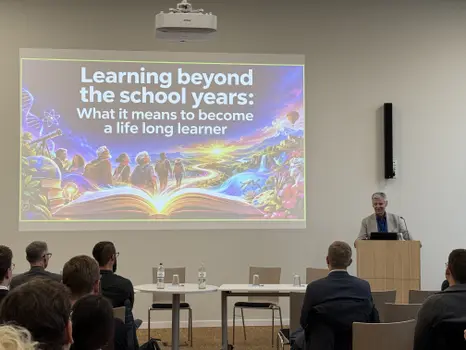
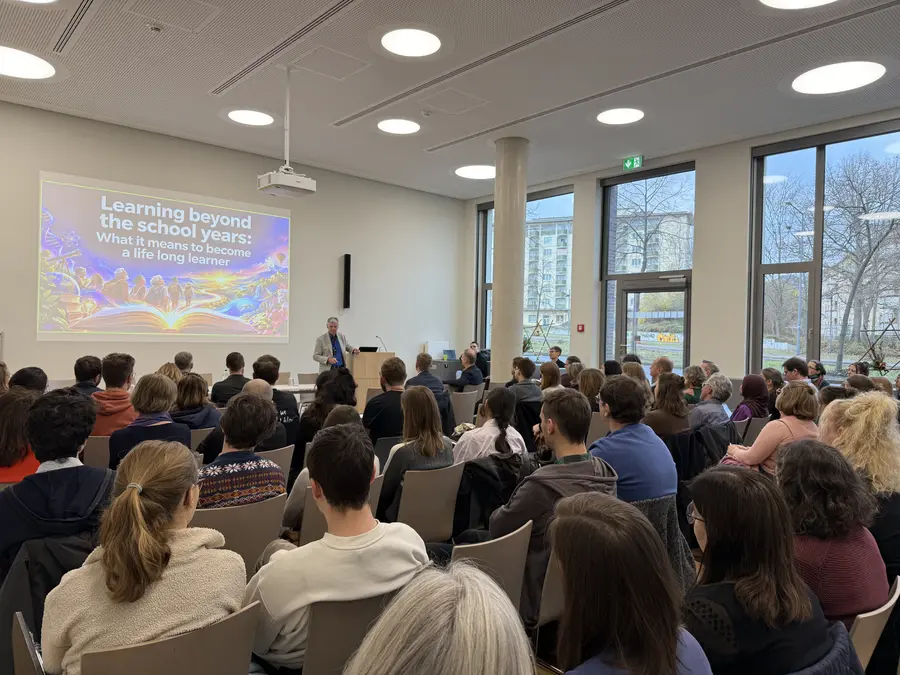
On November 23, 2026, the Chair of Adult Education, in cooperation with Prof. Thomas Köhler’s Chair of Educational Technology, had the great pleasure of welcoming one of today’s most influential educational researchers to our faculty: Prof. John Hattie from the Melbourne Graduate School of Education (University of Melbourne, Australia). Under the title “Visible Learning Beyond School: What Works for Learners Across the Lifespan?”, approximately 90 participants gathered in the auditorium of the Faculty of Education—joined by nearly 80 more online—to explore together what Hattie’s world-renowned evidence synthesis means for learning beyond school.
A Day Dedicated to Lifelong Learning
While Hattie’s “Visible Learning” research is primarily known in the context of schools, the event deliberately shifted the perspective: What happens to these findings when learners are older, more experienced, more autonomous, and shaped by their professional identities? How do feedback, self-regulation, and teaching quality play out in higher education, vocational training, professional development, and continuing education?
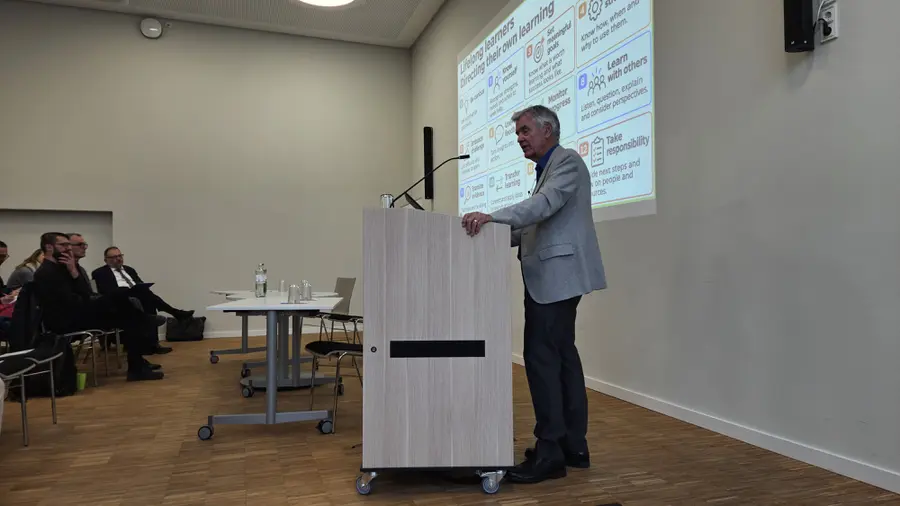
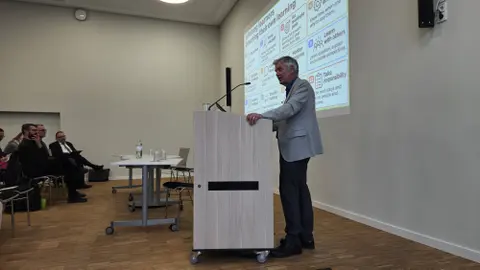
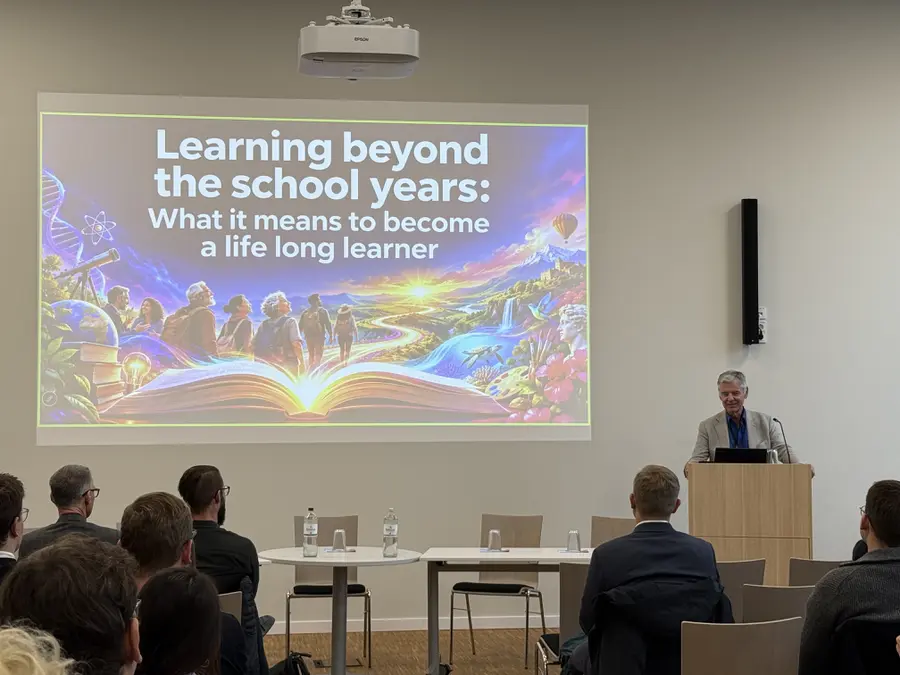
In his keynote address, “Learning Beyond School Years: What It Means to Become Lifelong Learners,” John Hattie addressed precisely these questions with his characteristic blend of solid evidence, clarity, and humor.
Dialogue Between Research, Practice, and Academia
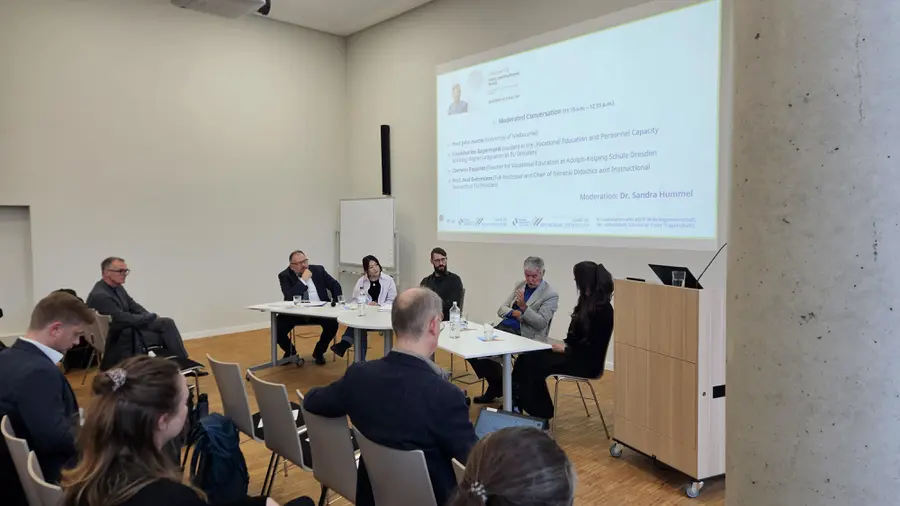
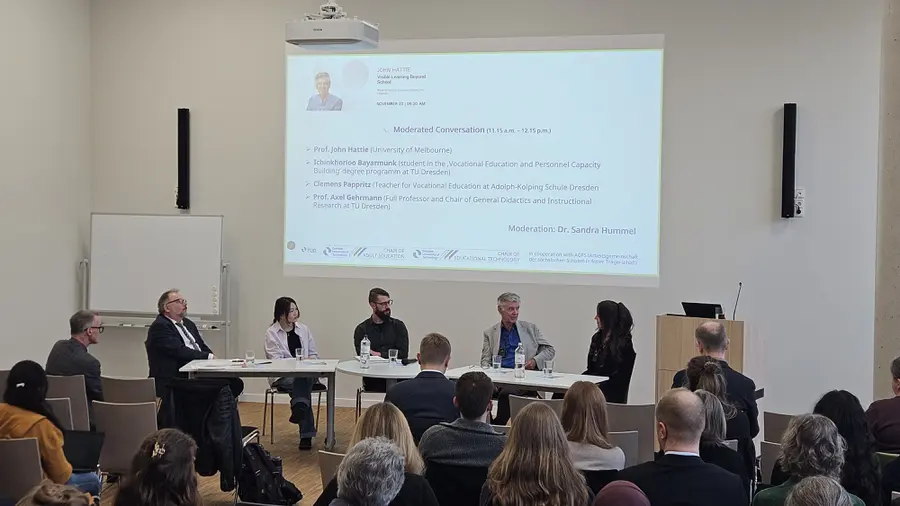
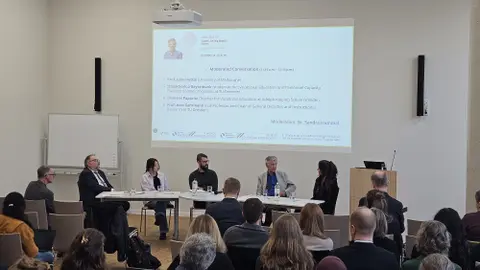
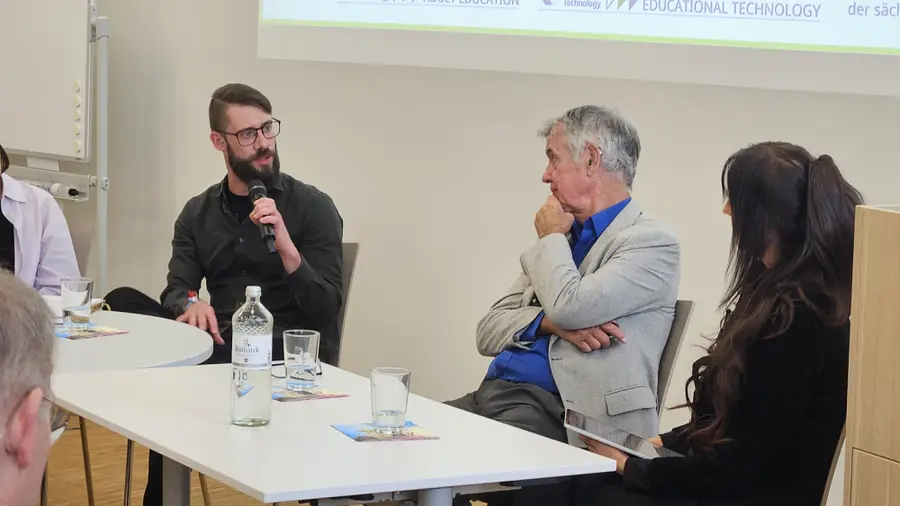
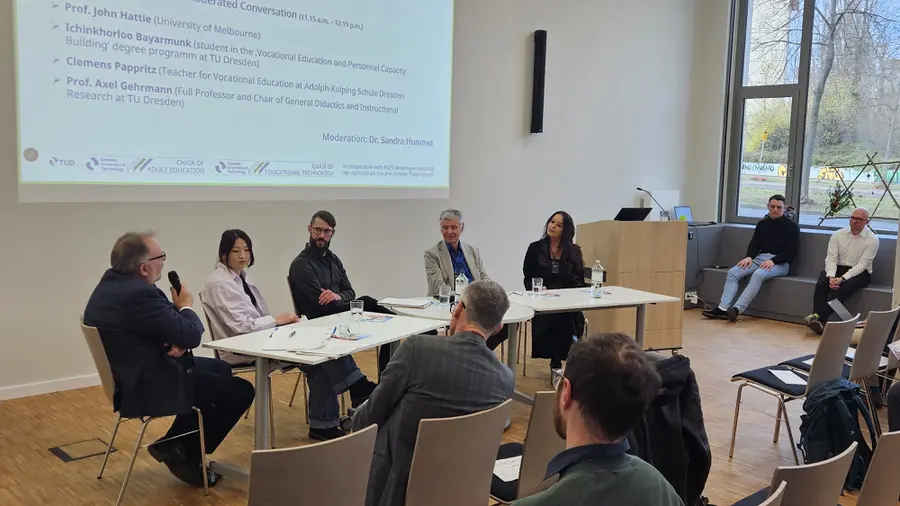
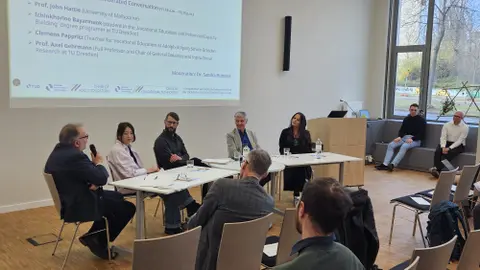
Following the keynote, a moderated discussion explored how these key insights relate to areas of tension, limitations, and questions of transfer. We were delighted to welcome three outstanding panelists:
- Ichinkhorloo Bayarmunkh, a student in the “Vocational Education and Personnel Capacity Building” degree program at TU Dresden,
- Clemens Pappritz, a vocational school teacher at the Adolph-Kolping School in Dresden, and
- Prof. Dr. Axel Gehrmann, holder of the Chair of General Didactics and Instructional Research at TU Dresden.
Key questions such as “What doesn’t work, even though it’s practiced everywhere?” and “What changes when learners bring prior experience, autonomy, or professional identity to the table?” made it strikingly clear where evidence-based findings meet—and sometimes clash with—the realities of teaching and learning beyond the school setting.
Five Working Groups: Translating Evidence into Practice
In the afternoon, participants worked in five parallel working groups, each of which applied Hattie’s ideas to a specific field of practice and developed structured pitches: What can be effectively transferred? Where is adaptation necessary? And what is unlikely to work outside of school?
- Session 1: Feedback and Assessment – Moderator: Alina Praun
- Session 2: Self-Regulation and Learner Agency – Moderator: Dr. Jennifer Schauer
- Session 3: Teaching Quality and Teaching Competence – Moderator: Dr. Frank Beier
- Session 4: Learning in Digital and Hybrid Environments – Moderator: Prof. Dr. Thomas Köhler
- Session 5: Transfer and System-Level Framework Conditions – Moderator: Prof. Dr. Axel Gehrmann
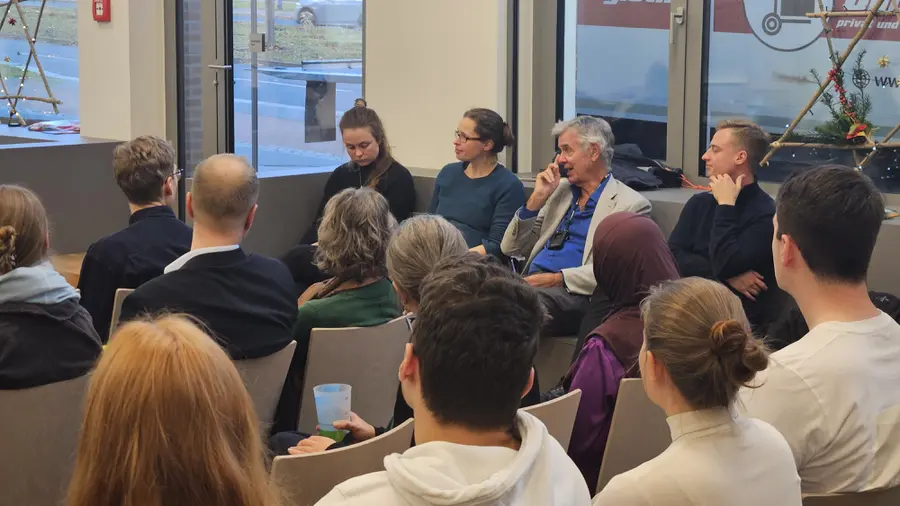
In the subsequent plenary session , “What Works Here?”, each group presented its findings, and John Hattie responded directly to each of the ideas raised. This fostered a lively and rare dialogue between global research evidence and local educational practice.
The event concluded with an open “Ask Me Anything” session. The questions went straight to the heart of evidence-based teaching and education.
Welcome and Opening Remarks
The event was opened by the Dean of the Faculty of Education, Prof. Dr. Rolf Koerber, followed by welcoming remarks from the organizing team: Prof. Dr. Sandra Bohlinger (Chair of Adult Education), Prof. Dr. Thomas Köhler (Chair of Educational Technology), and Dr. Christian Müller (Chair of Adult Education). Our moderator, Dr. Sandra Hummel, skillfully guided us through the day.
Our Thanks
The Chair of Adult Education would like to thank everyone who made this special day possible:
- Prof. John Hattie, for generously sharing his insights and engaging in an open, curious exchange with our community;
- Bishri Basheer for the excellent and seamless collaboration during the preparations;
- the AGFS—Association of Independent Schools in Saxony—for its outstanding cooperation and partnership;
- Prof. Dr. Rolf Koerber, Dean of the Faculty of Education, for his welcoming remarks and support;
- our moderator, Dr. Sandra Hummel, for her confident and warm-hearted guidance throughout the day;
- our panelists Ichinkhorloo Bayarmunkh, Clemens Pappritz, and Prof. Dr. Axel Gehrmann;
- our workshop facilitators Alina Praun, Dr. Jennifer Schauer, Dr. Frank Beier, Prof. Dr. Thomas Köhler, and Prof. Dr. Axel Gehrmann;
- our co-organizer, Prof. Dr. Thomas Köhler, and the Chair of Educational Technology;
- the technical and facilities team, as well as all the helping hands behind the scenes;
- and, last but not least, all participants—both in person and online—for their questions, their energy, and their commitment to better learning throughout the entire lifespan.
Looking Ahead
The questions raised on this day regarding feedback, self-regulation, teaching quality, digital learning, and the conditions for translating evidence into practice will continue to shape the research and teaching of the Chair of Adult Education. We look forward to continuing our dialogue with our partners in research, practice, and policy.
You can find the keynote presentation here: www.tu-dresden.de/ew/eb/vlbs
For more information on our research and teaching, please visit: www.tu-dresden.de/ew/eb