
May 18, 2026
Prof. Andreas Spengler - New Professor of School Pedagogy with a focus on media education
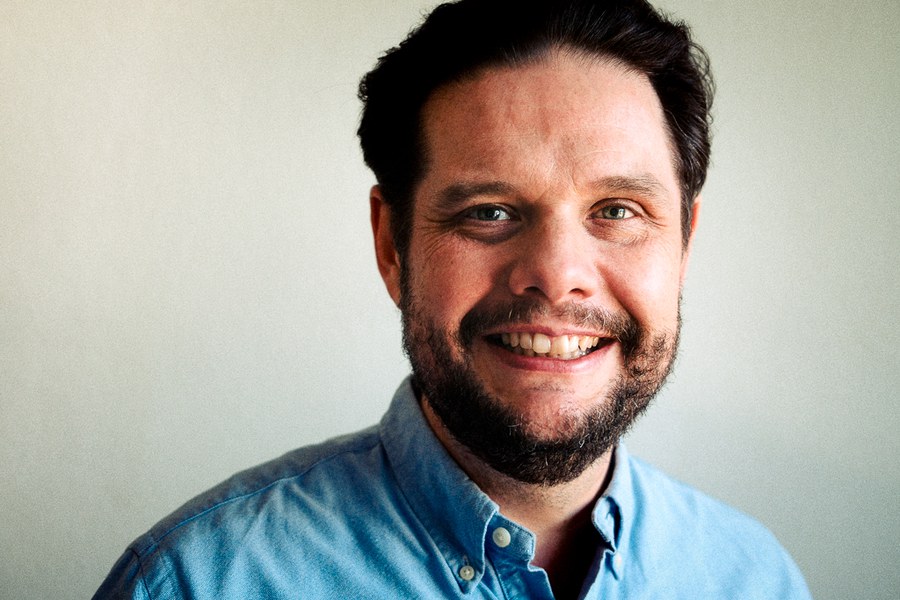
Andreas Spengler studied a Bachelor's and Master's degree in Media and Communication at the University of Passau, specializing in media education, media didactics, European ethnology/ethnology and photojournalism. From 2011 to 2020, he was a Research Associate at the Chair of General Pedagogy, where he completed his doctorate in 2018 with the thesis "The Self on the Net - An Investigation of the Connection between Socialization, Subject, Media and their Technologies". From 2020 to 2025, he was Junior Professor of Media Education and Media Literacy at the University of Rostock, where he was successfully evaluated in 2023. In the winter semester 2024/25, he was a visiting professor for education in the digital world/media education at TU Berlin. Since January 1, 2026, he has been Professor of School Pedagogy with a focus on media education at TU Dresden.
Name: Prof. Andreas Spengler
Position/Professorship: Chair of School Education / Media Education
Institute/Faculty: Institute of Education, Faculty of Education
What are your core research areas and research interests?
My research interests and focus are clearly in the field of media education. I am interested in the overlaps, interconnections, entanglements and folds, the associated practices, communities, spaces, media and technologies in which, with which and through which people form themselves and their environments. Or vice versa: where education is restricted in its possibilities by media and technologies or related aspects. In empirical terms, I am interested in the interplay and contradictions of processes and aspects of mechanization, aestheticization and economization in living and working environments.
What was your most interesting or exciting research project?
There are clearly two for me: on the one hand, it was my dissertation - and in particular the second part, when I worked out the networked self as a form of subjectivation. This is what drives me to this day. Ultimately, as a question about education and subjectivity at the interface of everyday life, technology and media, it still shapes my research interests today. On the other hand, it was an essay on education in a fluid and porous constellation, which I was allowed to write together with Guido Pollak. The text was written almost exclusively via email in ping-pong - always reacting to what had gone before and taking it further. In it, we develop the first basic features of a constellative theory of education, drawing on the essay as a method that aims to open up a critical sense of possibility. In this sense, it was not only the text that aims to achieve this in terms of content, but also the writing process itself from which it emerged.
What project are you currently working on?
At the moment, I would consider myself to be "in transition". We are currently working on the constellative educational theory I mentioned and I am also involved in other publication projects. I would also like to work more empirically again. However, the most important project at the moment is arriving and starting at TU Dresden. I'm really looking forward to getting to know the students at the TU in the context of teaching, but also to the warm and open welcome, the collegiality I've already experienced at the Faculty and in the Chair's team - and that is ultimately the central foundation for everything.
What should never be missing from your desk?
The obligatory cup of coffee has to be on my desk - otherwise my "analog" notebook, writing tools and a small pile of books that I'm particularly interested in at the moment.
Do you have a favorite quote? If so, which one and who is it from?
Unfortunately I don't have a specific one at the moment, it changes depending on what I'm currently reading, discovering or what moves me. Now, of course, I could answer cheekily with "I don't know" and refer to note 216 in David Foster Wallace's "Infinite Jest" ;) Otherwise, since it fits well, to a passage in Ernst Cassirer's essay "Form and Technique" from 1930: "The 'form' of the world is not simply received and accepted by man, neither in thinking nor in doing, neither in speaking nor in working, but must be 'formed' by him." In my opinion, this is the basis for the central tasks, content and demands of "media education".
What was the last book you read?
Privately, it was Ricarda Messner's "Wo der Name wohnt" and "Die kalten Nächte der Kindheit" by Tezer Özlü, both of which I couldn't put down; professionally, I'm currently in transition between Martina Heßler's "Sisyphos im Maschinenraum. Eine Geschichte der Fehlbarkeit von Mensch und Technologie" and Anna-Verena Nosthoff's "Kybernetik und Kritik. A theory of digital governance". Apart from that, I've heard that GTA 6 is due to be released this year - and of course there's a lot of interest in media education.
You can find more information about you on
the Chair's pages
on LinkedIn