
17.02.2026
Digitale Bürgerbeteiligung in Deutschland – Zwischen „Ost-Effekt“ und Stadt-Land-Gefälle
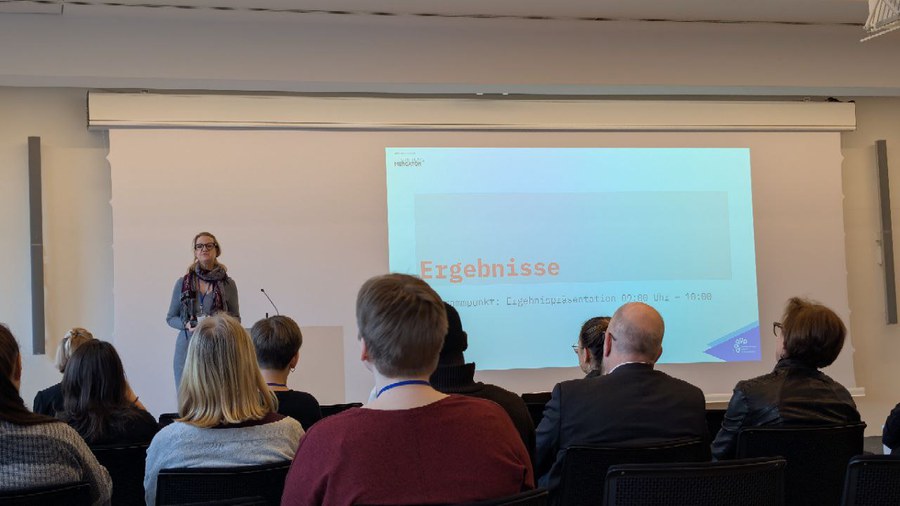
Prof. Dr. Marianne Kneuer stellt die Ergebnisse der Studie vor
Wie steht es um die digitale Teilhabe in Deutschlands Kommunen? Ein Forschungskonsortium unter Leitung der Technischen Universität Dresden (TUD) hat im Projekt „ErLE“ (Erfolgsfaktoren lokaler E-Partizipation) über 10.000 Städte und Gemeinden befragt. Die Ergebnisse der Studie, an der auch die Universitäten Düsseldorf, Leipzig und Koblenz beteiligt sind, zeichnen ein detailliertes Bild der digitalen Demokratie auf lokaler Ebene. Erste Einblicke bekam die Öffentlichkeit auf dem Fachtag "Von Daten zu Taten" am 11.02.2026 in Berlin.
Der „Ost-Effekt“: Vorsprung in den neuen Bundesländern
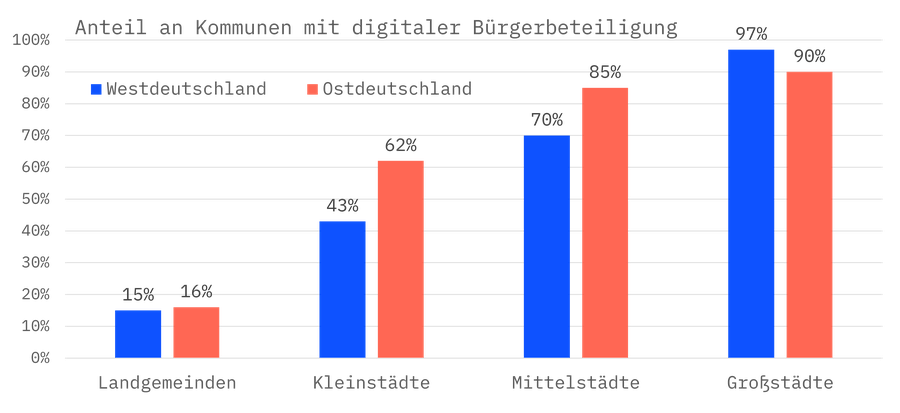
Überraschend deutlich zeigt sich in der Stichprobe (2.390 antwortende Kommunen) ein Vorsprung ostdeutscher Städte bei der digitalen Bürgerbeteiligung. Besonders bei mittelgroßen und kleinen Städten liegen die neuen Bundesländer vorn:
-
Mittelstädte: 85 % im Osten bieten digitale Formate an, gegenüber 70 % im Westen.
-
Kleinstädte: Hier ist der Kontrast mit 62 % (Ost) zu 43 % (West) noch prägnanter. Lediglich bei den Großstädten behält Westdeutschland die Nase vorn.
Standortfaktoren: Ressourcen entscheiden über das Angebot
Ob eine Kommune digitale Beteiligung ermöglicht, ist stark von ihrer Größe und Finanzkraft abhängig.
-
Großstädte sind mit 96 % fast ausnahmslos digital aktiv und verfügen zu 63 % über eigene Fachabteilungen oder Personalstellen.
-
Kleinere Kommunen sind deutlich zurückhaltender. Hier fehlen oft feste Strukturen; Beteiligung wird meist flexibel und ohne dediziertes Personal organisiert.
-
Netzwerkeffekt: Kommunen, die digitale Teilhabe anbieten, befinden sich häufig in einem Umfeld, in dem auch benachbarte Gemeinden bereits digital aktiv sind.
Unterschiedliche Themen und Zielsetzungen
Je nach Gemeindetyp variieren die inhaltlichen Schwerpunkte der Beteiligung:
-
Großstädte: Fokus auf Verkehrsentwicklung sowie Klima- und Umweltschutz (jeweils über 50 %).
-
Kleinere Städte/Gemeinden: Hier stehen die allgemeine Stadtentwicklung und das Mängelmanagement im Vordergrund.
Trotz dieser Unterschiede eint fast alle Kommunen ein zentrales Motiv: Transparenz. Für rund 80 bis 90 % der Befragten ist das wichtigste Ziel, politische Entscheidungsprozesse für die Bürgerinnen und Bürger nachvollziehbarer zu gestalten. Während Großstädte zudem gezielt unterrepräsentierte Gruppen ansprechen wollen, geht es kleineren Orten primär darum, die allgemeine Teilnehmerzahl zu erhöhen.
Hintergrund zum Projekt „ErLE“
Das Projekt „Erfolgsfaktoren lokaler E-Partizipation“, geleitet von Prof. Marianne Kneuer (TUD) und gefördert von der Stiftung Mercator, hat zum Ziel, Erfolgsbedingungen für digitale Formate zu identifizieren und diese für die kommunale Praxis nutzbar zu machen.
Kontakt für Rückfragen: Bastian Stock, Institut für Politikwissenschaft, TU Dresden E-Mail: bastian.stock@tu-dresden.de