
Jul 01, 2026
Schmalenbach Workshop on Corporate Democratic Action Brings Together Research and Business Practice
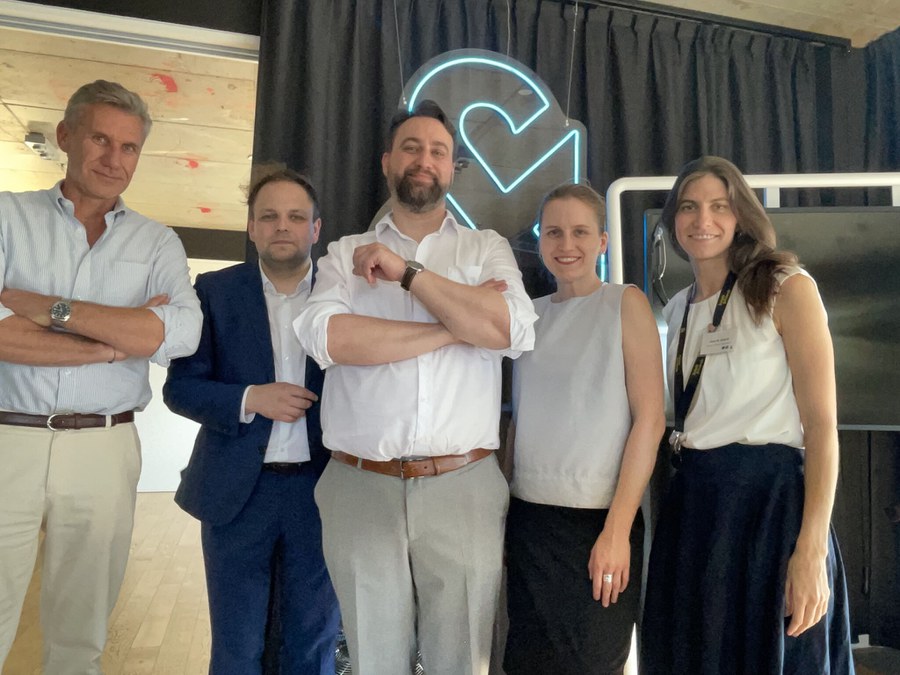
How can companies make an effective contribution to strengthening liberal democracies? What responsibilities do businesses bear in the face of growing democratic challenges, and how can these responsibilities be strategically embedded within organizations? These questions were at the heart of a full-day peer-to-peer workshop on Corporate Democratic Action (CDA), held on 25 June 2026 at Scholz & Friends Reputation in Berlin. Around 35 participants from academia and business came together to connect current research with practical experience and to discuss evidence-based approaches to responsible corporate engagement in democratic societies.
The workshop was jointly organized by the Business Ethics Working Group of the Schmalenbach Society for Business Research (Schmalenbach-Gesellschaft für Betriebswirtschaft e.V.) and Scholz & Friends Reputation. The event was led by Prof. Dr. Markus Scholz, Chair of Business Administration, particularly Responsible Management, at the International Institute (IHI) Zittau, TU Dresden, and Head of the Business Ethics Working Group of the Schmalenbach Society, together with Joris-Johann Lenssen, Managing Director of Scholz & Friends Reputation and Co-Head of the Business Ethics Working Group. Dr. Benedikt Kapteina, Postdoctoral Fellow at the Chair of Business Administration, particularly Responsible Management, at the International Institute (IHI) Zittau, TU Dresden, played a key role in the scientific design, organization, and coordination of the workshop.
The workshop aimed to strengthen the dialogue between academia and business and to explore how companies can strategically integrate democratic responsibility into their organizational practices. Against the backdrop of increasing societal polarization, democratic backsliding, and growing expectations of business, the role of companies in protecting and promoting liberal democracy has become an increasingly important topic in both research and management practice. The emerging field of Corporate Democratic Action examines how firms can contribute to safeguarding democratic institutions and values, as well as the governance structures, strategic approaches, and cross-sector partnerships required to do so effectively. The workshop provided a scientifically grounded forum for linking cutting-edge research with practical experience and for developing shared perspectives for both scholarship and managerial practice.
The programme opened with a keynote address by Dr. Harald Langenfeld, Chief Executive Officer of Sparkasse Leipzig. He highlighted the important role of regionally embedded companies and financial institutions in strengthening democratic resilience and discussed the responsibility of regional actors in fostering social cohesion. This was followed by a presentation from Inga Holtmann, Corporate Citizenship Manager at Lufthansa Technik AG, who shared practical insights into the development and implementation of a company-wide democracy promotion initiative, illustrating how such projects can successfully evolve from strategic concept to organizational implementation.
The core of the workshop consisted of two parallel working groups conducted under the Chatham House Rule, enabling an open and confidential exchange among participants. Discussions focused on strategies for building cross-sector alliances to strengthen democratic resilience and on how companies can prepare for potential authoritarian-populist governments. The intensive dialogue among scholars, business leaders, and practitioners from various sectors highlighted the growing demand for evidence-based guidance on how companies can navigate an increasingly complex political environment.
The workshop concluded with an academic roundtable featuring Prof. Dr. Tanja A. Börzel, Professor of Political Science and Director of the Center for European Integration at Freie Universität Berlin, Prof. Dr. Thomas Beschorner, Professor of Business Ethics and Director of the Institute for Business Ethics at the University of St. Gallen, and Sabine Klisch, Vice President Brand & Communication at JENOPTIK AG. The discussion was moderated by Dr. Benedikt Kapteina, Postdoctoral Fellow at the Chair of Business Administration, particularly Responsible Management, at the International Institute (IHI) Zittau, TU Dresden. Together, the panel reflected on the workshop's key insights, situated them within the current state of research on Corporate Democratic Action, and discussed future research opportunities at the intersection of responsible management, business ethics, and democracy.
The workshop reflects the commitment of the Chair of Business Administration, particularly Responsible Management, at the International Institute (IHI) Zittau, TU Dresden, to addressing pressing societal challenges through rigorous research and close collaboration with business, policymakers, and civil society. Events such as this create spaces for mutual learning, strengthen knowledge transfer between research and practice, and contribute to the development of evidence-based approaches to responsible corporate conduct in democratic societies. At the same time, the workshop highlights the role of the Business Ethics Working Group of the Schmalenbach Society as a platform for exchange between business research and management practice while further strengthening the international visibility of Responsible Management research at the International Institute (IHI) Zittau and TU Dresden.