
Nov 23, 2026
Prof. Jürgen Czarske has been inducted into the global “Photonics100” community
Photonics100 – Global Rock Stars of Photonics
Computing with light, communication, and the detection of diseases: Prof. Jürgen Czarske has been inducted into the global “Photonics100” community. Based in Dresden, the scientist bridges the gap between photonics and fields such as artificial intelligence, quantum technologies, and biomedical imaging.
Prof. Juergen Czarske of TU Dresden has been named to the prestigious “Photonics100 – Rockstars of Photonics” list. The international trade magazine *Electro Optics*, published by Europa Science, uses this list to honor individuals who are significantly shaping the future of photonics through innovative research and technological developments: the innovators, the boundary pushers, the disruptors and the ‘out-of-the-box’ thinkers.
Czarske’s work links information processing via light with artificial intelligence and novel optical methods—with applications in communication technology and medicine.
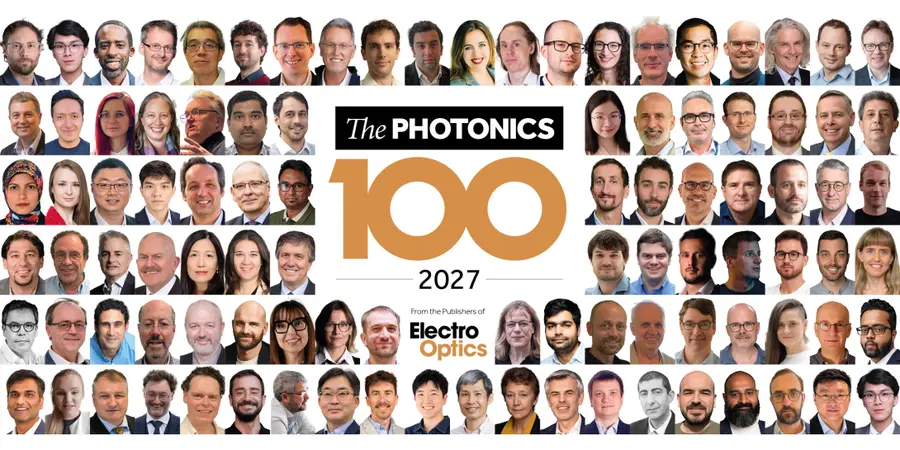
At TU Dresden, Prof. Czarske leads the Chair of Measurement and Sensor System Technology as well as the BIOLAS (Biomedical Computational Laser Systems) center. Together with his team, he investigates how complex light fields can be precisely controlled and utilized for the transmission, processing, and acquisition of information. A key focus of his research is on neural networks that combine physical knowledge with machine learning, as well as on optical computing methods—in which the propagation of light itself performs mathematical operations at the speed of light, with negligible energy consumption.
“Being part of the ‘Photonics100’ selection for 2027 and counted among the world’s leading innovators in the field of photonics is a wonderful validation, an honor, and, at the same time, a great motivation,” says Prof. Czarske. "This award is a testament to the loyalty and dedication of the entire team, as well as our cooperation partners. Together, we have achieved groundbreaking progress that has opened new avenues for industrial applications. I look forward to continuing our collaboration with our partners to ensure that the unique advantages of our photonic systems are successfully translated into practical use." Czarske’s international accolades include the *Joseph Fraunhofer Award / Robert M. Burley Prize* from Optica (2019), the *Laser Instrumentation Award* from the IEEE Photonics Society (2020), the *Chandra S. Vikram Award in Optical Metrology* from SPIE (2022), and the *Dennis Gabor Award in Diffractive Optics* from SPIE (2024). His achievements in the field of technology transfer were also recognized with the *Berthold Leibinger Innovation Prize / TRUMPF* (2008). Together with Bernard Kress from Google, Czarske is organizing the SPIE conference "Digital Optical Technologies," which will take place in Munich from June 21 to 24, 2027. Furthermore, he serves as a co-chair for the topic area "AI in Optics" at the International Commission for Optics conference, scheduled for August 22 to 26, 2027.
Photonics and AI: Light as a Tool for Information Processing
The rapidly growing use of AI is driving an increased demand for high-performance, energy-efficient data connections. Czarske’s work focuses on the targeted processing of spatial light channels: multimode optical fibers can transmit multiple information channels simultaneously, but mode coupling often leads to the intermixing of these channels. To bring these overlaps under control, the research involves developing trained diffractive optical elements and digital correction techniques. This opens up new possibilities for compact optical systems, high-performance fiber-optic links, and flexible information distribution.
Quantum and Biophotonics: From Secure Communication to Hair-Thin Endoscopes
Another research area links the control of light with quantum communication and biomedical imaging. While photonic quantum technologies offer new avenues for secure information transmission and highly sensitive measurements, miniaturized fiber-optic endoscopes provide access to previously hard-to-reach areas of tissue. Czarske’s team is developing approaches that harness light scattering through wavefront shaping and AI-assisted image reconstruction. The long-term goal is to create advanced diagnostic methods that provide detailed information from within the human body. The critical challenge lies in the transition from the laboratory to practical application: optical components must become more compact, methods must remain reliable even amidst movement or changing environmental conditions, and their utility must be demonstrated in collaboration with industrial partners. In this way, Czarske’s research addresses key forward-looking questions that will remain central to the international photonics sector over the next five years.
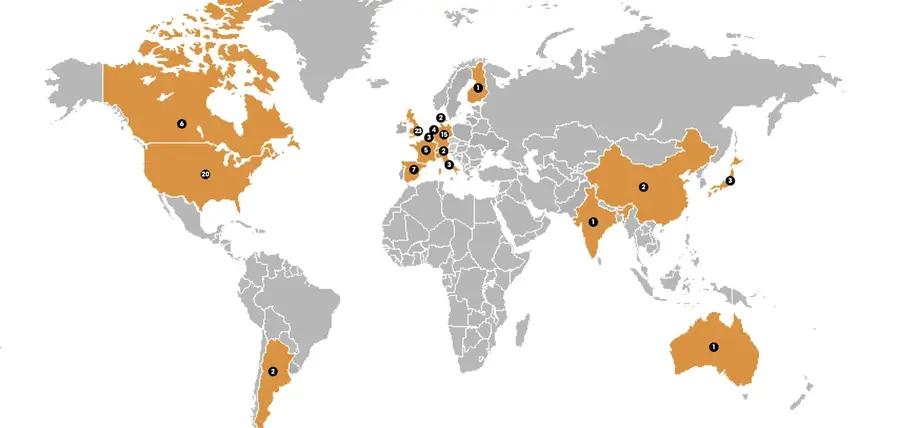
Photonics100 – “The most innovative minds in global photonics”
Published annually by *Electro Optics*, this selection honors 100 individuals from research and industry worldwide who are driving progress in the field of photonics. It recognizes contributions ranging from fundamental scientific research and the development of new technologies to their industrial implementation.
Contact at Europa Science:
Andrew Knight, Audience Engagement Manager, Electro Optics:
Scientific Contact:
Prof. Juergen Czarske
Chair of Measurement and Sensor System Technology, TU Dresden
Email: