
Jul 08, 2026
When Research Takes Flight: TU Dresden Teams Test Innovations on Rockets and Stratospheric Balloons
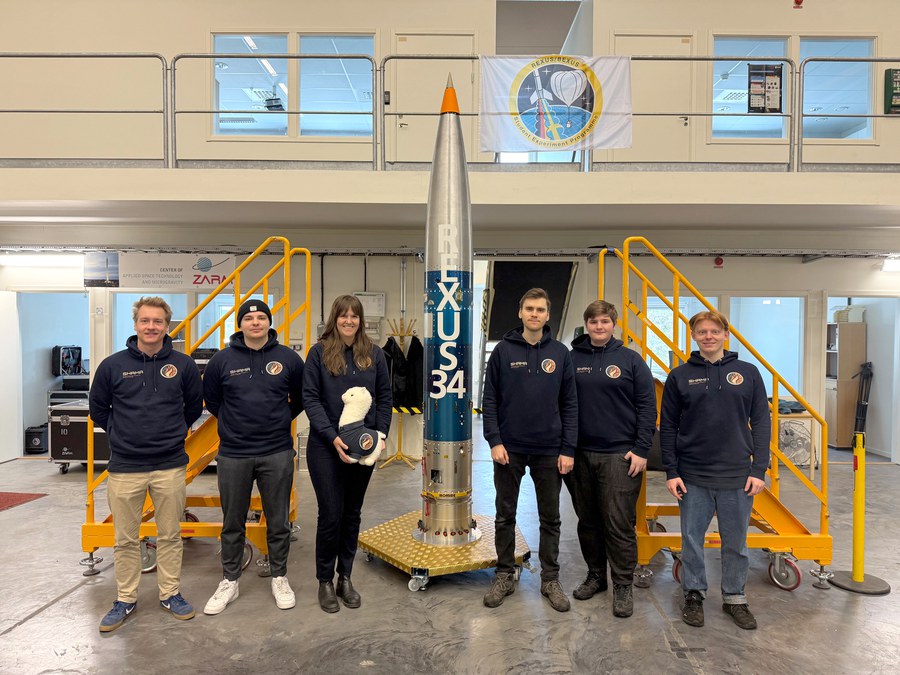
The SHAMA team in front of the fully integrated payload of the REXUS-34 rocket. The orange protective covers will enclose the experimental components until launch.
Authors: Raphaela Günther, Lucas Nöller
How do you develop sustainable materials for rockets? What might laser communication for future small satellites look like? Students in the STAR Dresden university group and doctoral candidates in the Chair of Space Systems at TU Dresden (TUD) tackle questions like these not only in lectures and labs, but also as part of real space missions. Together, they develop experiments and oversee them over several years, from the initial idea to the actual flight. In the process, they gain experience that would otherwise only be possible in professional space programs. Two current projects—the SHAMA rocket experiment and the CRAB balloon experiment—impressively demonstrate the diversity of research at the Chair.
Such projects are made possible by the European REXUS/BEXUS program (Rocket/Balloon Experiments for University Students). The program is jointly run by the German Aerospace Center (DLR), the Swedish National Space Agency (SNSA), and the European Space Agency (ESA). Students are given the opportunity to develop and build their own scientific experiments and test them under real-world conditions using high-altitude research rockets or stratospheric balloons. Launches take place from the Esrange Space Center in northern Sweden and are supervised by experienced space experts. Over a period of about two years, the teams go through all phases of a space project—from the initial idea through development, testing, and qualification to the flight and scientific analysis.
Sustainable Heat Shielding for Rockets: The SHAMA Experiment
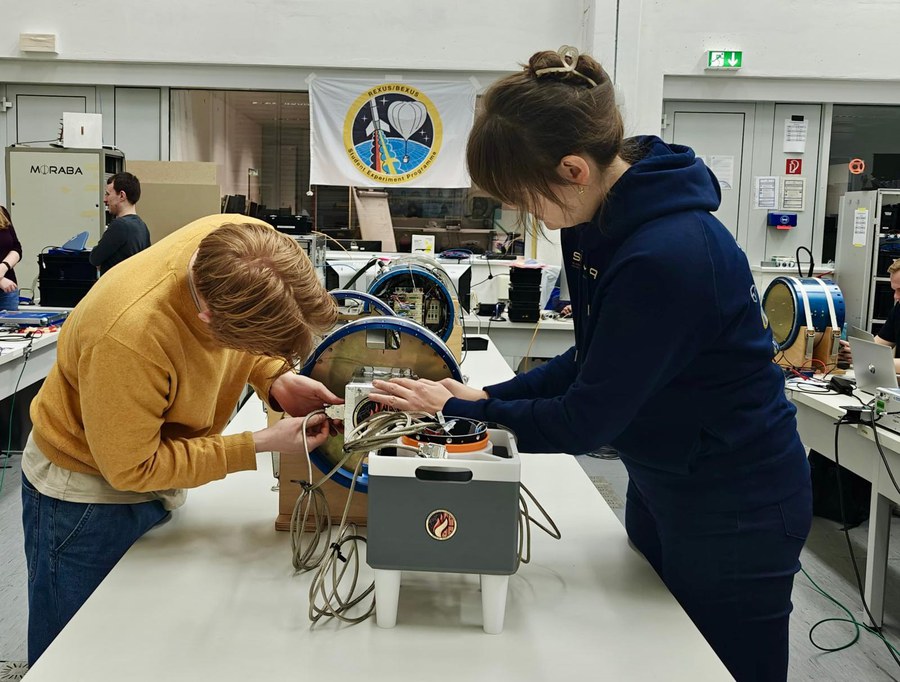
In der Experimententwicklung werden regelmäßig alle elektrischen und mechanischen Verbindungen überprüft sowie letzte Anpassungen am Experiment wenige Tage vor dem Start vorgenommen.
In March 2025, the SHAMA (Sustainable Heat-protective Ablative MAterial) experiment launched aboard the REXUS 34 high-altitude research rocket. The goal of the project was to test a novel thermal protection material called TPSea, which was developed at TUD and is based on wood and seagrass fibers.
Thermal protection systems are essential for spacecraft to shield them from extreme temperatures during flight. TPSea relies on renewable raw materials that are lightweight, thermally efficient, and mechanically robust, thus offering a sustainable alternative to conventional high-performance materials.
For SHAMA, material samples were mounted near the tip of the rocket and equipped with temperature sensors. The goal was to gather important information about the material’s behavior for the first time, even during the mission. Although REXUS 34 did not reach its planned altitude, the payload was recovered and some data was collected.
Despite these limitations, the mission provided valuable insights for the development of sustainable space materials. The successful integration of the experiment into the rocket and the launch itself marked important milestones. The project demonstrates how bio-based materials could be utilized in the future for space structures subjected to high stresses.
Further details are available on the project website.
New Approaches to Satellite Communication: The CRAB Experiment
The BEXUS project CRAB (Communication via Retroreflectors and ABsorption modulators) focused on a novel form of laser communication that offers great potential, particularly for small satellites. In this process, a laser beam is transmitted from a ground station to the satellite, where it is reflected back by a so-called modulating retroreflector and simultaneously encoded with information. Since the actual laser remains on the ground, the onboard communication system can be significantly more compact, lighter, and more energy-efficient.
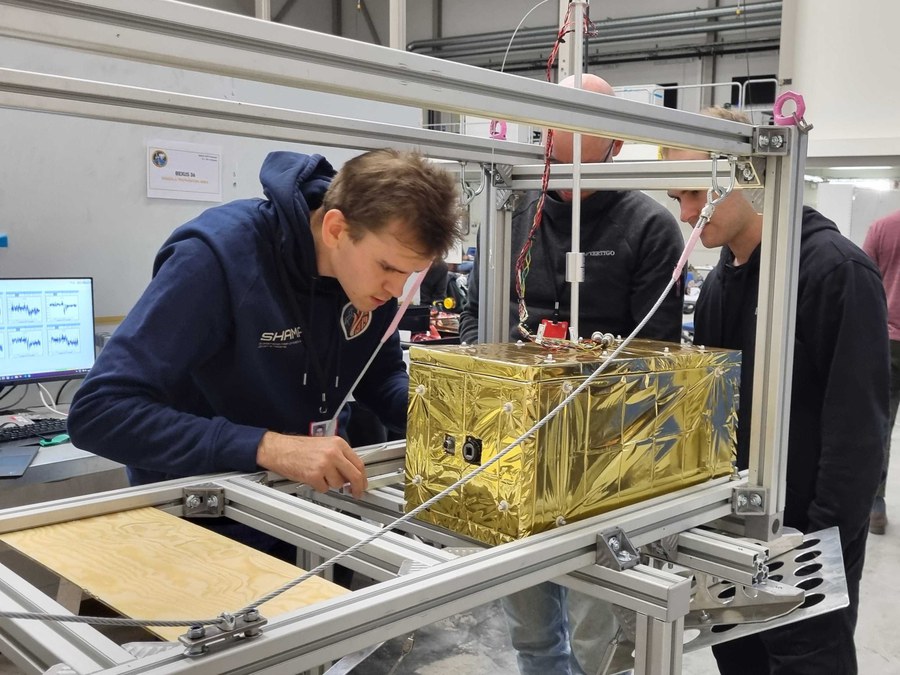
Selbst wenige Tage vor dem Start hat das Team noch fieberhaft an letzten Problemen gearbeitet, damit der Flug ein voller Erfolg wird.
As part of the CRAB project, researchers investigated how such a modulator behaves under stratospheric conditions and how a high-altitude balloon can be reliably tracked using a telescope. To this end, the student team developed its own electronics, mechanical components, and software and tested the systems during a BEXUS balloon flight at an altitude of approximately 25 kilometers. The experience and technologies gained form the basis for a follow-up project, in which the next step toward a complete laser communication link between the ground station and the flight platform will be taken.
Further details are available on the project website.
More Than Research: Space Exploration as a Team Effort
SHAMA and CRAB demonstrate that space research is far more than just a successful launch or the analysis of measurement data. New technologies emerge through a long process involving ideas, designs, tests, setbacks, and improvements. Not every mission goes as planned, and not every question can be answered on the first attempt. However, dealing with unexpected challenges, the collaborative search for solutions, and learning from mistakes are among the most important experiences in space exploration.
Programs like REXUS and BEXUS make it possible to experience these processes under real-world conditions. They uniquely combine research and education and give students the opportunity to take on responsibility in complex technical projects. At the same time, new scientific insights and technologies emerge—ranging from sustainable materials for future spacecraft to innovative communication systems for small satellites.
In this way, SHAMA and CRAB not only illustrate the breadth of research at the Chair of Space Systems but also demonstrate how curiosity, teamwork, and scientific rigor give rise to ideas that pave the way for the space exploration of tomorrow. These two experiments also make it clear that the success of a project is measured not only by the outcome of a mission, but equally by the knowledge, skills, and team spirit that develop along the way.
Selbst wenige Tage vor dem Start hat das Team noch fieberhaft an letzten Problemen gearbeitet, damit der Flug ein voller Erfolg wird. © STAR Dresden
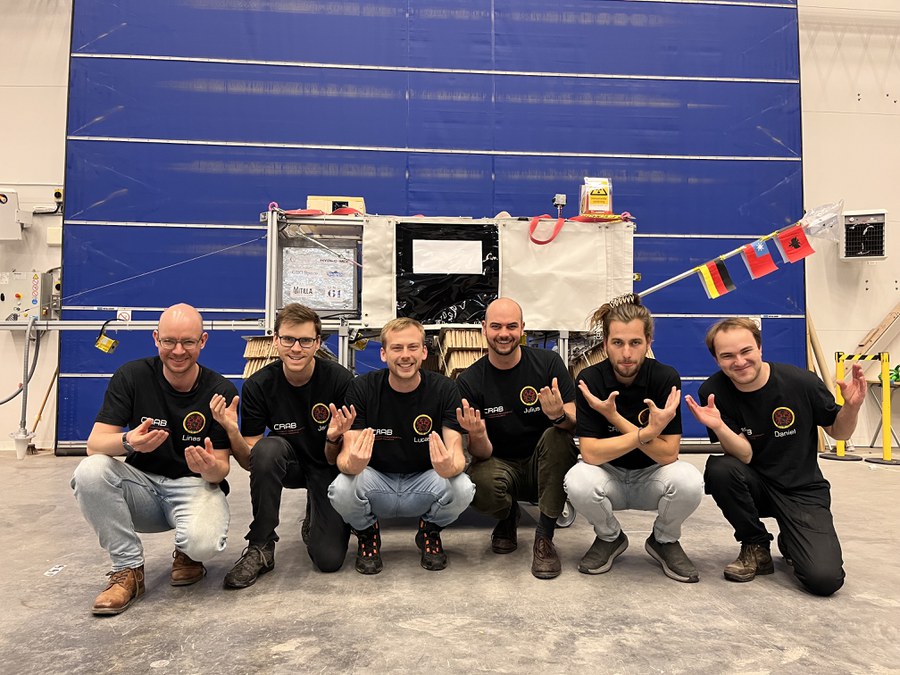
Team CRAB vor der fertigen Ballongondel kurz vor dem Start in Esrange, Nordschweden. © STAR Dresden
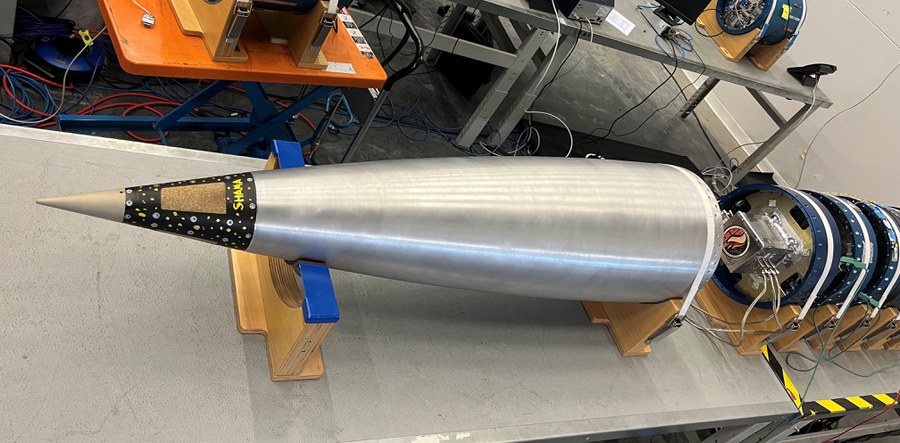
Das SHAMA-Experiment ist vollständig in die Nutzlast der Rakete integriert, getestet und startbereit. © Raphaela Günther
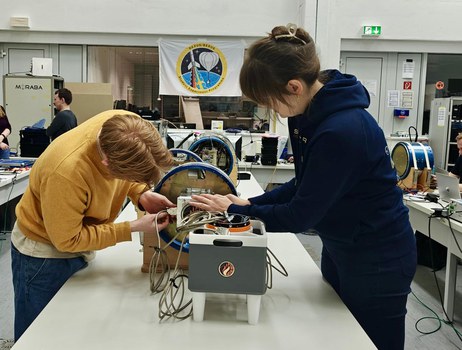
In der Experimententwicklung werden regelmäßig alle elektrischen und mechanischen Verbindungen überprüft sowie letzte Anpassungen am Experiment wenige Tage vor dem Start vorgenommen. © STAR Dresden
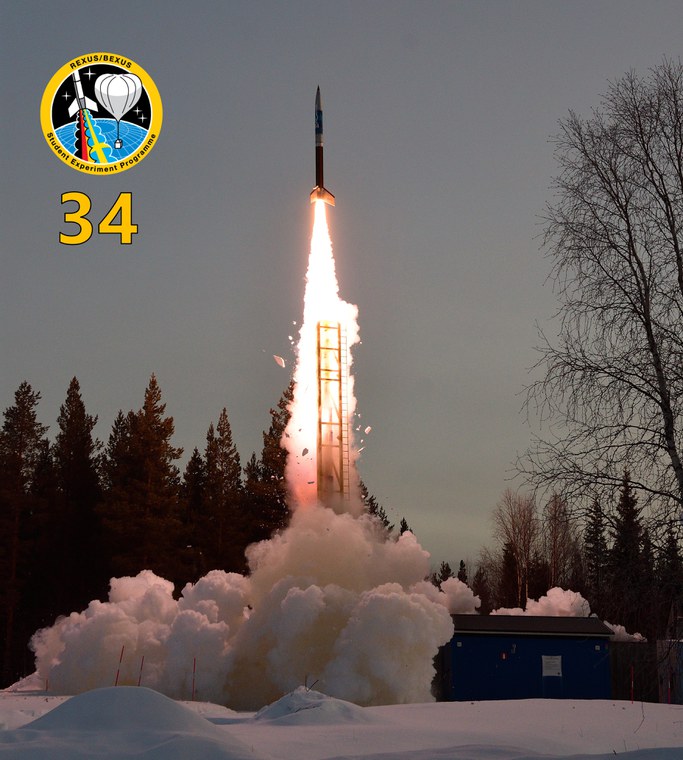
Start der REXUS-34-Höhenforschungsrakete am Raketenstartplatz Esrange in Nordschweden. © DLR/MORABA/Schleuß
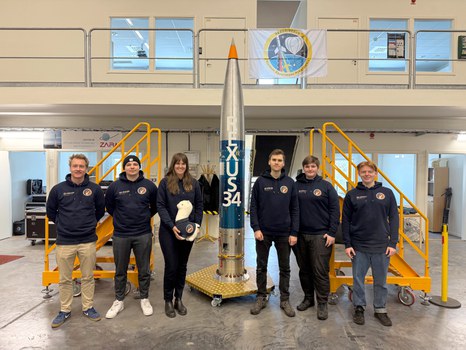
Das SHAMA-Team vor der vollständig integrierten Nutzlast der REXUS-34-Rakete. Die orangefarbenen Schutzhüllen umschließen bis zum Start die Experimentkomponenten. © STAR Dresden
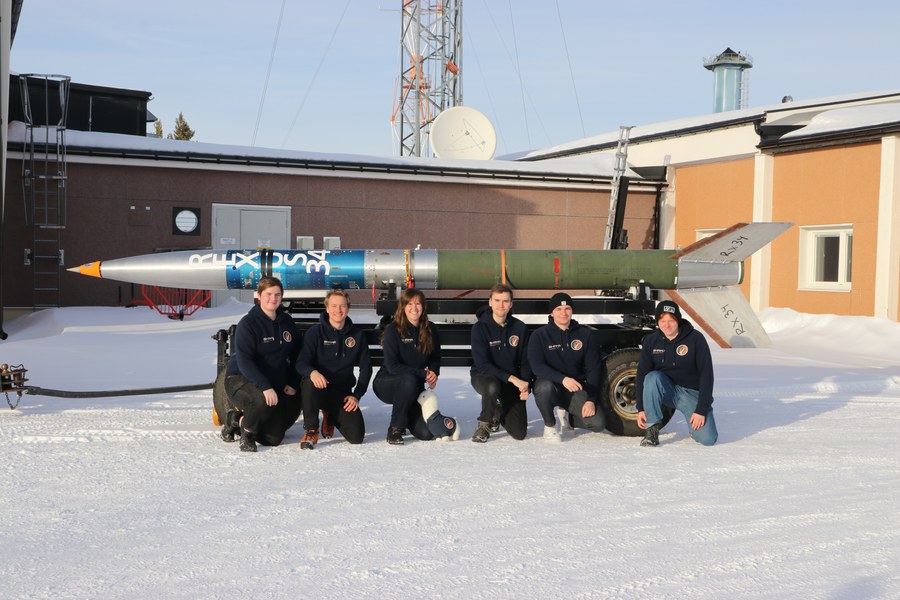
Das SHAMA-Team begleitet die vollständig integrierte REXUS-34-Rakete auf ihrem Weg zum Startplatz in Esrange, Nordschweden. © REXUS/BEXUS
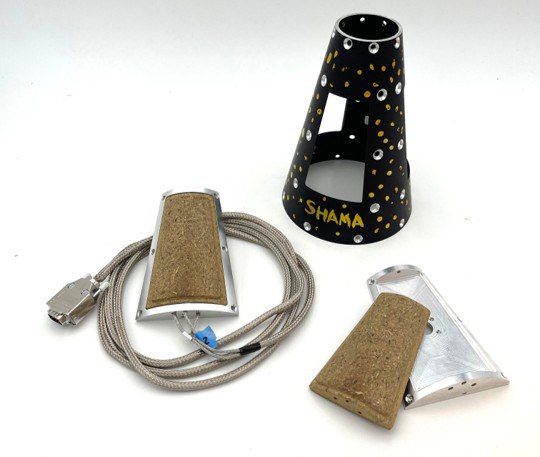
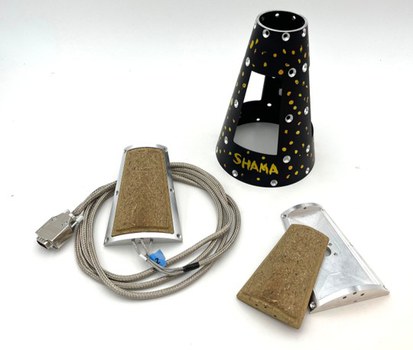
Die Komponenten des SHAMA-Experiments mit den Probenkörpern vor der Integration in die Nutzlast. © Raphaela Günther
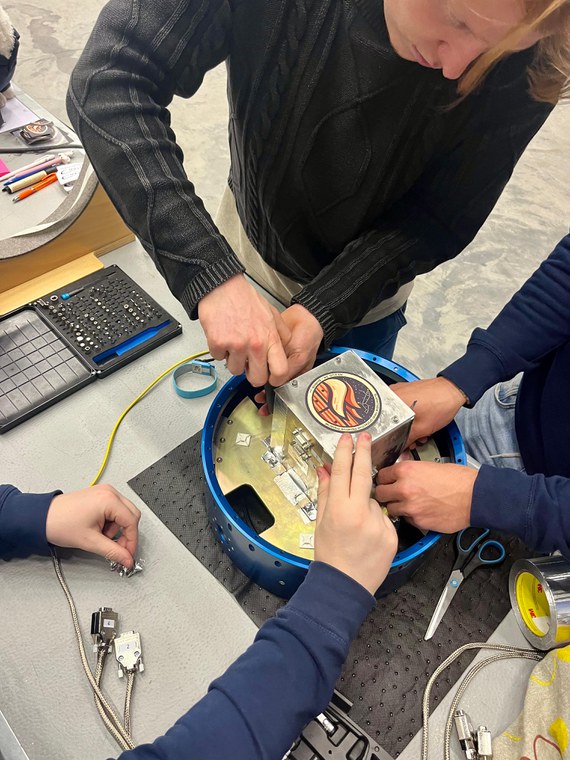
Gemeinsam montiert das SHAMA-Team das Elektronikgehäuse des Experiments während der Integrationsphase. © Raphaela Günther