
Infrastruktur-Messsystem für Stadtbahnen
Inhaltsverzeichnis
|
Projekt |
Infrastruktur-Messsystem für Stadtbahnen |
|
Bearbeiter |
seit 2026: Dipl.-Ing. Vincent Voigtländer 2019 – 2023: Dipl.-Ing. (TUM) Maximilian Loderer 2013 – 2017: Dr.-Ing. Christian Telke |
|
Förderer |
Alstom (ehemals Bombardier Transportation) |
Bei der Entwicklung von Straßen-, Stadt- und U-Bahnen stehen wiederkehrende Standardmessaufgaben an. Viele dieser Messaufgaben müssen bereits in einer sehr frühen Projekt- bzw. Angebotsphase durchgeführt werden. Im besonderen Fokus stehen dabei die folgenden Größen:
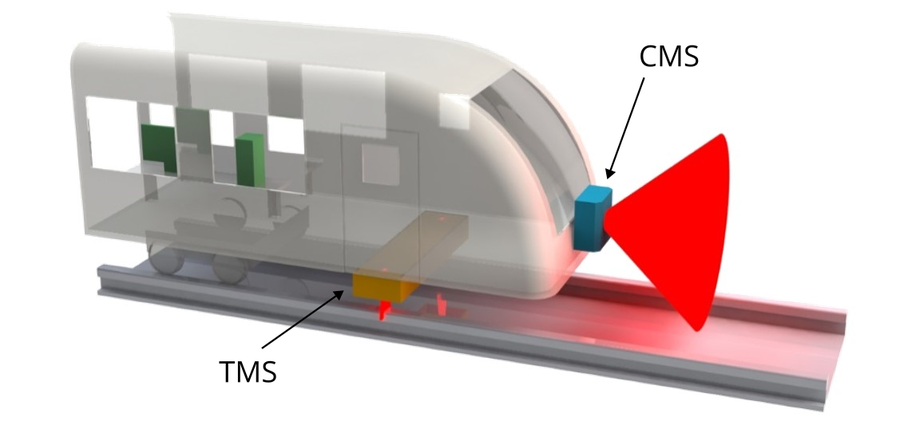
Trägerfahrzeug mit TMS und CMS
- Die Trassierung, Gleislagestörung sowie Schienenprofile, welche maßgeblich Fahrzeugdynamik, Fahrkomfort und Radverschleiß beeinflussen und zur Lastfall-Generierung verwendet werden können.
- Der verfügbare Lichtraum innerhalb der Infrastruktur, welcher die geometrischen Abmessungen einer einzusetzenden Bahn bestimmt.
Im Rahmen dieses Forschungsprojektes soll ein modulares Sensorsystem entwickelt werden, welches an Bestandsfahrzeugen montiert werden kann und mit dem die genannten Messaufgaben im laufenden Betrieb durchgeführt werden können.
Track Measurement System - TMS
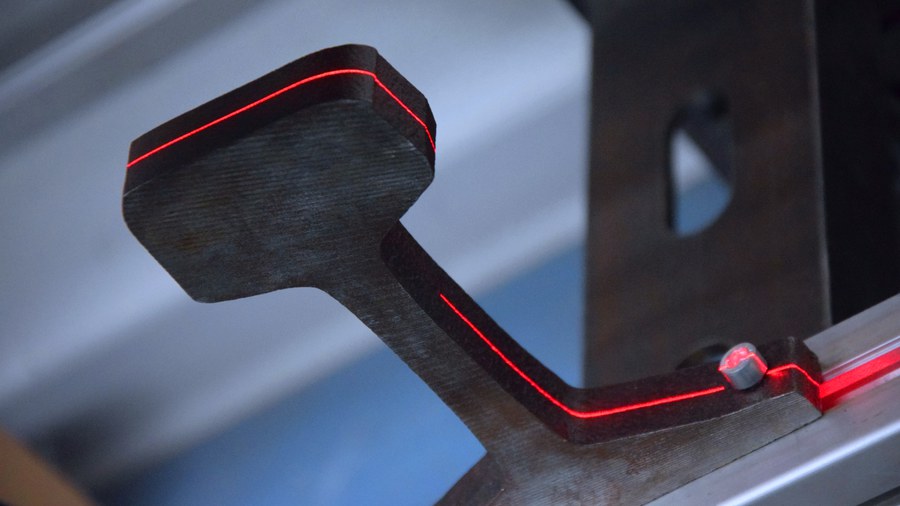
Laserprofilscanner mit Schiene.
Für die Generierung von Lastfällen für die Simulation in der Entwicklung von Neufahrzeugen sollen mit dem Gleislagemesssystem die Spurweite, die horizontale und vertikale Krümmung sowie die Überhöhung des Gleises ermittelt werden. Außerdem sollen die Schienenprofile erfasst werden, um die Verschleißzustände als Eingangsinformation für Rad-Schiene-Profiloptimierungen zu nutzen. Zur Erfassung der genannten Größen wird ein mit bis zu 12 Laserprofilscannern ausgestatteter Sensor unter dem Trägerfahrzeug befestigt, welcher das Gleis während der Überfahrt vermessen kann. Wesentliche Herausforderungen liegen hierbei in dem begrenzt verfügbaren Bauraum, der Kompatibilität mit unterschiedlichen Trägerfahrzeugen, und den kleinen Kurvenradien im Straßenbahnbereich. Diese verursachen einen großen abzudeckenden Messbereich und erzeugen bei Messung senkrecht zur Fahrzeuglängsachse eine virtuelle Spuraufweitung, die im Postprocessing herausgerechnet werden muss.
Clearance Measurement System - CMS
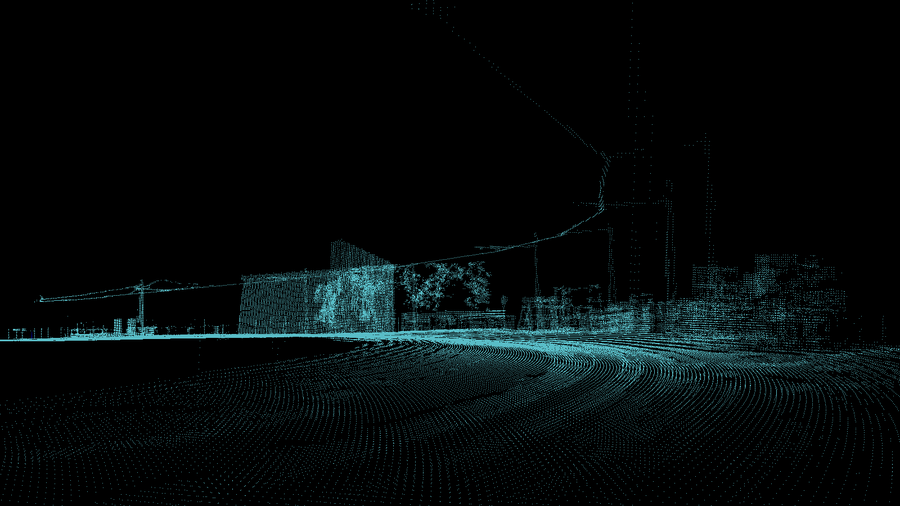
Punktewolke einer vermessenen Infrastruktur.
Zur Ermittlung der maximal möglichen Abmessungen eines Neufahrzeugs ist die Vermessung des Lichtraums im gesamten Schienennetz notwendig. Zu diesem Zweck sollen LIDAR-Sensoren an der Front des Trägerfahrzeugs angebracht werden, mit welchem die Abstände zu benachbarten Objekten während der Fahrt gemessen werden können. Eine spezielle Herausforderung im urbanen Bereich liegt dabei in der Behandlung von kleinen und dynamischen Objekten. Während zahlreiche kleine Objekte wie Geländer oder Masten bei der Abtastung der Umgebung nicht übersehen werden dürfen, müssen dynamische Objekte, wie beispielsweise Fußgänger, Autos, Fahrradfahrer oder auch Laub, vor der Bestimmung des verfügbaren Lichtraums rechentechnisch entfernt werden. Auch muss für die Erstellung des ortsfesten Lichtraumprofils die Position jeder Messung mit Zentimetergenauigkeit bekannt sein, selbst wenn temporär keine Ortungsdaten von Satelliten empfangen werden können.