
Forschungsprojekte
Inhaltsverzeichnis
„Wir modellieren dynamische Systeme, um mit Hilfe von Simulationen bessere Maschinen, Fahrzeuge, Roboter und Drohnen entwerfen und bauen zu können“
Robotik
Seit 2018 entwickelt sich die Robotik zu einem Forschungsschwerpunkt an der Professur für Dynamik und Mechanismentechnik. Der Fokus liegt dabei auf der Auslegung, Modellierung und Regelung von Robotern, basierend auf der Kinematik und Dynamik der Systeme. Der Schwerpunkt unserer Forschungsarbeit liegt in der Flugrobotik und Seilrobotik.
Flugrobotik
Im Bereich der Flugrobotik liegt das Hauptaugenmerk auf der Entwicklung vollaktuierter Flugroboter zur Durchführung von Manipulationsaufgaben („Aerial Manipulation“) unter physikalischem Kontakt zur Umgebung. Um die hohen Präzisionsanforderungen vieler Anwendungen zu erfüllen, werden taktile Navigationsansätze erprobt. Weiter ist unsere Forschung gekennzeichnet durch:
Flugrobotik
- Standardisierte GNC-Entwicklung durch Model-Based Design
- Lastraumbasierte Auslegung von Hardwarekonfigurationen
- Präzise Modellierung des Flugverhaltens
- Genaue Schätzung der Manipulationslasten
- Flugversuche im In-House Fluglabor
Seilrobotik
Seilroboter stellen eine besondere Klasse parallelkinematischer Systeme dar, bei denen flexible Seile anstelle von starren Verbindungselementen verwendet werden. Unser Forschungsschwerpunkt liegt auf der Entwicklung hochflexibler Seilrobotersysteme, die durch eine modulare Systemarchitektur gekennzeichnet sind. Wir haben mehrere Demonstratoren verschiedener Konfigurationen umgesetzt und erfolgreich getestet. Unsere Forschung konzentriert sich dabei auf folgende Themenbereiche:
Demonstrationsseilroboter
- Modellierung des Systemverhaltens
- Optimierung des Arbeitsraums
- Anwendungsspezifische Reduzierung der Hardwarekomplexität
- Entwicklung leistungsfähiger Steuerungskonzepte


Schienenfahrzeugtechnik
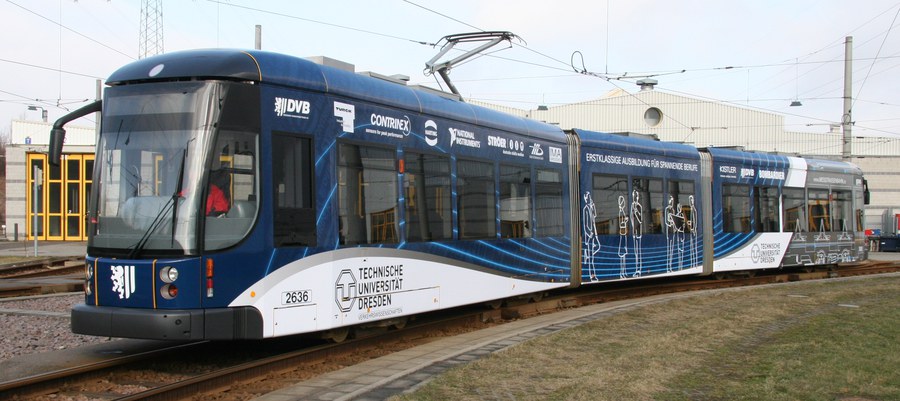
Die Simulation des dynamischen Verhaltens ist zentraler Bestandteil im Entwicklungsprozess von Fahrzeugen, um inbesondere Informationen über die im Betrieb auftretenden Lasten sowie die für den Fahrkomfort relevanten Beschleunigungen zu erhalten. Sie spielt auch im Bereich der Schienenfahrzeuge mit hohen Sicherheitsanforderungen und teuren Prototypen eine entscheidende Rolle. Neben der Anwendung im Entwicklungsprozess ergeben sich zunehmend Anwendungen für die simulationsgestützte Analyse über die gesamte Lebensdauer im Kontext der Instandhaltung. Die Professur für Dynamik und Mechanismentechnik (DMT) verfügt über langjährige Erfahrungen auf dem Gebiet der Mehrkörpersimulation und der fahrdynamischen Berechnung von Schienenfahrzeugen
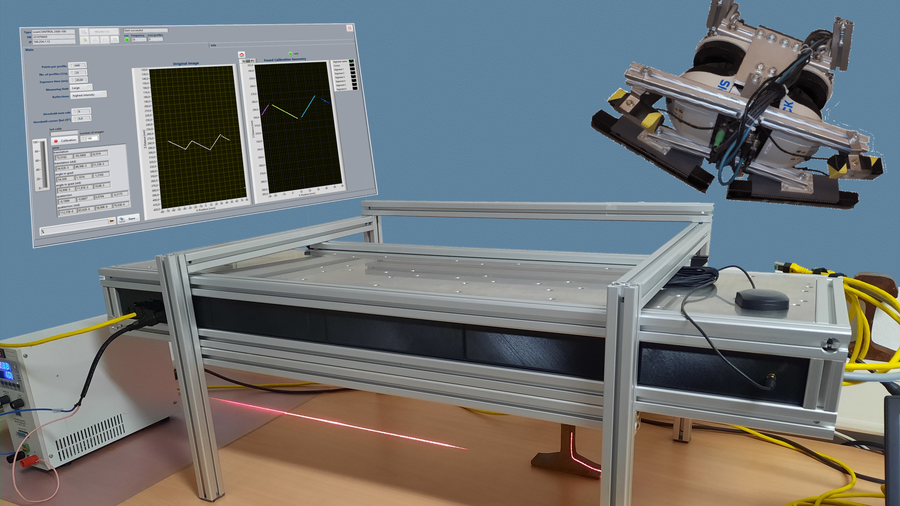
In Fortführung der Aktivitäten der ehemaligen Professur für Fahrzeugmodellierung und -simulation an der Fakultät Verkehrswissenchaften „Friedrich List“ ist die Entwicklung und Anwendung fortschrittlicher Simulationsmethoden wesentlicher Bestandteil des Lehr- und Forschungsprofils der Professur. Disziplinen der Strukturdynamik, Akustik und Energiesimulationen werden in verschiedenen Forschungsprojekten im Kontext der Schienenfahrzeugtechnik bearbeitet. Das Fachgebiet der Messtechnik ergänzt das Profil zur Gewinnung von wertvollen Kenntnissen über die Systeme von Fahrzeug und Fahrweg u.a. durch Rad-, Gleis- und Umfeldvermessung. Ferner rückt die Entwicklung von digitalen Zwillingen z. B. zur Radprofilpflege zunehmend in den Fokus.
Untersuchung des Schwingungsverhaltens der Oberleitung bei mehreren Stromabnehmern
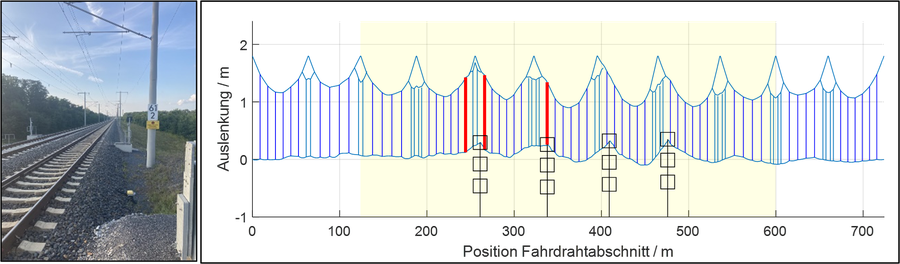
Schwingungsverhalten der Oberleitung im Projekt DYNOLA


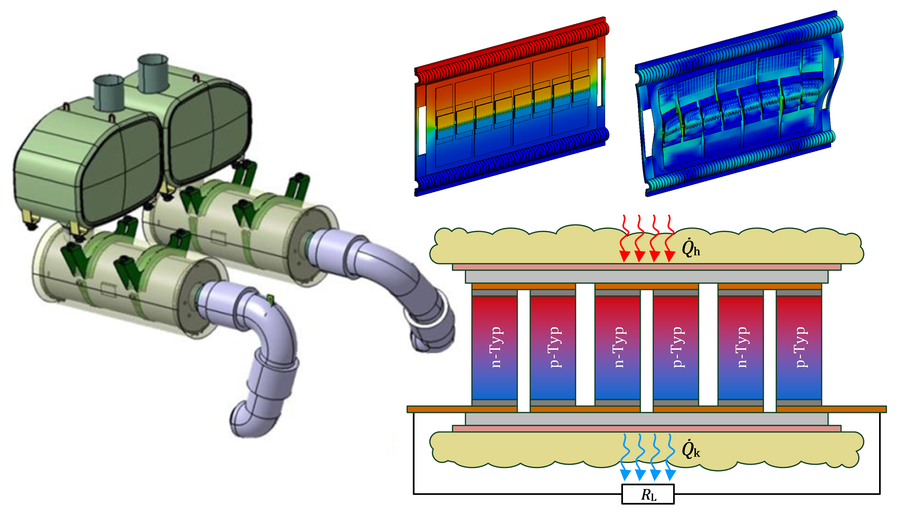

- Entwicklung und Optimierung von Systemen zur effizienten Steuerung und Nutzung von Energieflüssen in Schienenfahrzeugen
- Untersuchung von Methoden zur Rückgewinnung und Nutzung von Abwärme, insbesondere aus Antriebsverlusten und der Leistungselektronik
- Analyse der thermischen Anforderungen an Komfort und Energieeffizienz im Fahrgastraum
- Einsatz von Simulationen (Modelica) zur Auslegung und Bewertung von Komponenten und Gesamtsystemen
- Bewertung von Maßnahmen zur Steigerung der Energieeffizienz
- Beitrag zu nachhaltigen Mobilitätskonzepten und zur Erreichung von Klimaschutzzielen im Schienenverkehr
Bearbeiter: Dipl.-Ing. Alex Swesdarov
Textilmaschinen
Zu einem weiteren Schwerpunkt der Professur hat die Dynamik von Textilmaschinen entwickelt. Ein besonderes Augenmerk liegt dabei auf dem dynamischen Verhalten von Fäden. In Rahmen von mehreren Projekten wird diese Eigenschaft mithilfe numerischer Dynamiksimulation untersucht. Dafür werden verschiedene existierende numerische Simulationsansätze und Verfahren mit neu Entwickelten Modellierungskonzepten kombiniert. Die Projekte finden in Kooperation mit dem Institut für Textilmaschinen und Hochleistungswerkstofftechnik (ITM) statt und werden von der Deutschen Forschungsgemeinschaft (DFG) finanziert. Themen sind:
- Dynamikmodelle von Textilmaschinen
- Simulation von stationären und instationären Betriebszuständen
- Nichtlinear elastische Modellbildung von Garnen
- Hochdynamische Simulation von Maschinen-Garn Interaktion
Ziel des Projekts ist es, das dynamische Verhalten eines Hochgeschwindigkeits-Ringspinnverfahrens mit einem Drallerteilungssystem mit supraleitendem Magnetlager (SMB) zu untersuchen. Das Ringspinnen ist ein Verfahren, das schon lange in der Textilindustrie zur Herstellung von feinem Garn eingesetzt wird. Beim herkömmlichen Ringspinnen gibt es jedoch Geschwindigkeitsbeschränkungen aufgrund der Reibung in den Ring-/Reisekomponenten, wodurch Wärme entsteht, die zu Garnbrüchen und einer geringeren Produktionsqualität führt. Daher werden neue Technologien untersucht, wie beispielsweise die Implementierung eines Drallerteilungssystem, das eine Erhöhung der Spindeldrehzahl auf bis zu 50.000 U/min ermöglicht.
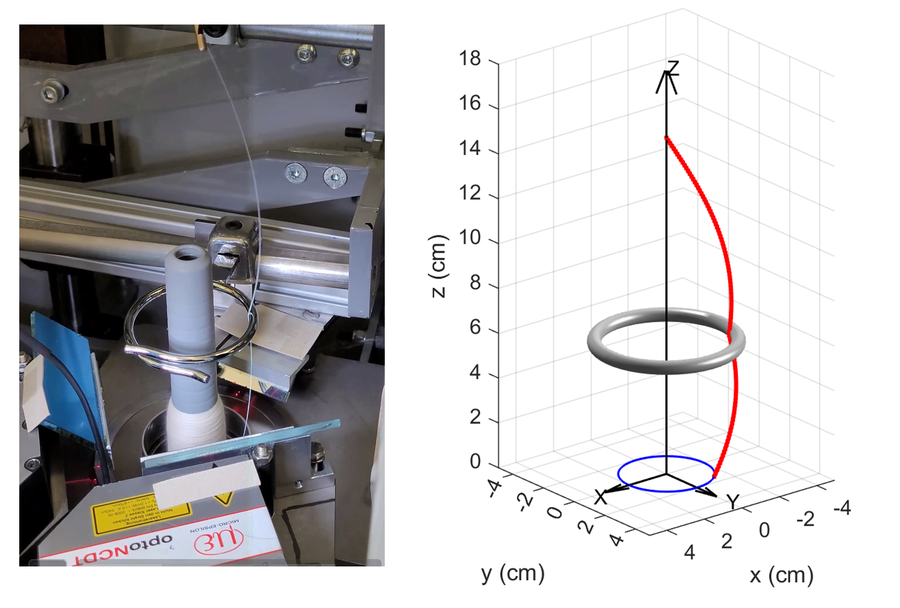
Am Lehrstuhl für Dynamik und Mechanismusdesign werden mathematische Modelle für die dreidimensionale Bewegung entwickelt. Die Dynamik des magnetisch schwebenden Permanentmagnetring wird simuliert und in realen Experimenten validiert, wobei die Position und Ausrichtung mit Lasersensoren gemessen wird. Der während des Spinnens entstehende Garnballon wird sowohl im transienten als auch im stationären Zustand simuliert, wobei die Auswirkungen des Luftwiderstands und des Kontakts mit dem Steuerring berücksichtigt werden.
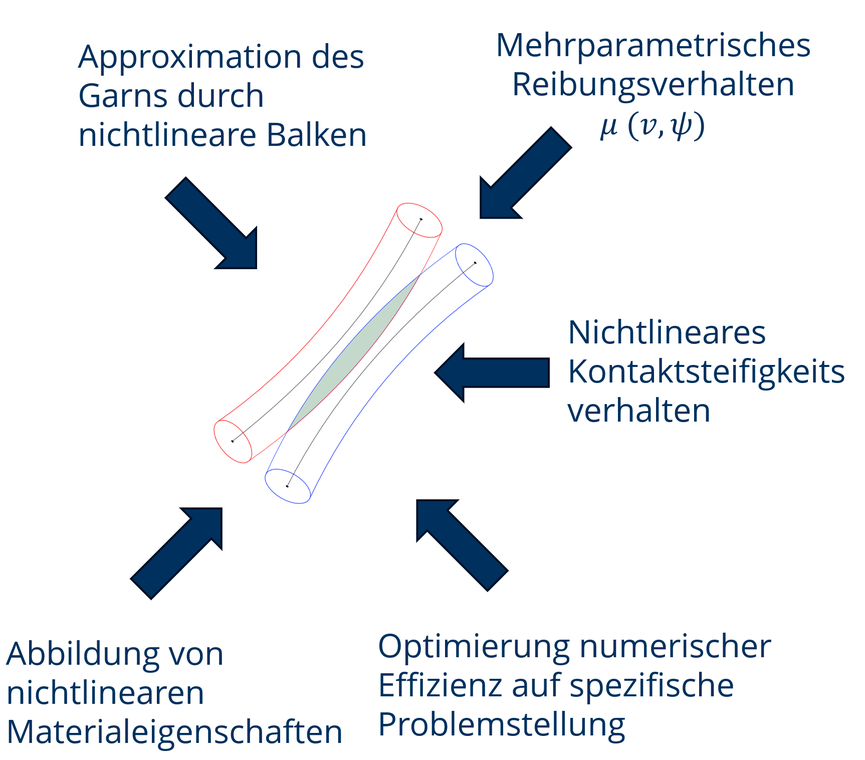
Aspekte des Projekts
Das Hochleistungskettwirken stellt ein maschenbildendes Textilherstellungsverfahren dar. Die Arbeitsgeschwindigkeit ist aufgrund von Garnversagens auf ca. 73 Arbeitszyklen pro Sekunde begrenzt. Im Rahmen des DFG Forschungsprojektes „Analyse und Modellierung von kurzzeitdynamischen Garnverarbeitungsprozessen am Beispiel des Hochleistungskettenwirkens“ wird das dynamische Verhalten des Garnes simulativ untersucht.
Bearbeiter: Dipl.-Ing. Jan Schröder

Sonstiges
In diversen weiteren Projekten an der Professur für Dynamik und Mechanismentechnik wurde und wird die Fachkompetenz bei Modellierung und Messung an dynamischen Systemen eingebracht.

