
27.03.2026
20 Jahre Zusammenarbeit: TU Dresden und Rolls-Royce feiern Jubiläum ihres University Technology Centre
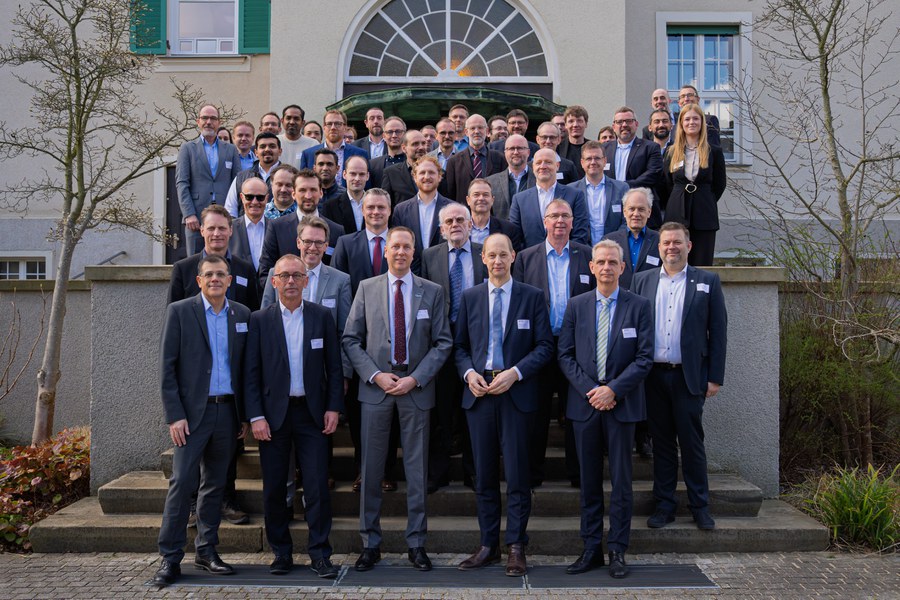
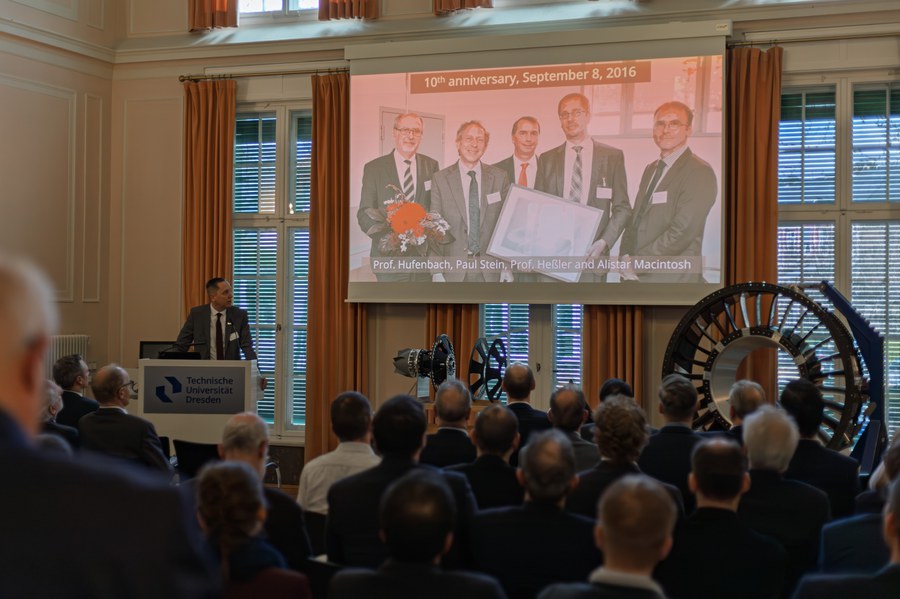
Die Entwicklung leichter, effizienter und zugleich robuster Triebwerksstrukturen gehört zu den zentralen Herausforderungen der Luftfahrt. Diesen Fragestellungen widmet sich das gemeinsame University Technology Centre (UTC) "Lightweight Structures and Materials and Robust Design" der TU Dresden und Rolls-Royce seit nunmehr 20 Jahren. Das Jubiläum wurde im Rahmen eines Festkolloquiums in Dresden begangen. Vertreter:innen der beteiligten Institute der TU Dresden sowie von Rolls-Royce kamen zusammen, um die Ergebnisse zu diskutieren und Perspektiven der weiteren Zusammenarbeit zu entwickeln.
Das UTC wurde 2006 an der TU Dresden eingerichtet und ist Teil des globalen Netzwerks von Rolls-Royce, das langfristige Forschungskooperationen mit ausgewählten Universitäten bündelt.
Am UTC Dresden arbeiten folgende Institute zusammen: das Institut für Leichtbau und Kunststofftechnik (ILK), das Institut für Strömungsmechanik (ISM), das Institut für elektrische Energieversorgung und Hochspannungstechnik (IEEH), das Institut für Maschinenelemente und Maschinenkonstruktion (IMM) sowie das Institut für Werkstoffwissenschaft (IfWW). Die Partnerschaft baut dabei auf eine bereits seit 1994 bestehende Zusammenarbeit zwischen Rolls-Royce und der TU Dresden auf und hat sich zu einer etablierten Schnittstelle zwischen universitärer Forschung und industrieller Entwicklung entwickelt. Die wissenschaftliche Leitung des UTC Dresden liegt bei Prof. Dr. Maik Gude, der zugleich das Institut für Leichtbau und Kunststofftechnik (ILK) verantwortet.
Im Zentrum des UTCs stehen dabei Leichtbau, Werkstoff- und Komponentenentwicklung sowie die robuste Auslegung von Triebwerksstrukturen. Dies sind genau jene Bereiche, die Effizienz, Lebensdauer und Zuverlässigkeit moderner Antriebssysteme maßgeblich bestimmen.
Charakteristisch für das UTC Dresden ist die enge Verzahnung von industriellen Entwicklungsbedarfen und wissenschaftlicher Methodik. Industrierelevante Problemstellungen werden frühzeitig in die Forschung integriert, dort methodisch weiterentwickelt und anschließend in die Anwendung zurückgeführt.
Ein Beispiel hierfür ist das Projekt PEP4.0. Im Mittelpunkt steht die digitale Verknüpfung des Produktentstehungsprozesses komplexer Leichtbaustrukturen sowie die systematische Verbesserung der Zusammenarbeit zwischen unterschiedlichen Disziplinen Konstruktion, Strukturnachweis und Fertigung. Dadurch lassen sich Entwicklungszeiten verkürzen, Abstimmungsaufwände reduzieren und gleichzeitig die Qualität der Bauteilauslegung steigern. Die im Rahmen des UTC entwickelte Methodik wurde mit einem Innovationspreis ausgezeichnet und zeigt exemplarisch, wie digitale Entwicklungsansätze zur Gewichtsreduktion und Effizienzsteigerung von Triebwerkskomponenten beitragen.
© University of Bristol/UTC
Die Zusammenarbeit zwischen Rolls Royce und der TU Dresden wirkt zudem unmittelbar in die Ausbildung hinein. Studierende und Promovierende arbeiten im UTC Dresden an konkreten industriellen Entwicklungsfragen und gewinnen früh Einblick in reale Anwendungszusammenhänge. Für viele eröffnet sich dadurch ein direkter Einstieg in internationale Industrie- und Forschungsumfelder und damit eine klare Perspektive für den weiteren beruflichen Werdegang. Gleichzeitig stärkt die Einbindung in das globale UTC-Netzwerk mit Partnern wie University of Oxford, University of Bristol, Imperial College London und Queen’s University Belfast die internationale Sichtbarkeit und schafft zusätzliche Qualifikations- und Austauschmöglichkeiten. Gleichzeit arbeitet das UTC Dresden eng den weiteren deutschen UTCs in Cottbus und Darmstadt zusammen.
Auch für den Innovationsstandort Sachsen entfaltet das UTC konkrete Wirkung. Kooperationen mit Unternehmen wie East4D Carbon Technology, Connova, HighTex sowie den ILK-Ausgründungen Herone und Leichtbau-Zentrum Sachsen GmbH (LZS) ermöglichen es, neue Leichtbaukonzepte, Fertigungsansätze und Entwicklungsmethoden frühzeitig in industrielle Anwendungen zu überführen. Gleichzeitig entstehen dadurch hochqualifizierte Arbeitsplätze und nachhaltige Wertschöpfung in der Region.
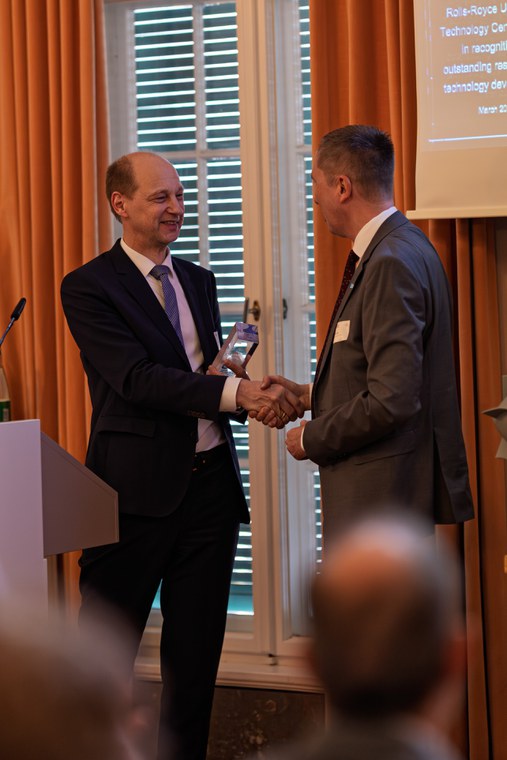
Nach zwei Jahrzehnten zeigt das UTC Dresden, wie eine langfristig angelegte Partnerschaft zwischen Industrie und Universität funktionieren kann: mit klar definierten Forschungsfeldern, belastbaren Ergebnissen und einer engen Verzahnung von Forschung, Anwendung und Qualifizierung. In diesem Sinne steht das UTC exemplarisch für den Anspruch der TU Dresden, wissenschaftliche Exzellenz mit internationaler Kooperation und wirksamem Technologietransfer zu verbinden. Mit Blick auf die kommenden Jahre wird die enge Zusammenarbeit weiter an Bedeutung gewinnen – insbesondere vor dem Hintergrund steigender Anforderungen an Effizienz, Nachhaltigkeit und Systemintegration. Das UTC Dresden steht damit auch künftig für eine Partnerschaft, in der wissenschaftliche Kompetenz und industrielle Erfahrung gezielt zusammengeführt werden, um Innovationen in die Anwendung zu bringen.
Kontakt
 © Diana Wolfrum/ILK
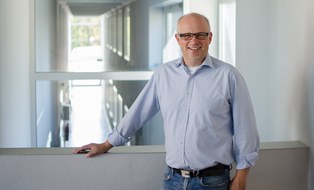
Dr.-Ing. Albert Langkamp
Geschäftsführer
Eine verschlüsselte E-Mail über das SecureMail-Portal versenden (nur für TUD-externe Personen).
Postanschrift:
Institut für Leichtbau und Kunststofftechnik / UTC Dresden, Etage 2, 264a Holbeinstr. 3
01307 Dresden
Deutschland