
Jun 10, 2026
Strengthening Sustainable Aviation Technologies in Eastern Germany through European Collaboration
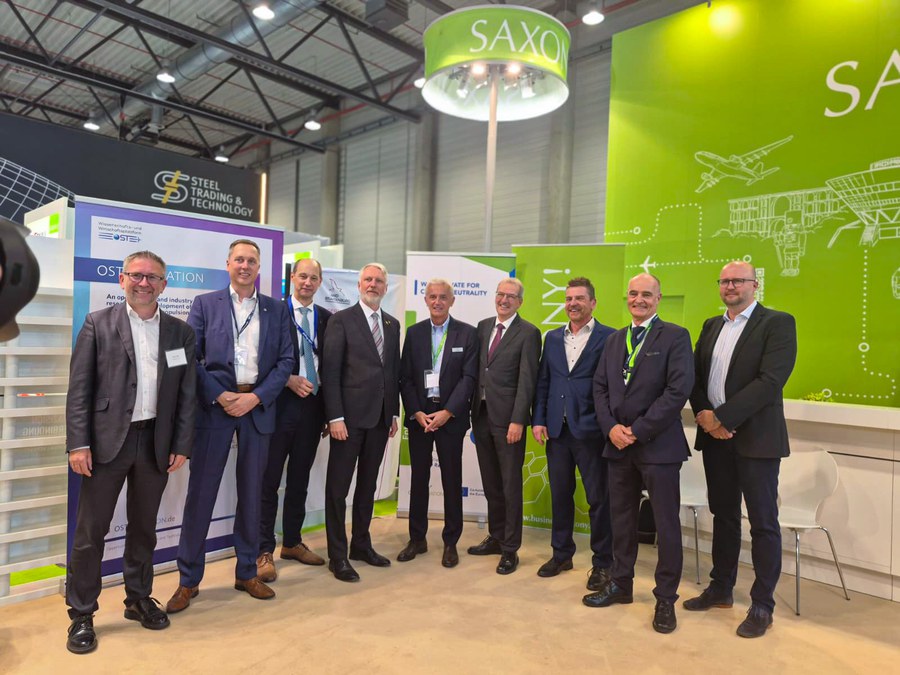
With the signing of a Memorandum of Cooperation (MoC) between the State of Brandenburg, the Free State of Saxony, and the European Clean Aviation Joint Undertaking at the ILA Berlin 2026, the collaboration on sustainable aviation technologies in Eastern Germany has gained a new European dimension. The agreement aims to advance the development of low-emission aviation technologies while fostering collaboration between European, national, and regional stakeholders.
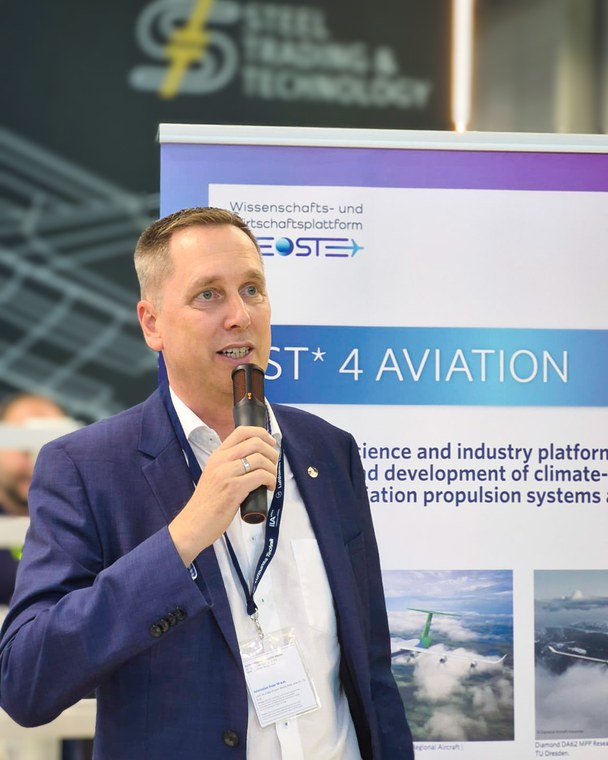
ILK Director of the institute Prof. Dr.-Ing. Maik Gude
For the Institute of Lightweight Engineering and Polymer Technology (ILK) at TU Dresden, this agreement marks a significant milestone. As one of the co-initiators of the OST4Aviation research network, the ILK brings together the expertise of TU Dresden, BTU Cottbus, TU Berlin, the German Aerospace Center (DLR), and other partners from industry and academia. Together, these partners are developing cutting-edge technologies to pave the way for climate-neutral aviation. The focus lies particularly on hybrid-electric regional aircraft, ultra-efficient short- and medium-haul aircraft, and hydrogen-powered aviation systems.
The Lusatia region plays a pivotal role in this endeavor. Significant investments are already being made in projects such as AERO-Lausitz, CircEcon, chesco, the PTX Lab, and the Smart Mobility Lab, all of which contribute to sustainable aviation concepts within the OST4Aviation initiative. A cornerstone of this research cluster is the joint research aircraft of ILK and the Institute of Aerospace Engineering (ILR), a Diamond Aircraft DA62 MPP, based in Kamenz, Lusatia. Under the EU-funded project FoFlu, this aircraft serves as a flying laboratory for the development, integration, and validation of fossil-free propulsion technologies, including electric motors, hydrogen fuel cells, and hybrid propulsion systems.
This collaborative ecosystem is positioning Lusatia as a recognized European innovation hub for sustainable mobility and aviation. At the same time, the initiative aims to boost the competitiveness of small and medium-sized enterprises, create jobs, and provide qualifications for a climate-neutral aviation industry. The federal states of Brandenburg and Saxony actively support this transformation by expanding modern research and innovation infrastructures, contributing to the structural development of the region.
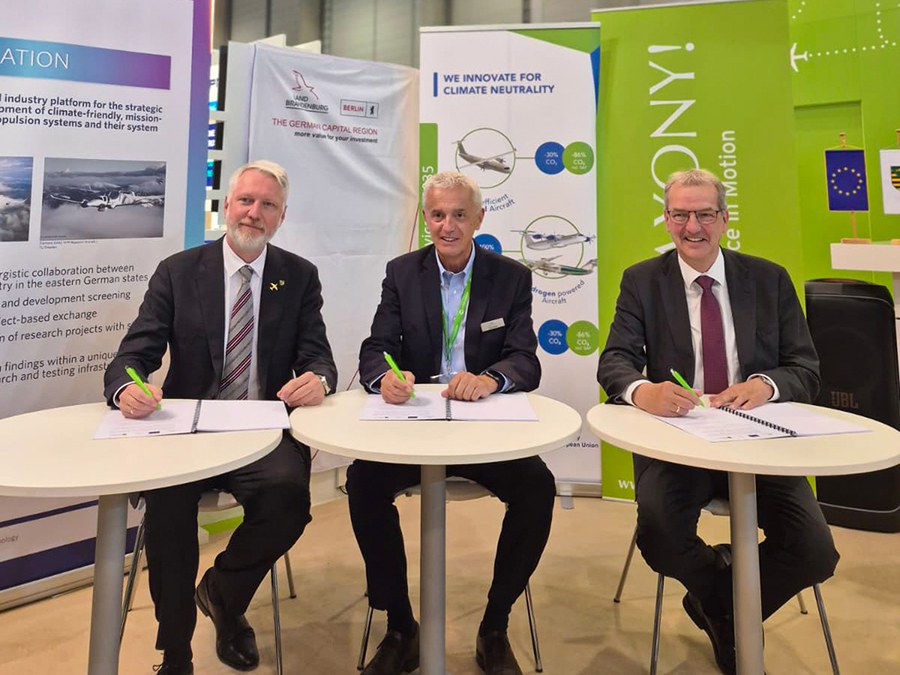
From left to right: State Secretary Sebastian Scheel, Axel Krein, and State Secretary Hendrik Fischer signing the Memorandum of Cooperation.
"The signing of this memorandum is a key step forward for the aviation regions of Brandenburg and Saxony. Together with the Clean Aviation Joint Undertaking, we can accelerate the development of low-emission aviation technologies and further establish our regions as strong European innovation centers," explained Hendrik Fischer, State Secretary at the Ministry of Economic Affairs, Energy, Climate Protection, and Europe of the State of Brandenburg.
Sebastian Scheel, State Secretary at the Saxon State Ministry for Economic Affairs, Labor, Energy, and Transport, also emphasized the importance of this agreement: "Aviation is a global industry that demands trust and long-term investment to achieve sustainable success. With this joint declaration of intent, we aim to provide companies and research institutions with the opportunity to establish themselves as vital contributors to a sustainable European aviation sector. This will enable them to develop, test, and bring to market the technologies of tomorrow. Structural transformation regions, along with their emerging research and industrial centers, stand to benefit significantly from this collaboration."
Axel Krein, CEO of Clean Aviation, added: “Many aerospace companies and research institutions based in Brandenburg and Saxony are pioneers in the field of clean technology innovation. They play a key role in the design, development and production of a new generation of environmentally friendly and globally competitive aircraft. At Clean Aviation, we welcome this Memorandum and are delighted to elevate our collaboration with this European high-tech region to a new level. By doing so, we can bring together regional and European expertise, capabilities and resources to strengthen the competitiveness and sustainability of the European aviation sector.”
The cooperation strengthens Lusatia and Eastern Germany’s position as a European model region for climate-friendly aviation technologies. For the ILK, it also opens new opportunities to align regional research initiatives with the strategic goals of the European Clean Aviation research program. This step is seen as vital for actively shaping the technological transformation of aviation and sustainably enhancing the international visibility of the region as a research and innovation hub.
About the Clean Aviation Joint Undertaking
The Clean Aviation Joint Undertaking is the European Union’s research and innovation program for aviation. Its mission is to develop new technologies that will reduce CO₂ emissions by at least 30% for short- and medium-haul aircraft and by 50% for regional aircraft. Through its strategic initiatives, Clean Aviation aims to revolutionize the aviation sector and contribute significantly to the EU’s climate goals.