
Aug 03, 2026
X-Garden AeroLab VOL. 2 – A Week for Aviation Pioneers in Bautzen
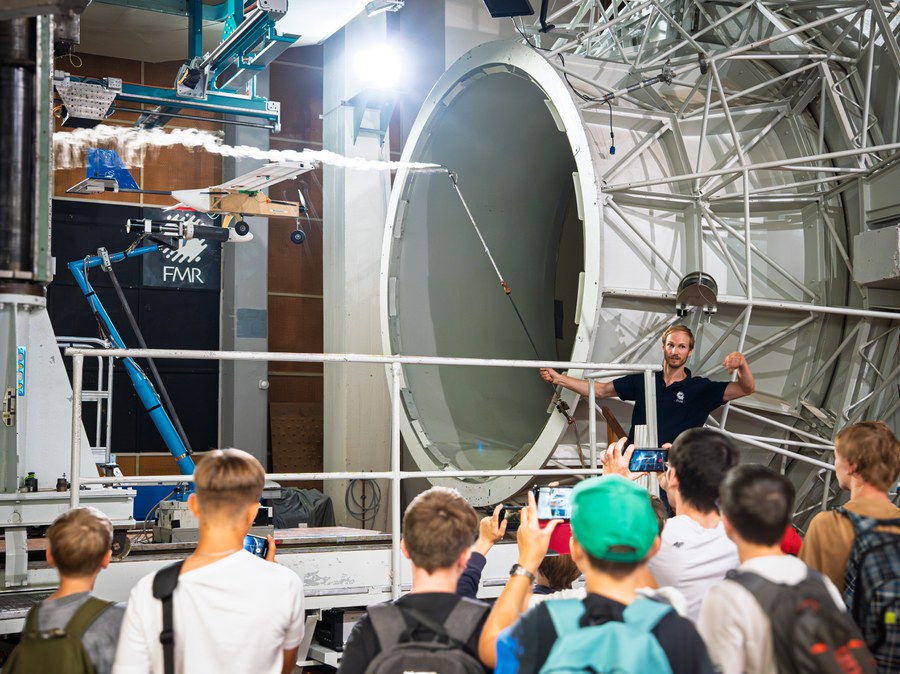
Bautzen, July 26 – August 2, 2026. For one week, the DJH “Gerberbastei” youth hostel in Bautzen was all about Design.Build.Fly.: As part of the German-Polish summer student camp AeroLab VOL. 2, part of the Interreg project X-Garden run by the Institute of Lightweight Engineering and Polymer Technology (ILK) at TUD Dresden University of Technology, 30 students aged 11 to 18 transformed the historic defense tower into a real aircraft workshop. From their own designs through construction to the final flight day, the young aspiring engineers from the Lusatia-Poland border region went through the entire process of an aviation project—across borders, hands-on, and with plenty of enthusiasm for flying.
After arriving on Sunday, the participants got in the mood for the week with team-building activities, a tour of Bautzen, and their first challenge—the “paper airplane with the longest flight time.” A brief introduction addressing the key question “Why does an airplane fly?” kicked off the program.
The subsequent project work got down to business: Working in groups, the young people each designed, built, and tested their own 3D-printed, electrically powered, remote-controlled model airplane, while also conducting specialized technical analyses. Tried-and-true models from the aviation community served as the basis for the designs, including the Pico Talon and the FT Mighty Mini Mustang. At the same time, in individual assignments, each participant designed their own model airplane out of foam—from cutting the pieces to the finished, balanced aircraft.
The scientific highlight was the X-Garden AeroLab workshop, where the physics of flight became tangible in the truest sense of the word. At various stations, the groups examined the balance of forces and weight distribution on the aircraft, experimentally determined lift in aerodynamics, calculated thrust, and measured the performance of the entire propulsion system. A VR flight simulator also allowed participants to step into the cockpit themselves. The day was rounded out with creative projects using a laser cutter and 3D printer.
The field trip to TU Dresden demonstrated that research extends far beyond the camp: During visits to the ILK and the Institute of Aerospace Engineering (ILR), the young people gained exclusive insights into current research and modern manufacturing technologies.
The big moment came on flight day at the KLIX airfield near Bautzen: Here, the aircraft they had built themselves took to the skies. The young pilots were supported by experienced glider pilots from the local club, who expertly flew the models and offered valuable tips. The eventful day came to a close with a barbecue at the airfield. The final session on Sunday served as an opportunity to collectively evaluate the project work, individual tasks, and workshops.
A heartfelt thank you goes out to everyone who made this cross-border camp possible: the DJH Bautzen “Gerberbastei” Youth Hostel for its warm hospitality, the glider pilots at the KLIX airfield for their active support on flight day, and our colleagues from the Institute of Aerospace Engineering at TUD for their dedicated organization and cooperation. Special thanks go to the students from Germany and Poland for their curiosity, team spirit, and enthusiasm—they turned a week in Bautzen into an unforgettable aviation adventure.