
What is Flight Control?


The Fascination of Flight Control
- Manipulation of technical systems in a targeted manner to achieve the desired behavior
- Detailed insights into the structure and operation of the entire system
- Diverse activities ranging from software development to hardware integration
- Applied mathematics with immediate results
Flight Control: An Example
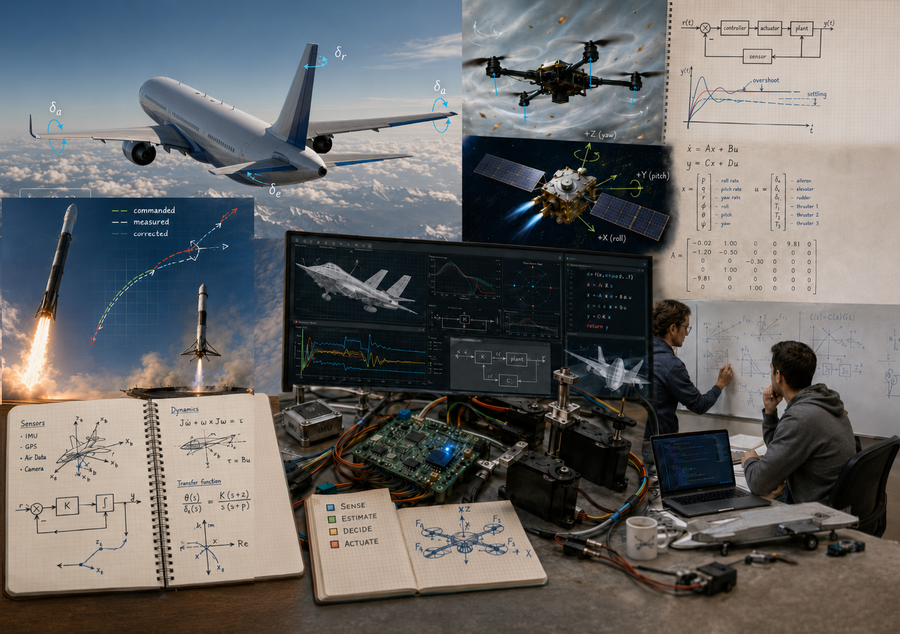
Designing a flight controller involves interaction with many interesting disciplines, which provides a solid understanding of the overall system. The various steps are illustrated using a successfully completed research project as an example.
1. Mission
UrbanCondor
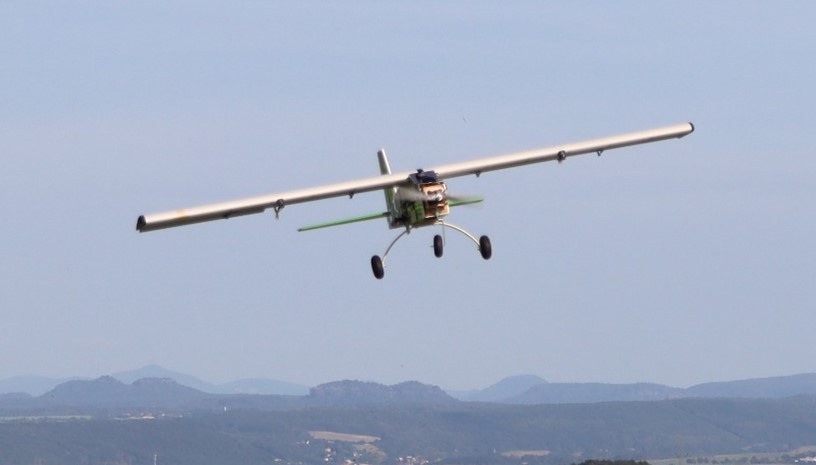
In the Chair’s UAV laboratory, the Urban Condor was built —an aircraft with a wingspan of just under 2 meters, a maximum speed of 130 km/h, and a payload capacity of up to 2 kg. The goal is now to design an autolander that enables the aircraft to land fully autonomously without any pilot input.
2. Modeling
Simulink Modell
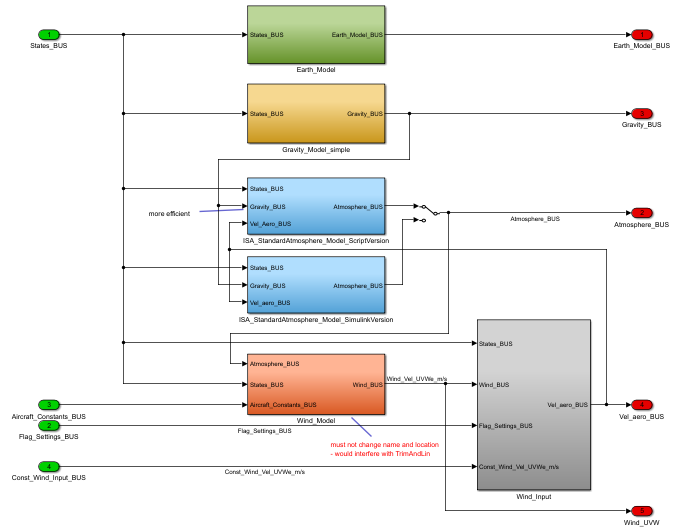
The modern design process is conducted entirely digitally. A model of the overall problem is created in MATLAB/Simulink, the industry standard for control engineering in aerospace. The aerodynamics of the wings and control surfaces, environmental influences such as wind, and the aircraft’s dynamics are modeled realistically using equations of motion for the aircraft. Exact numerical values, such as aerodynamic coefficients, are determined through system identification, either via experiments in the Chair’s wind tunnel or through flight tests.
3. Controller Design
Block Diagramm Regelkreis
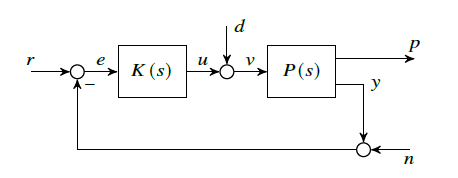
Controller design involves deriving a mathematical law that calculates the required deflection of the control flaps (control signal) in order to maneuver the aircraft as desired. This calculation is based on the difference between the aircraft's current trajectory (actual value) and the planned landing trajectory (reference value). The design takes into account the specific dynamics of the UrbanCondor to ensure a wide range of functional requirements, such as the stability of the controlled system.
4. Robustness
A key focus of the Chair is robust control, in which specialized theoretical approaches and mathematical methods are applied to controller design. Robustness means that our controller continues to perform its task and does not endanger the aircraft even when disturbances (e.g., wind) occur or the mathematical model deviates from the real aircraft. The robustness of the controller is investigated using nonlinear simulation campaigns or probabilistic methods.
5. Flight Tests
Finally, of course, we want to see the finished controller in action and test the performance on the real system. The control law isloaded onto the UrbanCondor hardware, and flight tests are then conducted by staff members of the Chair. The successful landing can be seen in the video. As you can see, the aircraft performs a landing completely autonomously without any intervention from the pilot.