Master's in Resource-Efficient Manufacturing and Materials
Expected to begin in the 2027–2028 winter semester
Resource-Efficient Materials and Sustainable Manufacturing
How can materials and manufacturing processes be designed to use materials and energy as efficiently as possible? And how can products and production processes be made more sustainable while retaining their technical capabilities?
The English-language master’s program in Resource Efficient Manufacturing and Materials combines manufacturing engineering and Material Science/Engineering with a special focus on resource efficiency and sustainability. The program centers on the interplay between materials and their properties and modern manufacturing technologies.
You will explore how materials and energy can be used efficiently in industrial processes, how materials can be designed to be recyclable, and how manufacturing processes can be optimized sustainably. In doing so, technical, environmental, and economic requirements are considered together. In addition to topics such as the circular economy and recycling, digitalization, process optimization, and modern modeling and simulation methods also play an important role. You will learn to analyze complex technical problems holistically and to develop resource-efficient solutions for materials, products, and manufacturing processes.
What to Expect from the Program
The four-semester master’s program is application-oriented and combines in-depth knowledge of manufacturing engineering and Material Science/Engineering with the development of an individualized professional profile.
In the first two semesters, you’ll deepen your knowledge in the core areas of the degree program. These include, among others, resource-efficient materials, sustainable and energy-efficient manufacturing processes, materials characterization, process and quality management, as well as process optimization and digitalization.
In addition, you will explore current manufacturing technologies and methods, such as additive manufacturing, joining technologies, modeling, simulation, and data-driven analysis. The circular economy, recycling, and the resource-efficient design of products and processes are also integral parts of the program.
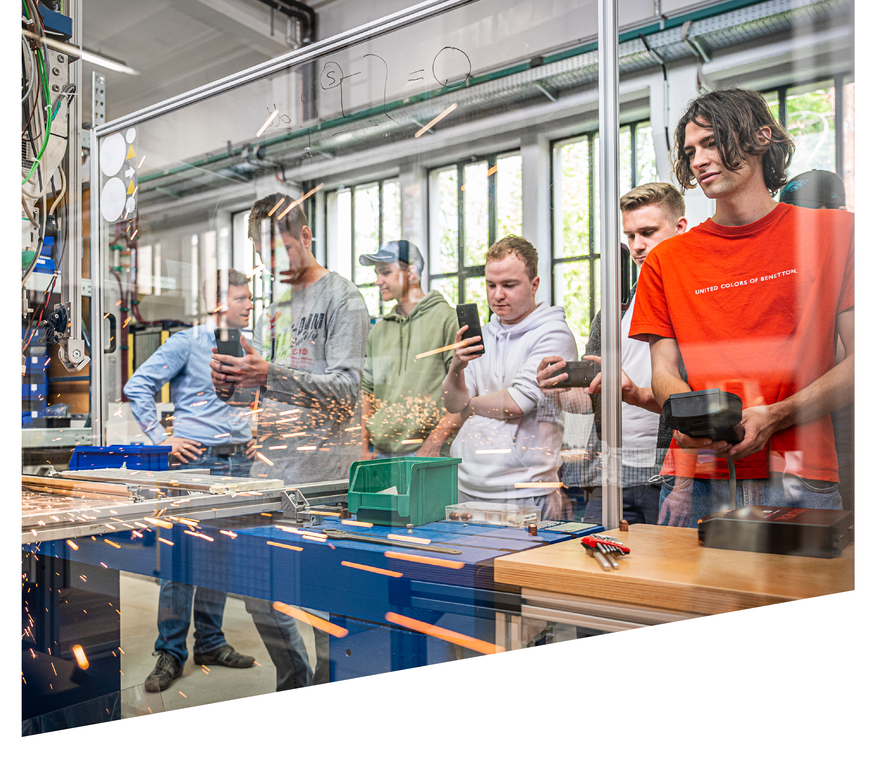
Project-based, laboratory, and seminar formats allow you to apply your knowledge to practical and research-oriented problems. In the process, you’ll develop skills in scientific work, problem-solving, and interdisciplinary collaboration.
A special focus is placed on the research internship in the third semester. In this 15-LP module, you will independently work on a scientific or application-oriented project, applying the technical and methodological knowledge you have acquired.
The research internship can also be completed at an external research institution or abroad. As a result, the third semester offers you an integrated mobility window and the opportunity to gain practical or academic experience in a different setting.
The fourth semester is dedicated to the master’s thesis and the accompanying colloquium. Under academic supervision, you will work on a challenging, research-oriented project in the field of resource-efficient materials and manufacturing.
Individual Academic Profiles
The degree program does not prescribe fixed areas of specialization. Instead, you can tailor your studies through the required-elective modules to align with your interests and career goals. In doing so, you can combine content from manufacturing engineering and Material Science/Engineering and set different academic priorities.
Resource-Efficient Materials
You will study materials, their properties, and their evaluation from the perspective of resource efficiency. This also involves the development and evaluation of materials that are characterized, for example, by lower resource and energy consumption or improved recyclability.
Sustainable Manufacturing and Process Optimization
Here, you can explore modern manufacturing technologies and the optimization of industrial processes. Topics include energy-efficient manufacturing processes, process and quality management, and the analysis and optimization of production processes.
Circular Economy and Recycling
Another area of focus may be on how materials and products can be designed to conserve resources throughout their entire life cycle. This includes topics such as the circular economy, recycling, and resource-efficient product and process design.
Digitalization, Modeling, and Simulation
In addition, methods for the digital analysis and optimization of technical processes are available. These include, for example, modeling, simulation, and data-driven analysis, which can be used to investigate and improve materials and manufacturing processes.
Your Career Prospects
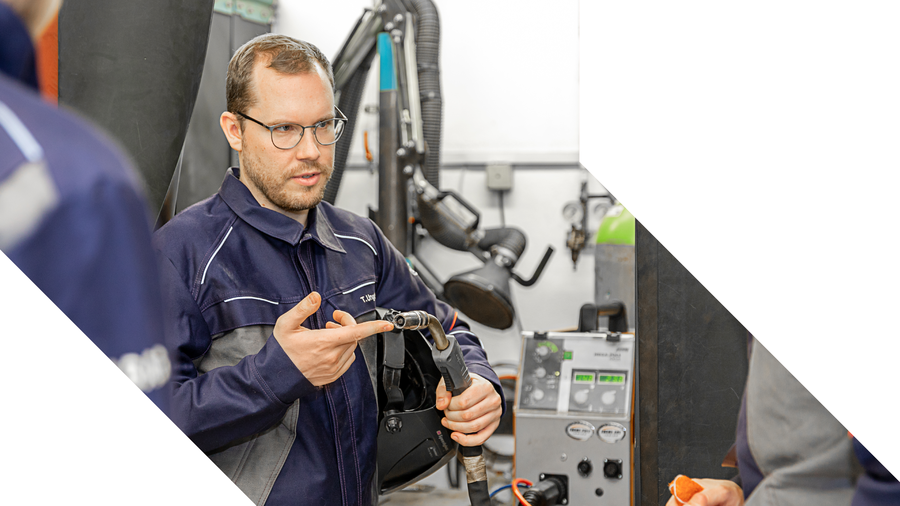
The master’s degree qualifies you for challenging technical, scientific, and industrial roles at the intersection of manufacturing engineering, Material Science, and resource efficiency.
For example, you can pursue a career in the following areas:
- Production Engineering
- Materials development and characterization
- Process and Quality Management
- Sustainability and Resource Efficiency Management
- Research and Development
- Engineering Firms
- Public Institutions
- Testing and Certification Bodies
By combining manufacturing and materials engineering, you will be prepared to independently tackle complex tasks in the development, optimization, and evaluation of resource-efficient materials, products, and manufacturing processes. Career opportunities are available in various industrial sectors as well as in national and international research and development settings. Positions at universities, research institutions, and other scientific organizations are also possible. The master’s degree also serves as the foundation for a Ph.D. and an academic career.
Application
The master’s program is expected to begin in the winter semester of 2027/28. All information regarding admission requirements, application deadlines, potential admission restrictions, and guidelines for international applicants will be published in the Student Information System (SINS) well in advance of the program’s start. Go to the Student Information System (SINS)
Applications are submitted online via the TU Dresden application portal.
Go to the online application
Contact
ServiceCenterStudium (general questions about studying)
℡ +49 351 463-42000
✉ scs@tu-dresden.de
🔗tud.de/scs
Academic Advising (subject-specific questions about the degree program)
✉ Studienberatung.mw@tu-dresden.de
To the Study Information System (SINS):
https://tud.de/sins