
Mar 13, 2026
Dr. Pyi Soe Aung from Myanmar
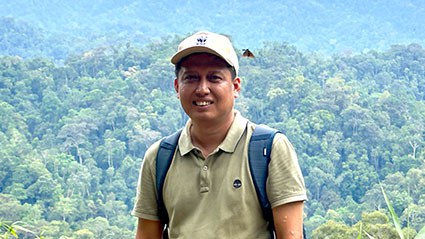
(interview from 2026)
Thomas Scheufler
Dr. Pyi Soe Aung from Myanmar works as Conservation Director of the WWF Myanmar Program, developing conservation strategies in the areas of wildlife, forest restoration, freshwater, climate, and inclusive conservation.
A brief statement about your studies at TU Dresden:
“I stay connected with TU Dresden by providing online guest lectures, co‑supervising master’s students conducting field research in Myanmar, and actively participating in alumni forums and events. My studies at TU dresden gave me strong academic foundations, an extensive international network, and opportunities for collaboration with researchers and practioners around the world. These experiences continue to support my professional work. They also helped me improve my understanding of international development cooperation in Myanmar, which has helped me successfully secure and deliver several conservation projects in my current role.”
|
Profile of |
Dr. Pyi Soe Aung |
|
Degree program |
Master in Tropical Forestry and Doctoral Programme in Forestry Science |
|
Faculty |
Faculty of Environmental Sciences |
|
Studienzeit |
M.Sc Tropical Forestry (2010 – 2012); Doctoral Programme (2015 – 2019) |
|
Current activity |
Conservation Director, WWF-Myanmar |
Why did you decide to study at TU Dresden?
I decided to study at TU Dresden because of the strong historical link between Germany and Myanmar’s forestry sector. In the 1956, a German forester namely Dr. Dietrich Brandis introduced modern forest management to Myanmar. As a forestry graduate from Myanmar, this history made me dream of studying postgraduate degrees in Germany. With its 200-year of history, the Institute of International Forestry and Forest Proucts in Tharandt had made a great reputation among the forestry professions globally. And many senior colleagues also shared their positive experiences studying there after completing their studies. These reputations have encouraged me to choose TU Dresden for my studies.
What factors drove you to choose your field of study?
My interest in forestry began during my high school days, when I first understood how quickly our forests were disappearing and how important they are for the health of our planet. I realised that protecting these forests was not just a scientific challenge but a responsibility to future generations. My love for nature also played a big role. I’ve always enjoyed hiking, exploring remote landscapes, and observing wildlife near our village. These experiences made me want to study forestry more seriously so I could contribute to conserving the forests that I enjoy a lot in my childhood days.
Who from research and teaching influenced you the most during your studies?
Of all the teachers I met during my studies, Prof. Jürgen Pretzsch, who founded the M.Sc programme in Tropical Forestry, had the strongest influence on me. He was not only my supervisor but also a mentor who shaped the way I think about tropical forestry. Through his lectures and discussions, he emphasized the interconnection between people and forests and the realities of working in tropical countries. He helped me see that forest management is not just about ecology; it is also shaped by policies, local livelihoods, culture, and long‑term social change. That mindset has stayed with me throughout my career.
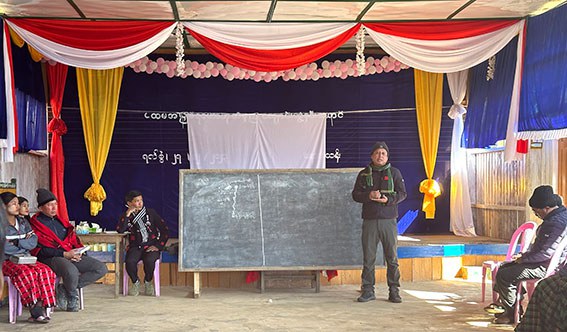
Community consultation for forest conservation at Nagaland Myanmar
Where are you employed today, and what are your responsibilities?
I currently work for the World Wide Fund for Nature (WWF), where I serve the Conservation Director for the Myanmar Programme. In this role, I lead the overall conservation strategy and oversee five key areas of work: wildlife conservation, forest restoration, freshwater governance, climate and energy, and inclusive conservation. Together, these programmes support Myanmar’s contribution to major global commitments such as the Sustainable Development Goals, the Global Biodiversity Framework, and the Paris Agreement on Climate Change. It is a challenging role, but it is also deeply meaningful because it allows me to directly contribute to protecting nature and improving the livelihoods of people in Myanmar.
What advice would you give to today's first-year students?
Being a student at TU Dresden is a great opportunity, and I would encourage students to make the most of it. It is important to stay curious, be open to learning new things, and not to be afraid to step outside the comfort zone. University life will come with challenges and frustrations, but those who keep going and continue to learn are the ones who grow the most. If you stay motivated and take the opportunities that come your way, your time at TU Dresden can truly shape your future.
What do you remember most fondly from your student days?
One of the things I remember most fondly from my student days is the strong bond I built with my international classmates. We came from different continents and backgrounds, but we shared the same challenges and joys. We studied together, supported each other during difficult times, and explored Dresden whenever we had the chance. Those friendships became one of the best parts of my life, and many of us still stay in touch today.
Where was your favorite place at university?
SLUB was my favourite place at the university. It was more than just a library for me. It was where my friends and I studied together, shared ideas, felt frustrated during exam times, and celebrated small achievements. I can still remember the library closing announcement that we hear at midnight. Even now, many years later, that sound still brings back memories of my student life in Dresden.
What do you still benefit from today/would you have liked more?
I continue to benefit from my time at TU Dresden in many important ways. The academic foundation I gained there still guides my work every day. The programme did not only teach theories, it helped me understand how forestry connects with people, policies and long‑term development. The international learning environment was also a major influence. Working closely with classmates from many countries taught me to appreciate different perspectives and to communicate across cultures, which is essential in my current role. Many of my classmates have now become long‑term partners and collaborators, and our shared experience in Dresden still brings us together in professional work. Another key benefit is the deeper understanding about German development cooperation and how German institutions work in Myanmar. This knowledge has helped me build stronger partnerships and confidently manage projects supported by German organisations. It has also played a big role in securing several conservation projects for WWF‑Myanmar in recent years. In many ways, the skills, networks and insights I gained at TU Dresden continue to shape my decisions and strengthen my work as a conservation leader today.
How do you manage a good career start in your industry?
There is no single formula for starting a good career, but a few principles helped me during my early years and I would like to share the three of them. The first was focusing on building strong technical skills, which is why I continued my postgraduate studies at TU Dresden. The second was investing time in networking. I tried to learn from people in both academic and professional settings, and many of those connections later opened doors for me. The third was being willing to take on new challenges and explore growth opportunities, even when they felt uncertain. Looking back, these simple habits helped me grow step by step and eventually reach the position I am in today.
What connects you with TU Dresden today?
Since my doctoral years, I have been giving guest lectures to the M.Sc. Tropical Forestry students on protected area planning and management. I always enjoyed sharing both my academic learning and my practical experience from working in Myanmar’s protected areas. I continued teaching even after completing my doctoral studies, and I remained involved until now. I also co‑supervise students who conduct field research in Myanmar, which helps keep me connected to the new generation of forestry professionals. Alumni forums and meetings are another important link for me. I still join them whenever possible, and they always give me a chance to reconnect with my professors, classmates, and the many memories I have from my time in Dresden.
Contact:
Dr. Pyi Soe Aung