
Mar 18, 2026
Marcelo Rezende from Brazil
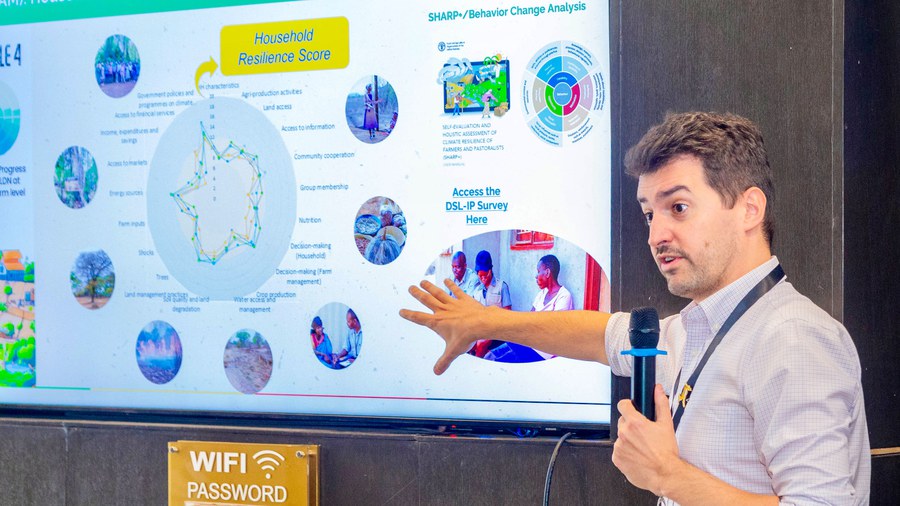
(interview from 2026)
Thomas Scheufler
Marcelo Rezende from Brazil leads capacity development and knowledge management for sustainable dryland management at the Food and Agriculture Organization of the United Nations in Rome.
A brief statement about your studies at TU Dresden:
„The multicultural and multidisciplinary environment I experienced at TUD has been something I have actively sought to cultivate since leaving the university. Moving from a geographically bound and highly specialized background in forestry toward a more holistic understanding that encompassed socio-political considerations at a global scale prepared me fundamentally for the challenges I would face in advancing my career as a United Nations officer.”
|
Profile of |
Marcelo Rezende |
|
Degree program |
Tropical Forestry |
|
Faculty |
Faculty of Environmental Sciences |
|
Studienzeit |
2012-2014 |
|
Current activity |
Natural Resources Officer at the Food and Agriculture Organization of the United Nations |
Why did you decide to study at TU Dresden?
Germany has had a long history of excellence in Forestry. Dresden, Freiburg and Goettingen were all on my radar when I was researching places to advance my studies. Dresden stood out as a city with beautiful architecture, interesting history and culture, and surrounded by nature. When looking into the TUD, I found out about the Department of Forest Sciences, and the excellent work and research taking place there. I became convinced that it would be the ideal place to broaden my horizons as a professional. And it was!
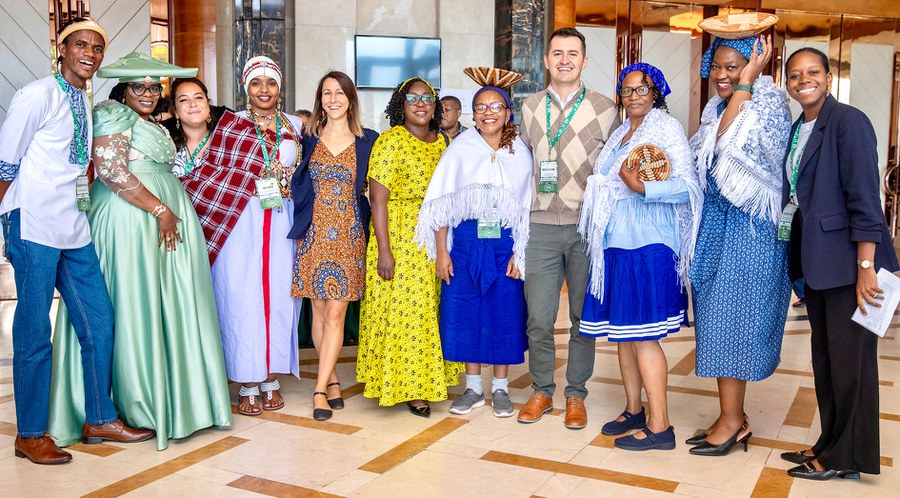
Marcelo Rezende with the Drylands Sustainable Landscapes Impact Program Southern Africa project teams.
What factors drove you to choose your field of study?
Forestry is my passion. Since I discovered one could have a career working with trees and forests, I was sure this is what I wanted to do with my life. I was always a very curious kid, breaking open my toys to learn what was going on and how they worked. I think in Forestry the opportunities for exploration and discovery are endless. It is hard to find a book about the trees, forests and their relationship with us and other ecosystems that I don’t find fascinating.
Who from research and teaching influenced you the most during your studies?
I may not be my most diplomatic self, but I have a clear memory of those who left a strong mark on me. Prof. Norbert Weber (Professor Weber, for short) may not know how much of an impact he has had on my professional career. Knowing how busy he was, I deeply appreciated him taking me on to supervise my thesis. A Brazilian forester coming from the private sector, wanting to research environmental policy in Small Island Developing States: the trust he extended alone deserves recognition. But it was in the few, yet remarkably productive, discussions we had that I came to appreciate the depth of his knowledge, professional principles, and genuine love for forestry. The guidance was exceptional, I thoroughly enjoyed my research, and I can only hope some of his expertise rubbed off on me. I must also express my appreciation for the coordinator of the Masters program, Prof. Jürgen Pretzsch. Prof. Pretzsch dedicated his career to institutionalizing, financing, and enhancing the quality of the Tropical Forestry program. As a student, I did not fully grasp how challenging this effort was. But now, looking back with more mature eyes, his commitment and devotion to the program are nothing short of inspiring.
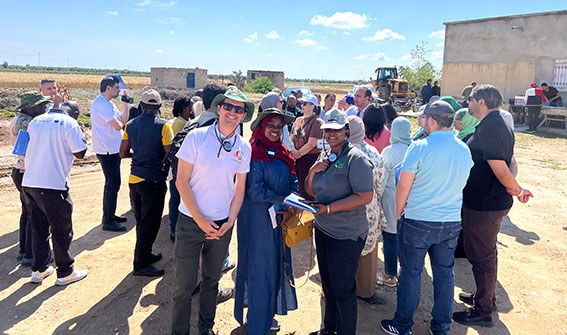
Marcelo Rezende and technical group participate in a field visit during the inter-Regional Technical Platform on Water Scarcity (iRTP) meeting in Tunisia, 2025.
Where are you employed today, and what are your responsibilities?
I have been working for the past decade with the Food and Agriculture Organization of the United Nations. I work in the Forestry Department, and I am responsible for providing technical assistance to member countries on all issues related to sustainable forest management, with a strong focus on the interaction between forests and other land uses in drylands.
What advice would you give to today's first-year students?
The best advice I can give is to pursue something you are passionate about. If you aim at a topic or field of study you are genuinely interested in, all aspects of professional life become more manageable and pleasant.
What do you remember most fondly from your student days?
It is not possible to encapsulate all the great memories I have from life in the WG, in the heart of Neustadt. From food, friendship, languages, parties, and late nights studying, those days will always be remembered very fondly.
Where was your favorite place at university?
The Department of Forest Sciences campus in Tharandt takes first place as my favorite due to its beautiful greenery and surrounding hills. Nothing beats a picturesque village in a forest valley. The SLUB in Dresden comes in a close second.
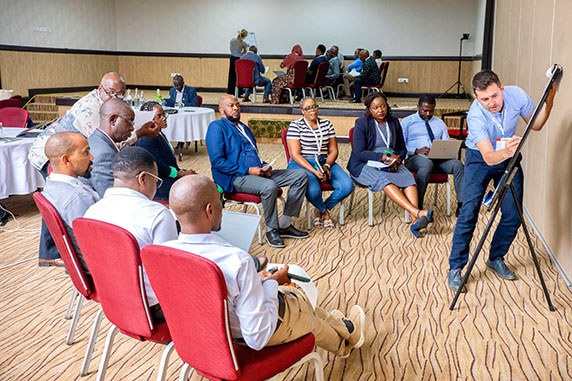
Marcelo Rezende conducting a stakeholder engagement exercise during the Drylands Sustainable Landscapes Impact Program Regional Meeting in Blantyre, Malawi. 2024.
What do you still benefit from today/would you have liked more?
The networks and relationships I cultivated during my time at TUD are still very important to me today. As a DAAD Alumni and Carlo-Schmid fellow, I remain involved in various events, newsletters, and gatherings that enable the network to stay active. Unfortunately, the current socio-economic turmoil in the world has also impacted alumni, such as through the discontinuation of the Scientific Literature Programme. I hope we can move towards greater investment to further strengthen and leverage the alumni networks.
How do you manage a good career start in your industry?
Openness to learning. The intersection of natural resources management and development is fertile ground for diversity. Diversity of challenges, of solutions, of strategies, of mindsets, and more. When starting your career, be open to adapting your knowledge and growing with inputs from others.
What connects you with TU Dresden today?
I am lucky to have kept strong ties with TUD and the Institute in Tharandt. For the past several years I have been a guest lecturer in the Tropical Forestry program, having the opportunity to share some of the work we do at the UN and potential career paths for the students.
Contact:
Marcelo Rezende