
Informatik
Informatik: Die Sprache der Zukunft!
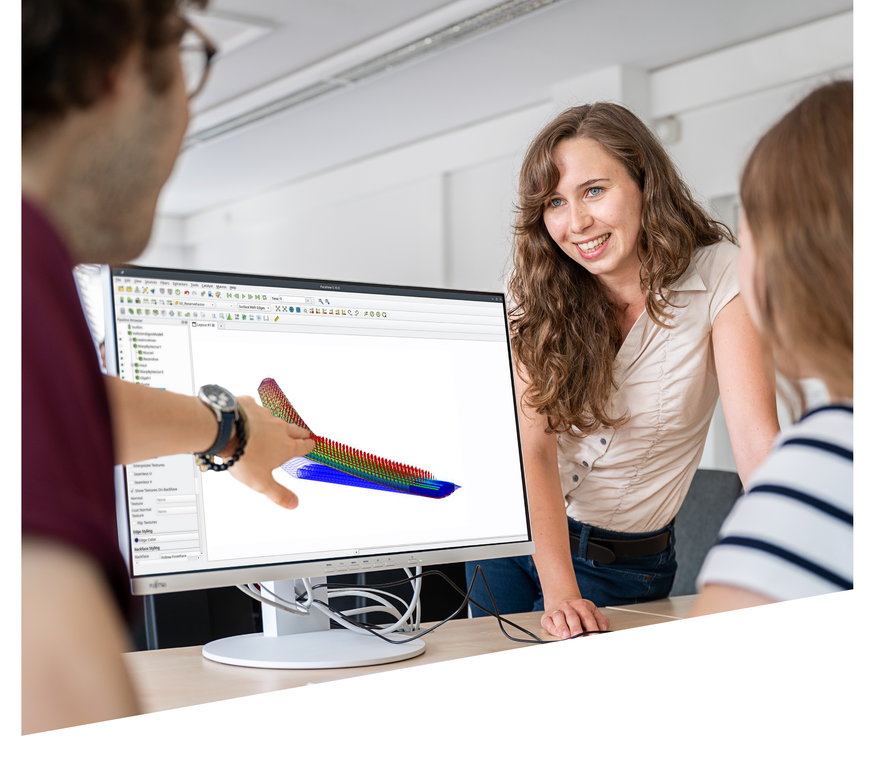
Informatik prägt unsere Welt – von künstlicher Intelligenz über die digitale Kommunikation bis hin zur Entwicklung neuer Technologien. Unsere Angebote bieten dir die Möglichkeit, die faszinierenden Verbindungen der Informatik zu anderen Fachbereichen zu entdecken. Erfahre, wie Programmierung und Daten die Welt verändern, und finde deine Verbindung zur digitalen Zukunft!
Related Subjects: Mathematics | Physics | Computer Science
Main topics: Hydraulics, Pneumatics, Fluid Mechatronics, Drive Technology
Format: Guided tour/laboratory tour
Hydraulic and pneumatic drive technology is used in a wide range of mobile and stationary applications, such as construction and agricultural machinery, road vehicles, aerospace, machine tools, pressing plants, and material handling systems. These drive systems allow forces and movements to be controlled and regulated with extreme flexibility, high precision, and dynamic performance. Current topics in research and development include, among others, digitalization, energy efficiency, and the environmental sustainability of drive systems. To this end, the Chair of Fluid-Mechatronic Systems Engineering has a wide range of component and system test benches, which can be viewed as part of a guided tour. An introductory lecture and a hands-on activity are also available.
| Participant Capacity | Age/Grade Level: | Duration: | Location: |
| (5–30) | Starting in 8th grade | 90 minutes or more | Hydraulics and Pneumatics Test Facilities, Sachsenberg-Bau, Helmholtzstr. 7a, 01069 Dresden |
Institution: Chair of Fluid-Mechatronic Systems Engineering
Inquire now
Related Subjects: Mathematics | Physics | Computer Science | ESD
Key Topics: Materials, Wood, Sustainability, Environmental Protection
Format: Workshop
How exactly does flying work, and how can it be made more environmentally friendly? We’ll answer these and many other exciting questions about aviation and the study of aerospace engineering in our program for students in grades 9 through 12. Aviation faces major challenges—let’s explore the latest developments and how they’re connected in an interactive way. Are you ready to take off and broaden your horizons? Join us and be part of the journey into the future of aviation!
| Participant Capacity | Age/Grade Level: | Duration: | Location: |
| (5–30) | Starting in 9th grade | 90 minutes or more | Marschnerstraße 32, 01307 Dresden |
- Also available as a mobile program (e.g., conducted directly in the classroom)
- Also available as a full-day program (with multiple learning stations and a closing forum)
Institution: Chair of Aircraft Engineering
Inquire now
Related Subjects: Physics, Mathematics, Chemistry, Biology, Computer Science
Key topics: Space exploration, medical technology, sustainability
Format: Guided tour/lab visit
We’ll tour the machine shops to see developments that enable the creation of new, resource-efficient products for medical technology, construction, and lightweight engineering.
| Participant Capacity | Age/Grade Level: | Duration: | Location: |
| (5–30) | From 5th grade through high school graduation | 45 to 90 min | Walter-Frenzel Building at TU Dresden |
Institution: Institute of Textile Machinery and High Performance Material Technology
Related Subjects: Computer Science
Key Topics: Artificial Intelligence, Programming, Robotics, Physical Computing, 3D Printing, Laser Cutting
Format: Workshop
EduInf offers free computer science workshops for school classes and for interested children and teens on specific event days. You can find information about the current workshop topics on our website: Dates can be booked flexibly upon request.
| Participant Capacity | Age/Grade Level: | Duration: | Location: |
| (5–30) | From 5th grade through high school graduation | Starting at 90 minutes (morning and full-day workshops also available) | Andreas-Pfitzmann-Bau (APB), Nöthnitzer Str. 46, 01187 Dresden |
Institution: Chair of Didactics of Computer Science
Related Subjects: Physics | Computer Science
Key Topics: Quantum communication, quantum physics phenomena, future technologies
Format: Workshop
Immerse your class in the fascinating world of quantum physics! Across three modules, your students will gain diverse insights into quantum communication and its impact on digital security. Each 90-minute module explores different aspects of quantum science and is supplemented by interactive elements. Engaging demonstrations make the learning experience even more tangible and exciting. The modules are aligned with the curriculum and also offer a valuable extension of the course material.
| Participant Capacity | Age/Grade Level: | Duration: | Location: |
| (10–30) | Starting in 11th grade | 90 min | Barkhausenbau, 1st Floor, BAR-I15, Georg-Schumann-Straße 11, 01187 Dresden |
- Also available as a mobile option (e.g., as a format conducted directly in the classroom)
Institution: Deutsche Telekom Chair of Communication Networks / QUARKS
Related Subjects: Physics | Computer Science | Mathematics
KeyTopics: Mobility, Air Travel, Simulation
Format: Workshop
During a test flight in the cockpit of the Airbus A320 research simulator, students can apply technical skills and knowledge in a real-world setting and try their hand at being a pilot. This program highlights developments and innovative technologies for safe and sustainable air travel and provides insight into academic and career opportunities in the fields of aviation technology and logistics.
| Participant Capacity | Age/Grade Level: | Duration: | Location: |
| (5–20) | Elementary school through high school graduation | 45 to 120 min | Gerhart-Potthoff Building, Hettenrstr. 3, POT 259A, 01069 Dresden |
Institution: Chair of Air Transport Technology and Logistics
Related Subjects: Physics | Computer Science | Mathematics
KeyTopics: Mobility, Railways, Control Systems
Format: Guided tour/lab visit
Welcome to Europe’s most modern railway laboratory! In the Railway Operations Laboratory—a real-life model railway layout featuring original signal boxes—students can experience the digital control of rail traffic at various stops and learn interesting facts about the future of public rail transportation.
| Participant Capacity | Age/Grade Level: | Duration: | Location: |
| (5–20) | Starting in 8th grade | 30 to 90 min | Gerhart-Potthoff-Bau, Hettnerstr. 1-3, POT 06, 01069 Dresden |
Institution: Chair of Air Transport Technology and Logistics
Related Subjects: Physics | Biology | Computer Science | Mathematics |Ethics | Philosophy | Technology and Computers | Shop Class
Key Topics: AI , Programming, Digitalization, Tactile Internet, 5G
Format: Workshop
The Cluster of Excellence Center for Tactile Internet with Human-in-the-Loop (CeTI) currently offers eight school modules that align with the Saxon curriculum. The modules were developed by researchers in collaboration with educators and are designed for different grade levels across all types of schools. In our workshops, we explore and discuss questions and challenges related to digitalization. For example, students can learn the basics of programming and develop their own mobile game. In this way, CeTI aims to bring new technologies into the (virtual) classroom and empower students to use them effectively. The modules are designed to last 90 minutes each but can be flexibly adapted. We provide all the necessary technical equipment to ensure that everything runs smoothly.
| Participant Capacity | Age/Grade Level: | Duration: | Location: |
| (5–30) Can also be arranged for larger groups upon request |
From 1st grade through high school graduation | 45 to 120 minutes, or as arranged (morning or afternoon program) | At the school or in the Barkhausenbau building at TU Dresden |
- Also available as a mobile program (e.g., conducted directly in the classroom)
- Online
Institution: Cluster of Excellence “Centre for Tactile Internet with Human-in-the-Loop” (CeTI)
Related Subjects: Physics | Computer Science | Mathematics |Geography
Key Topics: Climate & Environment, Technology & Industry, Navigation & Mobility, Environmental Monitoring & Crisis Management, Infrastructure & Civil Engineering
Format: Workshop
Will the dam hold? How much ice is Antarctica losing? Geodesists are needed wherever precise measurements matter. Get a firsthand look at what modern geodesy looks like in practice. Try out modern 3D measurement technology, create a digital 3D model of yourself, and meet researchers from our Antarctic expeditions. This event offers insights into and a glimpse of the profession of a geodesist for all aspiring surveyors and those who want to become one.
| Participant Capacity | Age/Grade Level: | Duration: | Location: |
| 5–20 | From 8th grade through high school graduation | 90 to 120 minutes | HÜL/W535 |
Institution: Institute of Photogrammetry and Remote Sensing
Related Subjects: Computer Science
Key topics: Computer Science, artificial intelligence, computers, data
Format: Workshop
How does a computer learn to categorize things, such as animals into the groups “fish,” “mammals,” and “birds”? How exactly does this work in machine learning? To find out, we’ll step into the role of a computer ourselves and discover how it learns from data step by step. What happens when the solution isn’t entirely clear-cut? We’ll see how the computer solves tasks that often seem quite simple to us humans!
| Participant Capacity | Age/Grade Level: | Duration: | Location: |
| 5–10 | 11th through 13th grade or until after graduation | 90 minutes | ScaDS.AI Dresden/Leipzig Living Lab, Andreas-Pfitzmann-Bau (Room 1020), Nöthnitzer Str. 46, 01187 Dresden |
- Also available as a mobile option (e.g., as a format directly in the classroom)
Institution: Faculty of Computer Science – ScaDS.AI Dresden/Leipzig
Related Subjects: Computer Science
Key Topics: Technology, Computer Science, Computers, Artificial Intelligence, AI, Convolutional Neural Networks
Format: Workshop
Are you interested in modern technologies? Then our workshop on image recognition using Convolutional Neural Networks (CNN) is just right for you! Learn how computers can “see” and dive into the fascinating world of artificial intelligence. Find out how CNNs work, discover their potential applications, and gain valuable knowledge for your future. Join us and help shape the digital world of tomorrow!
| Capacity | Age/Grade Level: | Duration: | Location: |
| 10–20 | 11th through 13th grade or until after the Abitur | 90 minutes | ScaDS.AI Dresden/Leipzig Living Lab, Andreas-Pfitzmann-Bau (Room 1020), Nöthnitzer Str. 46, 01187 Dresden |
- Also available as a mobile option (e.g., as a format directly in the classroom)
Institution: Faculty of Computer Science – ScaDS.AI Dresden/Leipzig
Related Subjects: Computer Science
Key topics: Computer Science, computers, artificial intelligence, AI, machine learning
Format: Workshop
Have you ever wanted to teach your computer to recognize your handwriting or help you organize your photos? In this workshop, you’ll learn how to design and train your first machine learning model. And what’s even more important: You don’t need to know any programming languages!
| Participant Capacity | Age/Grade Level: | Duration: | Location: |
| 10–20 | 11th through 13th grade or until after graduation | 90 minutes | ScaDS.AI Dresden/Leipzig Living Lab, Andreas-Pfitzmann-Bau (Room 1020), Nöthnitzer Str. 46, 01187 Dresden |
- Also available as a mobile option (e.g., as a format directly in the classroom)
Institution: Faculty of Computer Science – ScaDS.AI Dresden/Leipzig
Related Subjects: Computer Science | Mathematics | Chemistry | Physics
Key Topics: Microelectronics, Communications, Energy Transition, Automotive Industry, Medical Technology
Format: Workshop | Guided tour | Lecture
Dresden is the center of Silicon Saxony and Europe’s most important microelectronics region. With the establishment and expansion of an ever-increasing number of increasingly modern and larger factories by international companies (Infineon, Bosch, Global Foundries, ESMC, X-FAB) to manufacture integrated circuits for a wide range of customers and applications, microelectronics has become the most important industry in our region. We’d like to show students what microelectronics is, where it’s used (namely, literally everywhere), and how modern semiconductor devices and integrated circuits are manufactured. We can also provide insight into the complex manufacturing processes of microelectronics and our research activities, and offer a guided tour of our cleanroom.
| Participant Capacity | Age/Grade Level: | Duration: | Location: |
| Up to 30 or more | From 8th grade through high school graduation | Starting at 30 minutes; longer than 120 minutes (morning or afternoon program) possible | Mierdel Building and Clean Room at the Mierdel Building, Nöthnitzer Str. 64, 01187 Dresden |
- Also available as a mobile program (e.g., conducted directly in the classroom)
- Online
Institution: Institute of Semiconductors and Microsystems, Chair of Nanoelectronics
Inquire now
Related Subjects: Computer Science | Biology | Art
Key Topics: Human-Computer Interaction, Information Visualization, Augmented Reality, Virtual Reality, Medicine, Biology, Technology
Format: Guided tour/lab tour
Dresden is the center of Silicon Saxony and Europe’s most important microelectronics region. With the establishment and expansion of an ever-increasing number of increasingly modern and larger factories by international companies (Infineon, Bosch, Global Foundries, ESMC, X-FAB) to manufacture integrated circuits for a wide range of customers and applications, microelectronics has become the most important industry in our region. We would like to show students what microelectronics is, where it is used (namely, literally everywhere), and how modern semiconductor devices and integrated circuits are manufactured. In addition, we can provide insight into the complex manufacturing processes of microelectronics and our research activities, and offer a guided tour of our cleanroom.
| Participant Capacity | Age/Grade Level: | Duration: | Location: |
| 10–20 | From 8th grade through high school graduation | 30–60 minutes | Andreas-Pfitzmann Building, Rooms 2042 and 2044 |
- Also available as a mobile session (e.g., conducted directly in the classroom)
- Online
Institution: Chair of Multimedia Technology
Related Subjects: Mathematics | Physics | Computer Science
KeyTopics: Automotive | Transportation | Test Bench
Format: Guided tour/lab tour
Insights into the testing technology used to investigate and research vehicle characteristics.
| Participant Capacity | Age/Grade Level: | Duration: | Location: |
| 5–20 | 11th through 13th grade or until after the Abitur (ages 16 and up) | 45–60 minutes | Dresden, August-Bebel-Straße 32 |
Institution: Chair of Automobile Engineering
Related Subjects: Mathematics | Physics | Computer Science
KeyTopics: Automotive | Transportation | Technical Systems
Format: Guided tour/lab visit
Explanation of how a driving simulator works and its intended use. Demonstration during operation, if applicable.
| Participant Capacity | Age/Grade Level: | Duration: | Location: |
| 5–20 | 11th through 13th grade or until after the Abitur (ages 16 and up) | 90–120 minutes | Freital, Schachtstraße |
Institution: Chair of Automobile Engineering
Subjects Covered: Physics | Computer Science | Biology | ESD
Key Topics: Sense of smell · Sensory perception · Digitalization
Format: Workshop
Some of our senses already have electronic counterparts. A camera for the eye—a microphone for the ear. But can we also build an artificial nose, and why would we need one? Human body odor is influenced by factors such as diet, current inflammatory processes, and hormonal balance; consequently, changes in body odor can provide clues about diseases. An electronic nose could provide valuable information that has so far been largely untapped in medicine. Electronic noses can also help people in their daily lives, as body odors play a crucial role in many social situations. They influence our attraction to a partner, create a sense of belonging within the family, and allow us to infer emotions. For this reason, the inability to perceive one’s own and others’ body odors is described as one of the most severe impairments for people with olfactory disorders. The workshop will explain how the digitization of the sense of smell works and will also introduce various sensors. Students will work together to set up an experiment in which such a sensor is connected and a measurement is taken. A short quiz in which students must identify odors is part of the workshop.
| Participant Capacity | Age/Grade Level: | Duration: | Location: |
| (5–20) | Starting in 8th grade | Up to 120 min |
Hallwachsstraße 3 (HAL), 01069 Dresden |
Institution: Chair of Materials Science and Nanotechnology