
Mathematik
Mathematik: Verstehen, verbinden, anwenden!
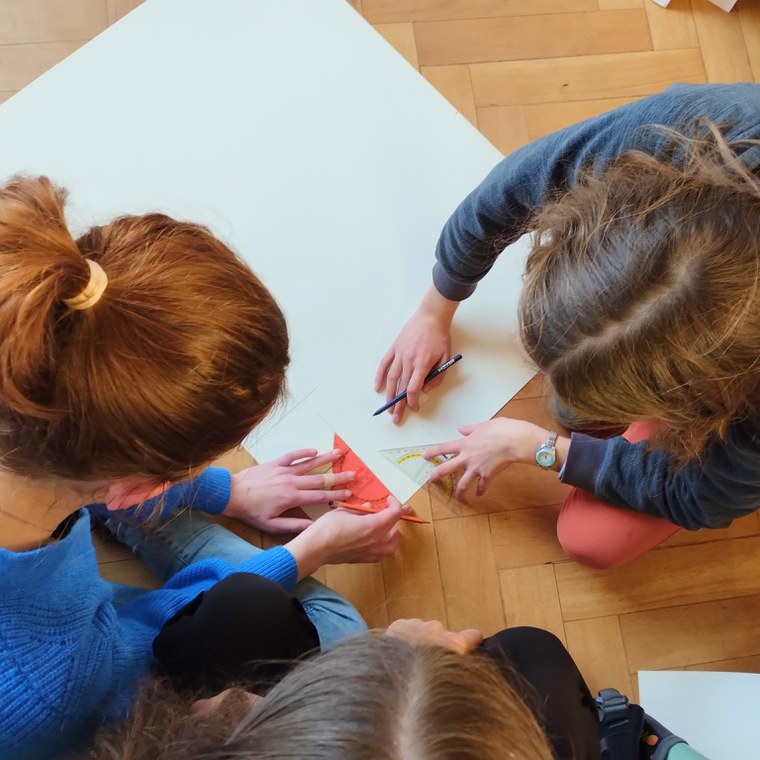
Mathematik ist die Grundlage für viele spannende Entdeckungen und Entwicklungen – sie verbindet Theorien mit Anwendungen in der realen Welt. Ob in der Datenanalyse, den Ingenieurwissenschaften oder der Modellierung natürlicher Prozesse: Unsere Angebote zeigen dir, wie Mathematik in unterschiedlichsten Bereichen genutzt wird, und eröffnen dir faszinierende Einblicke in ihre Vielseitigkeit.
Related Subjects: Physics | Chemistry | Mathematics
KeyTopics: Resource Extraction , Sustainability, Raw Materials, Process Engineering
Format: Workshop
Our student laboratory offers courses for school classes on the topic of froth flotation. These include laboratory experiments on froth stability, particle-bubble adhesion, and mineral recovery. Through these activities, students learn about the method, its fundamentals, and its relevance to resource extraction.
| Participant Capacity | Age/Grade Level: | Duration: | Location: |
| (5–20) | 11th through 13th grade or until after the Abitur (ages 16 and up) | 90–120 minutes | Merkelbau, Helmholtzstr. 14 |
Institution: Chair of Transport Processes at Interfaces
Inquire now
Related Subjects: Mathematics | Physics | Computer Science
Main topics: Hydraulics, Pneumatics, Fluid Mechatronics, Drive Technology
Format: Guided tour/laboratory tour
Hydraulic and pneumatic drive technology is used in a wide range of mobile and stationary applications, such as construction and agricultural machinery, road vehicles, aerospace, machine tools, pressing plants, and material handling systems. These drive systems allow forces and movements to be controlled and regulated with extreme flexibility, high precision, and dynamic performance. Current topics in research and development include, among others, digitalization, energy efficiency, and the environmental sustainability of drive systems. To this end, the Chair of Fluid-Mechatronic Systems Engineering operates a wide range of component and system test benches, which can be viewed during a guided tour. An introductory lecture and a hands-on activity are also available.
| Participant Capacity | Age/Grade Level: | Duration: | Location: |
| (5–30) | Starting in 8th grade | 90 minutes or more | Hydraulics and Pneumatics Test Facilities, Sachsenberg-Bau, Helmholtzstr. 7a, 01069 Dresden |
Institution: Chair of Fluid-Mechatronic Systems Engineering
Inquire now
Related Subjects: Mathematics | Physics | Computer Science | ESD
Key Topics: Materials, Wood, Sustainability, Environmental Protection
Format: Workshop
How exactly does flying work, and how can it be made more environmentally friendly? We’ll answer these and many other exciting questions about aviation and the study of aerospace engineering in our program for students in grades 9 through 12. Aviation faces major challenges—let’s explore the latest developments and how they’re connected in an interactive way. Are you ready to take off and broaden your horizons? Join us and become part of the journey into the future of aviation!
| Participant Capacity | Age/Grade Level: | Duration: | Location: |
| (5–30) | Starting in 9th grade | 90 minutes or more | Marschnerstraße 32, 01307 Dresden |
- Also available as a mobile program (e.g., conducted directly in the classroom)
- Also available as a full-day program (with multiple learning stations and a closing forum)
Institution: Chair of Aircraft Engineering
Inquire now
Subjects Covered: Mathematics | Physics | Chemistry | ESD
Key Topics:Paper, Sustainability, Circular Economy, Packaging, Recycling
Format: Workshop
Workshop featuring a brief introductory presentation on the circular economy in general and the recycling of paper and paper products. Group work to determine how different types of packaging should be disposed of in Germany to ensure recycling. Selection of paper packaging and conducting simple recycling tests in the lab. (Optional: conducting experiments on ink removal during recycling).
| Participant Capacity | Age/Grade Level: | Duration: | Location: |
| (5–10) | Starting in 8th grade | Longer than 120 minutes (morning or afternoon program) | Marschnerstraße 39, 01307 Dresden |
Institution: Chair of Wood Technology and Wood-Based Bioeconomy
Inquire now
Subjects Covered: Mathematics | Physics | Chemistry | BNE
Key Topics: Paper , Sustainability, Circular Economy, Packaging, Recycling, Product Development
Format: Workshop
Workshop featuring a brief introductory lecture on paper in general, packaging trends, and packaging functions. Overview of how to calculate insulation materials. Presentation of projects focused on developing paper-based insulation packaging. Group work to calculate packaging specifications (determining thickness) for specific insulation requirements. Demonstration of the recyclability of the developed paper packaging in the lab, including independent completion of lab reports (under supervision).
| Participant Capacity | Age/Grade Level: | Duration: | Location: |
| (5–10) | Starting in 8th grade | 120 min | Marschnerstraße 39, 01307 Dresden |
Institution: Chair of Wood Technology and Wood-Based Bioeconomy
Inquire now
Related Subjects: Mathematics | Physics | Chemistry | Biology
KeyTopics: Climate and Environment, Circular Economy
Format: Workshop
Workshop featuring a brief introductory presentation on paper in general, packaging trends, and packaging functions. Overview of how to calculate insulation materials. Presentation of projects focused on developing paper-based insulation packaging. Group work to calculate packaging specifications (determining thickness) for specific insulation requirements. Demonstration of the recyclability of the developed paper packaging in the lab, including independent creation of lab reports (under supervision).
| Participant Capacity | Age/Grade Level: | Duration: | Location: |
| (5–30) | Starting in 8th grade | 120 min | TU Campus / Merkelbau and VVT Hall |
Institution: Institute of Process Engineering and Environmental Technology
Related Subjects: Physics, Mathematics, Chemistry, Biology, Computer Science
Key topics: Space exploration, medical technology, sustainability
Format: Guided tour/lab visit
We’ll tour the machine shops to see developments that enable the creation of new, resource-efficient products for medical technology, construction, and lightweight engineering.
| Participant Capacity | Age/Grade Level: | Duration: | Location: |
| (5–30) | From 5th grade through high school graduation | 45 to 90 min | Walter-Frenzel Building at TU Dresden |
Institute: Institute of Textile Machinery and High Performance Material Technology
Related Subjects: Physics | Mathematics | Biology
Key Topics: Lightweight Materials, Lightweight Design, Resource Efficiency, Sustainability, Transportation
Format: Workshop
In this workshop, participants will learn the basics of lightweight materials and construction methods used in lightweight engineering. Particular emphasis is placed on participants independently determining and explaining the properties of materials and components. Through a series of stations, participants will experiment hands-on to discover the properties of various lightweight construction materials and how these should be geometrically designed to enable high-strength, lightweight components. In a subsequent hands-on activity, participants will apply what they have experienced and learned. The stations along the lightweight construction course involve a high degree of experimentation, allowing participants to try out various approaches and derive their own explanations for the observed phenomena.
| Participant Capacity | Age/Grade Level: | Duration: | Location: |
| (5–20) | Elementary school through high school graduation (program can be adapted to suit the age group) | 30 to 120 min | Institute of Lightweight Engineering and Polymer Technology, Holbeinstraße 3, 01307 |
Institution: Institute of Lightweight Engineering and Polymer Technology
Related Subjects: Physics | Computer Science | Mathematics
KeyTopics: Mobility, Air Travel, Simulation
Format: Workshop
During a test flight in the cockpit of the Airbus A320 research simulator, students can apply technical skills and knowledge in a real-world setting and try their hand at being a pilot. This program highlights developments and innovative technologies for safe and sustainable air travel and provides insight into academic and career opportunities in the fields of aviation technology and logistics.
| Participant Capacity | Age/Grade Level: | Duration: | Location: |
| (5–20) | Elementary school through high school graduation | 45 to 120 min | Gerhart-Potthoff Building, Hettenrstr. 3, POT 259A, 01069 Dresden |
Institution: Chair of Air Transport Technology and Logistics
Related Subjects: Physics | Computer Science | Mathematics
KeyTopics: Mobility, Railways, Control Systems
Format: Guided tour/lab visit
Welcome to Europe’s most modern railroad laboratory! In the Railroad Operations Laboratory—a real-life model railroad layout featuring original signal boxes—students can experience the digital control of rail traffic at various stops and learn interesting facts about the future of public rail transportation.
| Participant Capacity | Age/Grade Level: | Duration: | Location: |
| (5–20) | Starting in 8th grade | 30 to 90 min | Gerhart-Potthoff-Bau, Hettnerstr. 1-3, POT 06, 01069 Dresden |
Institution: Chair of Air Transport Technology and Logistics
Related Subjects: Physics | Biology | Mathematics |Social Studies | Political Science | ESD
KeyTopics: Mobility , Transportation Planning, Ecology
Format: Guided tour/lab visit
Climate-friendly, safe, inclusive: How should urban transportation be designed in the future? In this workshop, students learn to develop their own perspectives on their transportation behavior and can devise creative solutions for the mobility of the future.
| Participant Capacity | Age/Grade Level: | Duration: | Location: |
| (5–20) | Grades 1 through 7 | 45 to 90 min | Gerhart-Potthoff-Bau, Hettnerstr. 1-3, Seminar Room, 01069 Dresden |
- Also available as a mobile option (e.g., conducted directly in the classroom)
Institution: Chair of Transport Ecology
Related Subjects: Physics | Biology | Computer Science | Mathematics |Ethics | Philosophy | Technology and Computers | Shop Class
Key Topics: AI , Programming, Digitalization, Tactile Internet, 5G
Format: Workshop
The Cluster of Excellence Center for Tactile Internet with Human-in-the-Loop (CeTI) currently offers eight school modules that align with the Saxon curriculum. The modules were developed by researchers in collaboration with educators and are designed for different grade levels across all types of schools. In our workshops, we explore and discuss questions and challenges related to digitalization. For example, students can learn the basics of programming and develop their own mobile game. In this way, CeTI aims to bring new technologies into the (virtual) classroom and empower students to use them effectively. The modules are designed to last 90 minutes each but can be flexibly adapted. We provide all the necessary technical equipment to ensure that everything runs smoothly.
| Participant Capacity | Age/Grade Level: | Duration: | Location: |
| (5–30) Can also be arranged for larger groups upon request |
From 1st grade through high school graduation | 45 to 120 minutes, or as arranged (morning or afternoon program) | At the school or in the Barkhausenbau building at TU Dresden |
- Also available as a mobile program (e.g., conducted directly in the classroom)
- Online
Institution: Cluster of Excellence “Centre for Tactile Internet with Human-in-the-Loop” (CeTI)
Related Subjects: Physics | Computer Science | Mathematics |Geography
Key Topics: Climate & Environment, Technology & Industry, Navigation & Mobility, Environmental Monitoring & Crisis Management, Infrastructure & Civil Engineering
Format: Workshop
Will the dam hold? How much ice is Antarctica losing? Geodesists are needed wherever precise measurements matter. Get a firsthand look at what modern geodesy looks like in practice. Try out modern 3D measurement technology, create a digital 3D model of yourself, and meet researchers from our Antarctic expeditions. This event offers insights into and a glimpse of the profession of a geodesist for all aspiring surveyors and those who want to become one.
| Participant Capacity | Age/Grade Level: | Duration: | Location: |
| 5–20 | From 8th grade through high school graduation | 90 to 120 minutes | HÜL/W535 |
Institution: Institute of Photogrammetry and Remote Sensing
Related Subjects: Computer Science | Mathematics | Chemistry | Physics
Key Topics: Microelectronics, Communications, Energy Transition, Automotive Industry, Medical Technology
Format: Workshop | Guided tour | Lecture
Dresden is the center of Silicon Saxony and Europe’s most important microelectronics region. With the establishment and expansion of an ever-increasing number of increasingly modern and larger factories by international companies (Infineon, Bosch, Global Foundries, ESMC, X-FAB) to manufacture integrated circuits for a wide range of customers and applications, microelectronics has become the most important industry in our region. We’d like to show students what microelectronics is, where it’s used (namely, literally everywhere), and how modern semiconductor devices and integrated circuits are manufactured. We can also provide insight into the complex manufacturing processes of microelectronics and our research activities, and offer a guided tour of our cleanroom.
| Participant Capacity | Age/Grade Level: | Duration: | Location: |
| Up to 30 or more | From 8th grade through high school graduation | Starting at 30 minutes; longer than 120 minutes (morning or afternoon program) possible | Mierdel Building and Clean Room at the Mierdel Building, Nöthnitzer Str. 64, 01187 Dresden |
- Also available as a mobile program (e.g., conducted directly in the classroom)
- Online
Institution: Institute of Semiconductors and Microsystems, Chair of Nanoelectronics
Inquire now
Related Subjects: Mathematics | Physics | Computer Science
Main Topics: Mathematics, Mathematical Modeling, Biomathematics, Artificial Intelligence
Format: Workshop | Lecture
TU Dresden offers school classes of all grade levels lectures, guided tours, and mini-projects centered on mathematics—either on campus or directly at the school. Topics range from research to college orientation. Students actively explore mathematics and how it is applied in areas such as climate modeling, biological cell modeling, AI, and the optimization of solar cells. The goal is to spark interest, foster mathematical thinking, and highlight career paths.
More info
| Capacity | Age/Grade Level: | Duration: | Location: |
| 20–30 | From 5th grade through high school graduation | 30–120 minutes | Willersbau, Z21 |
- Online
Faculty of Mathematics
Related Subjects: Mathematics | Physics | Computer Science
KeyTopics: Automotive | Transportation | Test Bench
Format: Guided tour/lab tour
Insights into the testing technology used to investigate and research vehicle characteristics.
| Participant Capacity | Age/Grade Level: | Duration: | Location: |
| 5–20 | 11th through 13th grade or until after the Abitur (ages 16 and up) | 45–60 minutes | Dresden, August-Bebel-Straße 32 |
Institution: Chair of Automobile Engineering
Related Subjects: Mathematics | Physics | Computer Science
KeyTopics: Automotive | Transportation | Technical Systems
Format: Guided tour/lab visit
Explanation of how a driving simulator works and its intended use. Demonstration during operation, if applicable.
| Participant Capacity | Age/Grade Level: | Duration: | Location: |
| 5–20 | 11th through 13th grade or until after the Abitur (ages 16 and up) | 90–120 minutes | Freital, Schachtstraße |
Institution: Chair of Automobile Engineering