
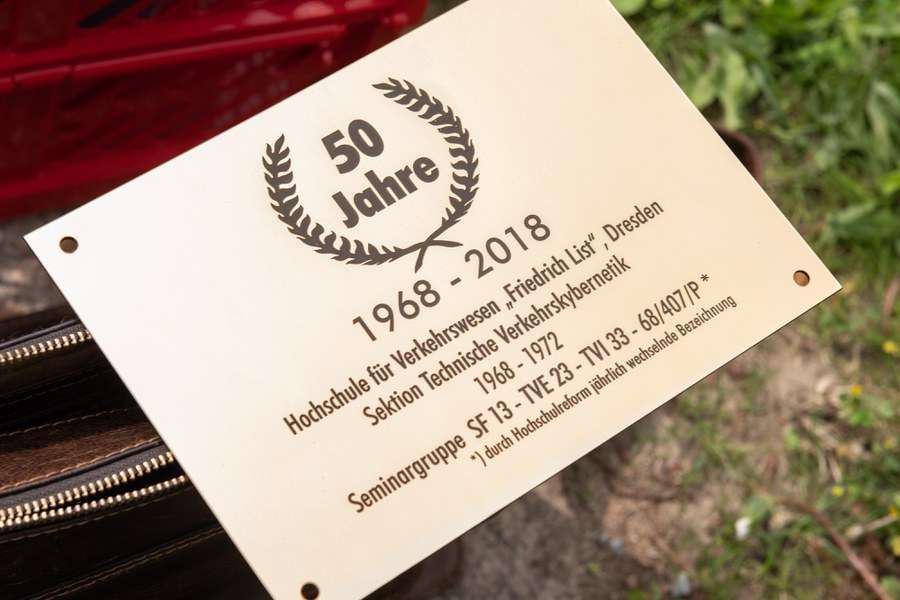
Tree sponsorship Study class Information Technology 1968 Irish oak
- Scientific name
- Quercus petraea
- Planting
- 2021
- Tree sponsor
-
Alumni of the Study class Information Technology 1968
- Handed over on
- Jun 01, 2021
Ever since its members finished their degree course, the study class meets up regularly in Dresden. To mark their 50th anniversary, they collected donations and sponsored a tree for the campus.
Location
Did you know?
The Irish Oak was voted tree of the year in 2014. After the pedunculate oak, the Irish oak is the most common oak species in Central Europe. Both species can form hybrids.
This tree can reach a height of 40 meters and live up to 800 years. The main trunk usually extends into the upper crown. Its stately growth and large crown mean the Irish oak needs a lot of space – which is why, as a solitary tree, it is well suited to large gardens and parks. The Irish oak has a much higher tolerance for urban climate and associated environmental pollution than the pedunculate oak, and as a result, can cope better with drought and heat.
The long, straight trunks of the Irish oak provide valuable lumber for shipbuilding, the construction of timber-frame houses, and of bridges. Until the advent of hard coal, charcoal makers used Irish oak in their kilns to produce iron and other metals.
The ecological value of the deadwood of the Irish oak should not be underestimated – the slowly decomposing wood of dead trees is home to vast quantities of fungi and insects. Among them, the stag beetle (Lucanus cervus), up to eight centimeters long, stands out as the largest native beetle species. Also, 23 butterfly species depend on the leaves of the Irish oak for caterpillar food.