
12.02.2026
IHI-Forscher entdecken neue Pilzarten auf Brandstellen in Sachsen
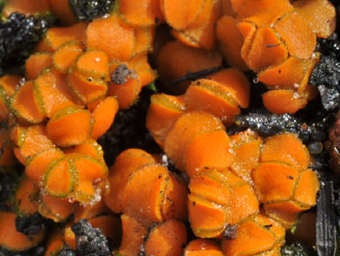
Breitsporiger Brandstellenbecherling Anthracobia platyspora Karich, R. Ullrich & Van Vooren, sp. nov.
Wissenschaftlern des Internationalen Hochschulinstituts (IHI) Zittau an der Technischen Universität Dresden (TUD) ist es gelungen, zwei neue Pilzarten zu beschreiben. Im Nationalpark Sächsische Schweiz sowie im Naturschutzgebiet Gohrischheide haben sie auf stark verbrannten Flächen neue Arten von Brandstellen-Becherlingen entdeckt. Die Pilze könnten eine Schlüsselrolle bei der Wiederbesiedelung von Brandstellen in den gemäßigten Klimazonen spielen.
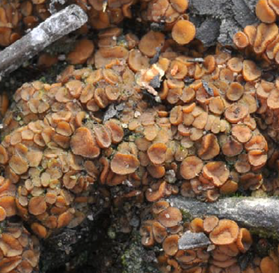
Larsens Brandstellenbecherling Anthracobia larsenii Karich & Van Vooren, sp. nov.
Seit den großflächigen Waldbränden im August 2022 untersuchen in diesen Gebieten Wissenschaftlerinnen und Wissenschaftler verschiedene Aspekte der Feuerökologie in Wäldern. Ein besonderes Augenmerk liegt dabei auf der natürlichen Wiederbesiedlung von verbrannten Baumstämmen und Böden. In der ersten Phase der Renaturierung dieser stark verbrannten Flächen dominieren verschiedene Moose und Pilze. Eine genaue Inventarsierung dieser Arten erlaubt Einblicke in die Abfolge der Sukzessionen, also wie sich das Ökosystem Schritt für Schritt natürlich entwickelt.
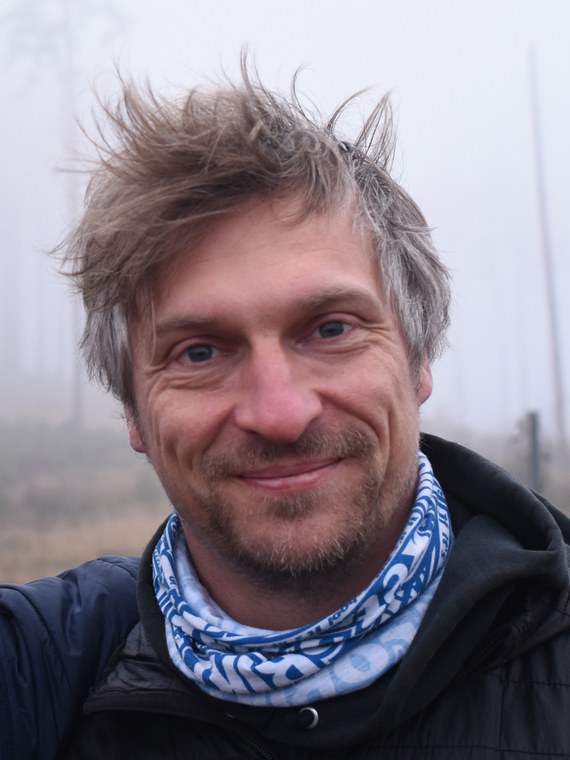
Alexander Karich
Die von den Wissenschaftlern des IHI Zittau neu beschriebenen Brandstellen-Becherlingen ernähren sich vermutlich von austretenden zuckerhaltigen Pflanzensäften, die durch die Hitzeeinwirkung aus den feuergeschädigten Bäumen austreten. Diese pyrophilen Pilze und ihre biochemischen Aktivitäten bilden in der Folge die Grundlage für eine erfolgreiche intrinsische Renaturierung, d. h. die Selbstheilung der Brandflächen.
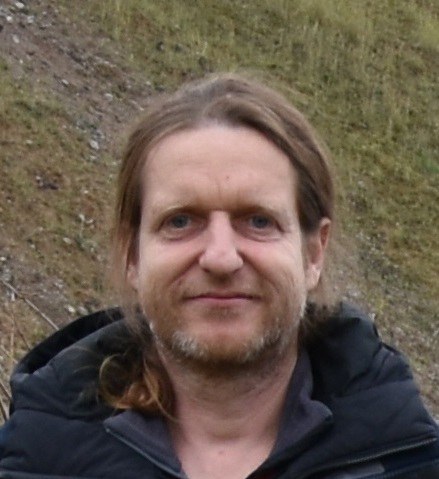
René Ullrich
Die erfolgreichen Untersuchungen der Brandstellen sind das Ergebnis einer intensiven wissenschaftlichen Zusammenarbeit des IHI Zittau mit sächsischen Wissenschaftlerinnen und Wissenschaftlern des Nationalparks, Dr. Annika Busse, und des Naturschutzgebietes, Dr. Torsten Bittner, sowie mit dem belgischen Mykologen Nicolas van Vooren.
Kontakt:
Dr. Alexander Karich
Professur für Umweltbiotechnologie
Tel.: +49 3583 612-4171
E-Mail: