
Sep 26, 2025
Getting a feel for materials science: TU Dresden promotes young STEM talents at the MINT-EC Camp
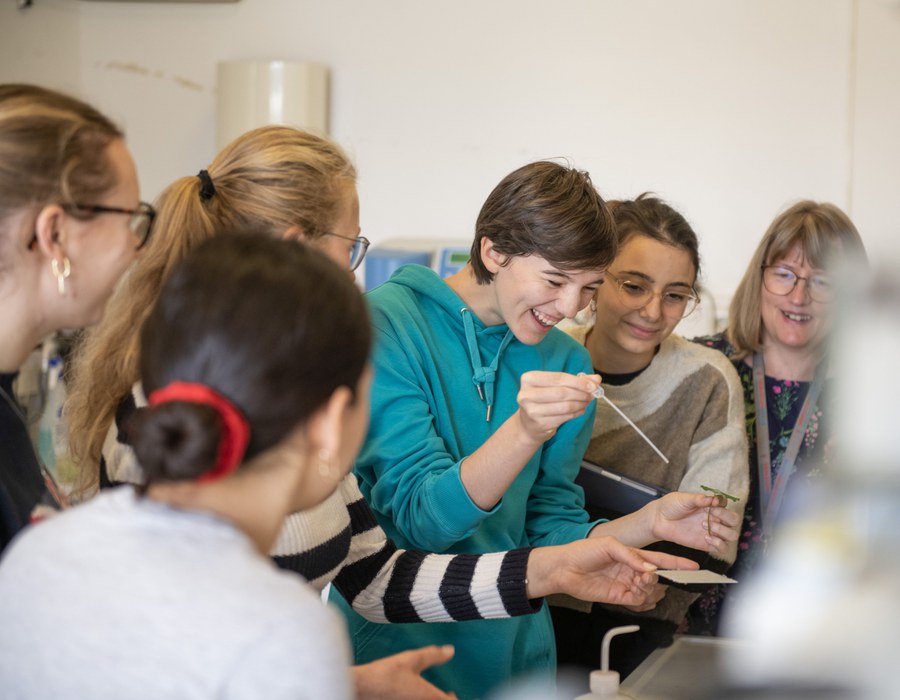
Investigating the lotus effect
How can we use novel materials to make our world more sustainable? And how do researchers approach these questions? 20 pupils from all over Germany had the chance to find answers to these questions at the MINT-EC Camp "Materials in circulation: economically and ecologically sustainable," which took place at TU Dresden from September 22 to 25, 2025.
The event, organized by the Institute of Materials Science (Faculty of Mechanical Science and Engineering) and the School Liaison Office of TU Dresden in cooperation with the MINT-EC school network, impressively illustrated how important practical and high-quality STEM courses are for educating young people - especially at a time when Germany is facing a growing skills shortage in the STEM sector.
Early promotion to secure our future
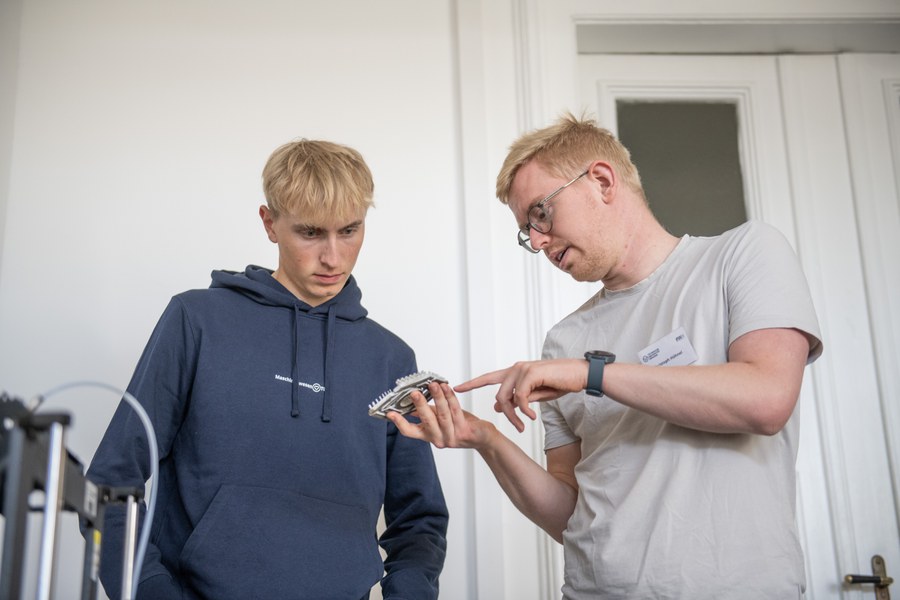
Scientists accompany the pupils and provide insights into their research work
With events such as the MINT-EC Camp, TU Dresden makes an active contribution to promoting young talent and strengthening STEM education. The aim is to get young people interested science, provide career guidance and highlight prospects in fields of research that are highly relevant for the future - especially in areas such as materials science, which make a decisive contribution to ecological and economic transformation.
Insights into the practical side of materials science
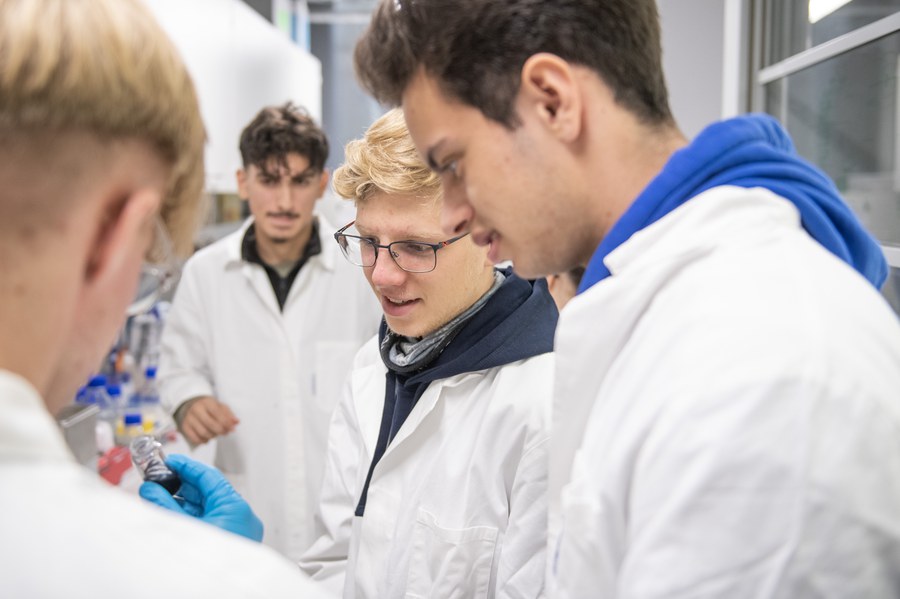
Graphene is extracted from graphite in the lab
The camp focused on four workshops that gave the participants the chance to delve into the world of materials science - from biomimetic surfaces and resource-saving 3D printing to material characterization and component tests with high-speed cameras, as well as the construction of a gas sensor with carbon nanotubes. Accompanied by scientists from the Institute of Materials Science and the Leibniz Institute of Polymer Research, the pupils collaborated in small groups to conduct experiments and subsequently evaluated their results independently. A lot of them were incredibly excited to work with highly specialized equipment such as the scanning electron microscope.
This gave them realistic insights into scientific working methods - a core concern of TU Dresden, which strives to combine science communication with professional orientation.
Networking with science and industry
A particular highlight was the excursion to BOSCH Dresden, where participants could look behind the curtain at the state-of-the-art 300 mm production line for semiconductors. There was also a lot to discover on the campus of TU Dresden: In addition to visiting the Saxon State and University Library (SLUB), talking with current students and taking part in campus tours, the final event with presentations and the awarding of certificates on September 25 was a fitting way to round off the experience.
Promoting STEM - taking responsibility
The MINT-EC camp is a testament to how universities can assume social responsibility - through practical educational programs, the targeted promotion of young minds and close cooperation with schools. Especially in light of the shortage of teachers in STEM subjects and the growing need for skilled workers, such initiatives are becoming increasingly important.
TU Dresden has a number of things in store for pupils, teachers and prospective students — all year round:
- School newsletter (6 times per year): Current STEM offers for teachers and schools
- Junior Campus Newsletter (4 times per year): For parents who would like to familiarize their children with approaches to scientific research
- Test our university: All programs for pupils and prospective students
- WhatsApp group of TU Dresden for prospective students
Contact:
Contact point for schools
Anne Bruder |
Institute of Materials Science:
Dr. Birgit Vetter |
Dr. Veneta Schubert |