
Feb 24, 2026
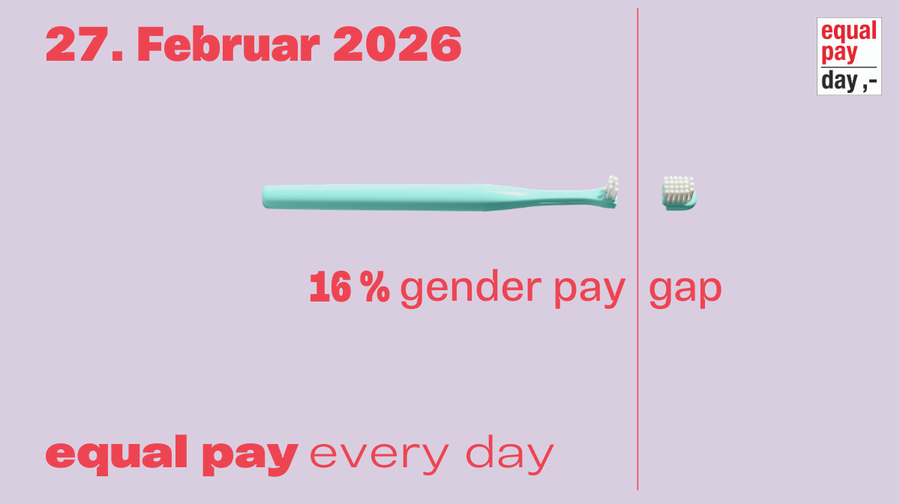
February 27, 2026, is Equal Pay Day!
February 27, 2026, is Equal Pay Day!
Equal Pay Day illustrates, with a symbolic date, the difference in average earnings between men and women. Data from the German Federal Statistical Office show that this difference, known as the Gender Pay Gap, has been 16 percent in Germany since 2024. Converted into days, this percentage (16 % of 365 days) corresponds to 58 days, which falls on February 27, 2026. This day is called Equal Pay Day. It symbolically marks the day until which women work “for free,” while men have already earned pay for the same work since January 1, 2026 - assuming equal hourly wages.
Information on the causes of pay inequality, the goals of Equal Pay Day, and further background can be found in the campaign’s wiki (http://www.equalpay.wiki/Hauptseite
Information on the causes of pay inequality, the goals of Equal Pay Day, and further background can be found in the campaign’s wiki. The initiative aims to raise awareness of the pay gap between women and men, analyze its causes, and make them publicly visible. Since 2008, the campaign has been supported by the Federal Ministry for Family Affairs and was initiated by Business and Professional Women (BPW) e.V. Under the motto equal pay every day, the campaign in 2026 highlights through various events and formats how gender-based pay differences develop and impact people over the course of their lives.). The initiative aims to raise awareness of the pay gap between women and men, analyze its causes, and make them publicly visible. Since 2008, the campaign has been supported by the Federal Ministry for Family Affairs and was initiated by Business and Professional Women (BPW) e.V. Under the motto equal pay every day, the campaign in 2026 highlights through various events and formats how gender-based pay differences develop and impact people over the course of their lives.
A press release from the Statistical Office of the Free State of Saxony reports: “6 percent earnings gap between men and women in Saxony in 2025.” It also notes that the national average in Germany was 16 percent, with 5 percent in East Germany and 17 percent in West Germany including Berlin.
Universities are not exempt from this phenomenon. Structural aspects of pay inequality in the academic context are addressed, among other places, in episode 24 of the Equal Pay Day podcast. In this episode, Alexandra Kühnen and Christina Wolff from the Bundeskonferenz der Frauen- und Gleichstellungsbeauftragten an Hochschulen (bukof) discuss female-connoted tasks in university offices, issues of salary (in)transparency, institutional frameworks such as Codes of Conduct, and other challenges in equality policy. At TU Dresden, the topic is addressed within the University Culture and Governance area of the 2025 Gender Equality Concept through a measure targeting the Gender Pay Gap among professors. The aim of this measure is to gradually reduce gender pay gaps and strengthen pay transparency at TU Dresden.