
Aug 07, 2026
Two CIDS Projects Among Nominees for TUD Prize for Science Communication
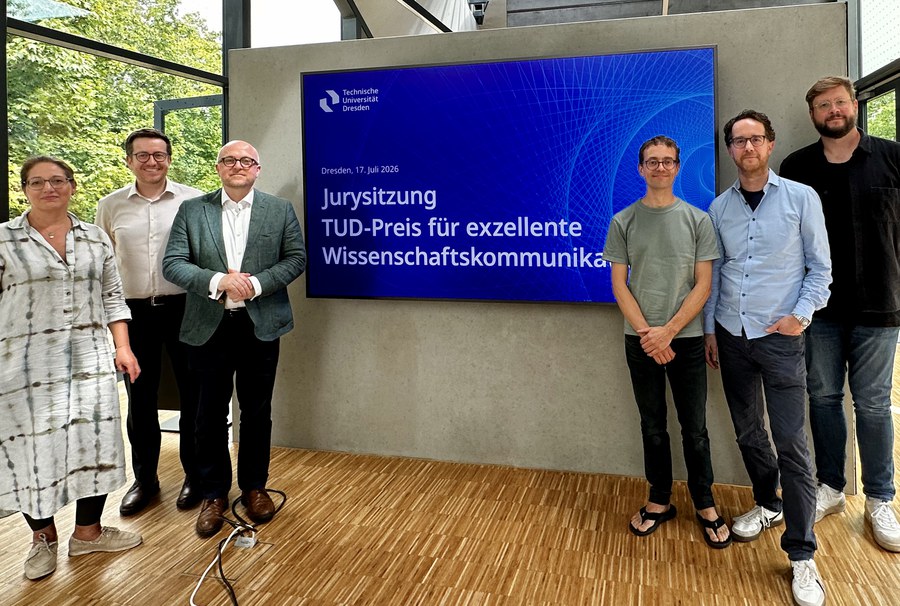
Jury for the TUD Award for Excellence in Science Communication: Sonja Kastilan, Sebastian Grote, Robert Denk, Prof. Simon Meier-Vieracker, Marc Hasse und Tim Gabel (from left) © TUD
Among the six nominees for the 2026 TUD Prize for Excellence in Science Communication are two initiatives from the Center for Interdisciplinary Digital Sciences (CIDS). The interactive exhibit “Double Harvest” by digi.farming.lab and the participatory exhibition “Invisible Heros – Between Everyday Life and Care,” showcase two different approaches to making scientific content accessible to a broad audience.
The “Double Harvest” exhibit by the “digi.farming.lab” (Katharina Porepp): The project is part of the permanent exhibition “Agriculture of the Future” at Futurium Berlin and brings the latest findings from agricultural research to life through interactive experiences. In virtual landscapes, for example, visitors can explore—from a bumblebee’s-eye view—what sustainable agriculture might look like in the future.
The exhibition“Invisible Heroes: Between Everyday Life and Caregiving” (Dr. Sandra Schulz): This participatory exhibition makes the stories of young people visible that often remain unheard. Young people who care for family members offer personal insights into the hopes and challenges of caregiving through moving depictions. The exhibition was developed as part of a research project at TUD. It was on display at the COSMO Science Forum, among other venues.
With the TUD Prize for Excellence in Science Communication 2026, TU Dresden is honoring, for the second time, outstanding formats and projects that make scientific content accessible to a broad audience. The prize is awarded in the categories of Main Award and Early-Career Researcher Award. A jury selected six projects from 21 submissions for the shortlist. The award ceremony will take place on September 1, 2026, as part of Science Communication Day.
These two nominations highlight the diversity of science communication at CIDS and demonstrate how different formats can foster dialogue between science and society.