
Study "Continuing Education and Organizational Development" Master's degree course

Table of contents
Content of the study program
The Master's degree course in Continuing Education and Organizational Development qualifies students for challenging tasks at the interface of education, organization and management. In view of the growing demands for lifelong learning and organizational change, specialists are needed who can combine pedagogical, social and economic perspectives - this is exactly where the degree program comes in. Previous knowledge of Business Administration and Economics is not required.
The degree program is research-oriented and at the same time strongly practice-oriented. By closely combining theory and application, students acquire in-depth knowledge in key areas such as organizational development, education management, personnel and quality development, personnel management, digital transformation, controlling, vocational and adult education, educational governance, empirical research methods and lifelong learning. Interdisciplinary courses, practical projects, research work and the promotion of key competencies complement the degree course and prepare students in a targeted manner for a wide range of fields of activity in education, organization and the world of work.
Are you already studying "Continuing Education and Organizational Development"?
You can find all information relevant to your studies under Information for students.
Short Facts
| Degree | Master of Arts |
|---|---|
| Standard period of study Full-time study | 4 semesters (2 years) |
| Language of instruction |
German |
| Tuition fees per semester |
Semester fee and, if applicable, second and long-term tuition fees |
| Modules | Empirical Research Methods, Organizational Development, Adult and Vocational Education, Education and Quality Management, Learning across the Lifespan, Education Systems and Educational Institutions, Mediality and Continuing Education, Controlling in Educational Institutions, Professional Practice, Research Practice and Development |
| Regulations |
Study regulations |
Further information on the degree program
For a brief introduction to the WB/OE, we recommend this short podcast episode with our students. The podcast was created as part of a seminar in which the students were also allowed to try out the modern podcast studio in the SLUB.
Tba
Yes, we regularly go on one-day excursions with our students. In the past, for example, we have visited the Landesforum Weiterbildung, an annual continuing education conference held at various locations in Saxony (e.g. Dresden, Leipzig, Moritzburg, Chemmitz, Schmochtitz etc.), several times. Other excursions took us
- to the Industry 4.0 model factory at HTW Dresden
- to the F+U Sachsen gGmbH in Chemnitz
- to the education office of the city of Dresden
- to the regional office of the Federal Employment Agency Saxony in Chemnitz
- to VHS Leipzig with workshops on their organizational development concept
- to the literacy conference in Chemnitz
- to the Foreign Office in Berlin
- to the HWK Training Center and the IHK Training Center Dresden
- to the Units for personnel development/training and organizational development of the state capital
- and much more.
Do you have an exciting idea for the next excursion? Talk to us!
Stays abroad and semesters abroad are possible as part of the WB/OE and are regularly undertaken by students. The third semester is usually used for this - your mobility window during your studies. The Institute of Vocational Education and Vocational Didactics has its own ERASMUS representative, Prof. Dr. Thomas Köhler , and you can find insights into your fellow students' stays abroad here.
Studying for a Master's degree is a challenge - especially if you also have family responsibilities. Students with children or relatives in need of care are often faced with the question: How can I reconcile everything - family, career and studies?
In the Master's in Continuing Education and Organizational Development (WB/OE), we know that every life situation is individual. That's why we attach great importance to flexibility, exchange and mutual support.
Here, two of our students report on how they experience everyday life with child(ren) and studies - honest, inspiring and encouraging. They show: With good planning, a strong environment and a degree program that is considerate, many things are possible.
Students on the WB/OE Master's program often have (relevant) part-time jobs, which they combine with the Master's program both in terms of content and time. In order to provide insights into how the degree program can be combined with a part-time job, a working student job or other professional activities, students report on their professional activities. They show how professional activities can be combined with studies.
Research is part of the WB/OE. As part of the Research Practice and Development module, students have the opportunity to develop, plan and carry out their first research project. On the one hand, this is intended to prepare students for their Master's thesis, and on the other, it gives them the opportunity to deepen their individual interests as part of their studies. We have put together three exciting examples for you here.
Completing an internship of at least 200 hours of attendance time is an important part of the Master's degree program in WB/OE. On the one hand, the internship serves to apply acquired knowledge and skills in practice. On the other hand, the internship can help you to orient yourself professionally. You can try things out and find out which activities you enjoy and which career paths you would like to take. The internship is usually completed in the third semester. You will be supervised by us as part of the "Professional Practice" module and submit an internship report at the end. Here, students tell us where they are completing their internship and what core tasks they are working on during their internship.
You can find more information about the internship here.
How can students volunteer at the university? Susanne Sell and Dominik Rosa (both WB/OE students) talked to us about this question. Listen in and discover various ways in which you too can get actively involved and help shape life at the university.
S. Sell: Hi, mein Name ist Susi, ich bin 26 Jahre alt und studiere im 4. Semester den Masterstudiengang Weiterbildungsforschung und Organisationsentwicklung – kurz WBF/OE – an der TU Dresden. Im Rahmen der Reihe «WBF/OE studieren» geben wir allen Interessierten einen spannenden Einblick in unseren Masterstudiengang.
Dabei lernen Sie den Studiengang aus der Perspektive unterschiedlichster Personen kennen. Ich habe ein Interview mit meinem Kommilitonen Dominik Rosa geführt, um mehr über ihn und seine Tätigkeiten als studentischer Studiengangskoordinator und als Mitglied im Prüfungsausschuss zu erfahren. Außerdem hat mich interessiert, wie er zu unserem Masterstudiengang gekommen ist und ob er schon Pläne für seine berufliche Zukunft hat. Ich wünsche viel Spaß beim Hören!
Hi Dominik, schön, dass du Zeit gefunden hast, um uns heute einen Einblick in deine Tätigkeiten als studentischer Studiengangskoordinator und als Mitglied im Prüfungsausschuss zu gewähren. Stell dich doch unserer Hörerschaft einfach mal kurz vor; wer bist du und was machst du?
D. Rosa: Ja, vielen Dank für die Einladung! Mein Name ist Dominik Rosa, ich komme ursprünglich aus Süddeutschland – aus dem Allgäu – und studiere hier den Master Weiterbildungsforschung und Organisationsentwicklung.
S. Sell: Erzähl uns doch gerne mal: Wie bist du zum Masterstudiengang WBF/OE gekommen?
D. Rosa: Ich habe bereits während meines Bachelorstudiums mich für BWL-Kurse interessiert. Meinen Bachelor, den habe ich in Musikpädagogik gemacht und während des Studiums habe ich schon ein paar Kurse belegt, unter anderem Unternehmensführung, aber auch der demografische Wandel und die Auswirkungen auf das Personalmanagement haben mich interessiert, genauso wie Veranstaltungsmanagement und weil wir hier ja sehr viele Inhalte haben, die Pädagogik und Wirtschaft verbinden, habe ich mich im Endeffekt für den Master entschieden.
S. Sell: Erzähl mal, wie bist du denn auf den Studiengang überhaupt aufmerksam geworden?
D. Rosa: Ich habe dann im Internet recherchiert und bin auf die Seite der TU gestoßen, habe mir dann da die Inhalte angeschaut und dann noch ein Beratungsgespräch vereinbart und dabei habe ich für mich festgestellt, dass das der Master ist, den ich machen möchte.
S. Sell: Ja, cool, also wie du weißt, bin ich ja auch in dem Studiengang und habe auch damals geschaut, nach meinem Lehramtsstudium, wie ich eben in eine andere – also ein bisschen weg von dem Lehramtsbereich komme, aber trotzdem in der Pädagogik bleiben kann und da fand ich es super spannend, dass dieser Studiengang eben die wirtschaftlichen und pädagogischen Themen miteinander verknüpft und mir eben beruflich irgendwie ein bisschen mehr Perspektiven ermöglicht.
Was erhoffst du dir denn aus der Absolvierung dieses Masters für deinen weiteren Werdegang?
D. Rosa: Durch die Inhalte sind wir ja sehr breit aufgestellt und ich kann mir vorstellen, dass es viele Perspektiven gibt, die mich interessieren. Aktuell finde ich die Organisationsentwicklung sehr spannend und würde gern Changemanagement-Prozesse begleiten.
S. Sell: Also, Dominik, ich weiß ja auch, dass du studentischer Studiengangskoordinator bist und da interessiert unsere Hörerschaft vielleicht auch, seit wann bist du als studentischer Studiengangskoordinator für den Master WBF/OE an der TU Dresden tätig und wie bist du dazu gekommen?
D. Rosa: Letztes Jahr habe ich mich in den Fachschaftsrat wählen lassen, weil ich einfach gern mit anderen Leuten noch ein paar Sachen hier organisieren wollte und die sind sehr aktiv. Hier helfe ich mit bei der Uniorganisation, bei verschiedenen Veranstaltungen – es gibt ein jährliches Angrillen – und wir organisieren immer die Erstsemester-Einführungswoche und im Rahmen dieser Tätigkeit hat man mich auch dann gefragt, ob ich auch als Studiengangskoordinator arbeiten möchte.
S. Sell: Beschreib uns gerne mal deine Arbeit als Studiengangskoordinator; was sind deine Aufgaben?
D. Rosa: Als Studiengangskoordinator bin ich für Fragen zum Studienablauf zuständig und habe immer ein offenes Ohr für Beschwerden oder sonstige Anliegen der Studierenden. Und außerdem unterstütze ich die Fachstudienberatung bei spezifischen Fragen zum Studienablauf usw.
S. Sell: Du bist außerdem auch noch studentisches Mitglied im Prüfungssauschuss des Studiengangs. Wie sieht deine Arbeit im Prüfungsausschuss denn aus?
D. Rosa: Als Mitglied bin ich im Prüfungsausschuss für die Mitberatung des Prüfungsausschusses zuständig, unter anderem bei Sitzungen und bei Studiengangsangelegenheiten sowie bei Einzelfallanfragen. Zudem bereite ich die Sitzungen vor und auch nach aus studentischer Perspektive.
S. Sell: Warum ist es dir denn wichtig, dich ehrenamtlich in deinem Studiengang zu engagieren?
D. Rosa: Ich vernetze mich sehr gern mit anderen Studierenden und setze gerne gemeinsame Projekte um. Und so bin ich auch auf den Fachschaftsrat gekommen; also das ist einfach eine schöne Arbeit, man hat gemeinsam eine gute Zeit zusammen, wir organisieren die Feste hier; und das macht einfach Spaß.
S. Sell: Welche Möglichkeit siehst du denn für deine Mitstudierenden, um sich ebenfalls ehrenamtlich zu engagieren?
D. Rosa: Das einfachste ist es, sich beim Fachschaftsrat zu melden und sich dort zu einer Wahl aufstellen zu lassen und von dort aus kann man dann auch in verschiedenen anderen Gebieten, wie z.B. auch dem Studienrat tätig zu werden.
S. Sell: Sehr spannend auf jeden Fall. Vielen Dank, dass du dir die Zeit genommen hast, uns von deinen Tätigkeiten als Studiengangkoordinator und als studentisches Mitglied im Prüfungsausschuss Bericht zu erstatten. Wir wünschen dir auf jeden Fall viel Erfolg für deinen weiteren Weg.
D. Rosa: Ja, vielen Dank für die Einladung.
In the summer semester 2022, we welcomed a guest student, Mr. Rosberger, to our degree program. Our student Susanne Sell conducted an interview with Mr. Rosberger. In the following report, you can find out more about how Mr. Rosberger became aware of the WB/OE Master's degree programme, which courses he attended as a guest student and what he was able to take away for himself.
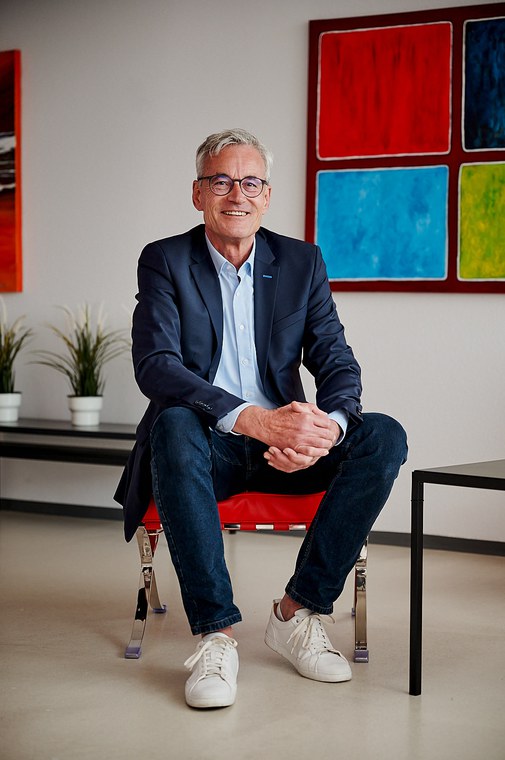
At TU Dresden, anyone who is interested has the opportunity to attend courses at the university as a guest student. In our Continuing Education and Organizational Development (WB/OE) degree program, we welcomed our guest student, Mr Rosberger, for the summer semester 2022. I had the opportunity to meet and interview Mr. Rosberger in June 2022 to find out why he decided to become a guest student on the WB/OE degree program and what impressions he was able to take away with him.
Kontakt: https://www.fr-in-change.de/
Mr. Rosberger is 36 years young - only in reverse - as he reveals with a twinkle in his eye. He studied education, business administration and organizational development several years ago. He then worked as a manager in a wide variety of areas and over the years discovered his great interest in the (further) development of organizations. Three years ago, he founded his own company, which focuses on organizational development and project management and supports SMEs in the transformation process by integrating new forms of work to increase innovation in the company's respective business model. In this way, he and his team want to make a contribution to a more people-friendly way of doing business, says Mr. Rosberger. His company primarily offers management training to enable managers to lead in a more future-oriented and thus more appreciative way and to incorporate these skills into the organization's processes in the long term.
I asked Mr. Rosberger how he came to take part in our degree program as a guest student. He said that he was in frequent contact with (technical) universities in various cities and had also worked as a lecturer himself. As he considers the combination of teaching, research and business to be extremely exciting and important and discovered this interesting degree program in Dresden while browsing, he thought he would go to the university as a representative of business and see the program for himself.
Mr. Rosberger attends courses according to his interests and his availability. The courses he has attended relate to personnel management, quality management and teaching and learning in continuing education. The background to his participation is not primarily the acquisition of new knowledge, but rather the refreshing of existing practical knowledge with theoretical approaches as well as the feedback of experience gained with the approaches to organizational development in science.
Mr. Rosberger was also particularly curious to see how he would be received by the students. Our guest student reports the following experience in this context: "What I found great right from the start, apart from the astonished looks at the beginning, was that the students, as I affectionately call them, gave me a great reception. There were no complications and I quickly got to know the people, exchanged ideas and they informed me where things were taking place. So it was really great. The lecturers also welcomed me openly and included me in the technical communication from the very beginning. Mr. Rosberger was particularly impressed by the varied and flexible teaching on the WB/OE degree program, which is tailored to the student body and includes both traditional and modern forms of teaching.
Mr. Rosberger's experience as a guest student was consistently positive, as he plans to return next winter semester to attend further courses on the WB/OE Master's degree course. We are looking forward to it!
Career prospects
The degree program enables students to embark on a career in research and practice at
- university institutions,
- non-university research institutes,
- public and private education, training and further education institutions as well as
- in companies
You will take on activities in areas such as
- Organizational development,
- personnel development,
- education management & corporate education as well as
- Program development, event planning and implementation and much more.
Here you will find exciting results of several alumni surveys conducted by the students themselves as part of the "Research Practice" module.
Here you will find alumni portraits of many graduates who will tell you more about their jobs after graduation and also give you some good advice.
Insights into everyday student life


Our campus - the place to study
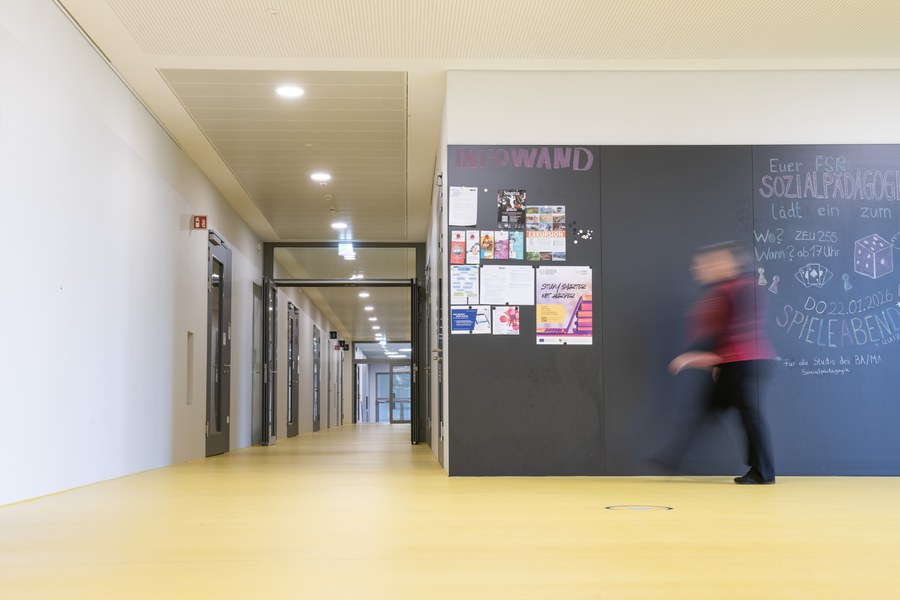
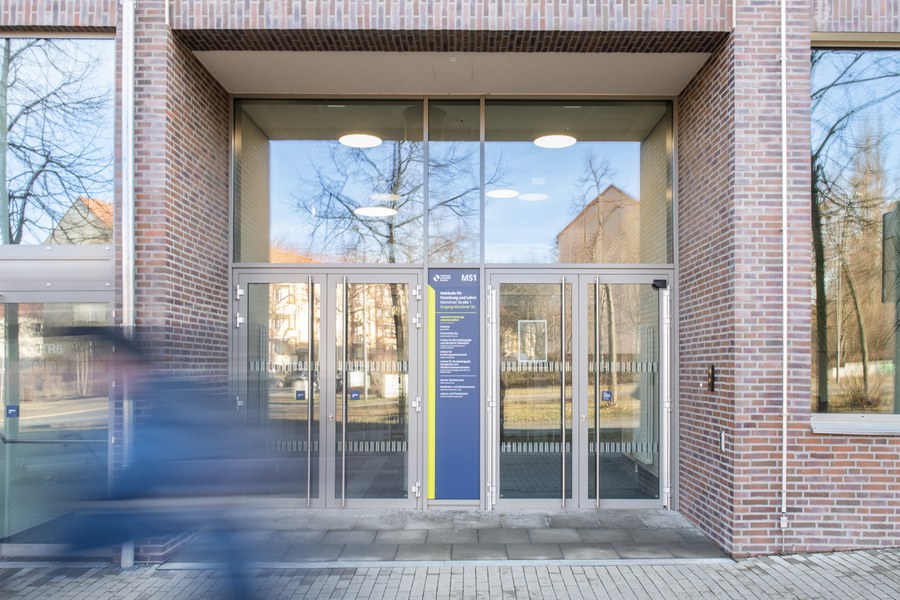
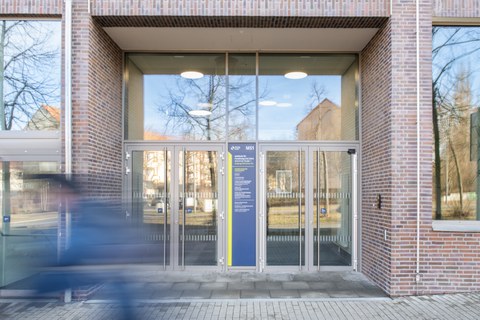
The main campus is located in Dresden's Südvorstadt district. Our faculty's premises are centrally located on campus and are very easy to reach by public transport or bicycle. The Faculty of Education building is one of the most modern buildings at TU Dresden.
© Sven Ellger
© Sven Ellger
© Sven Ellger


© Sven Ellger
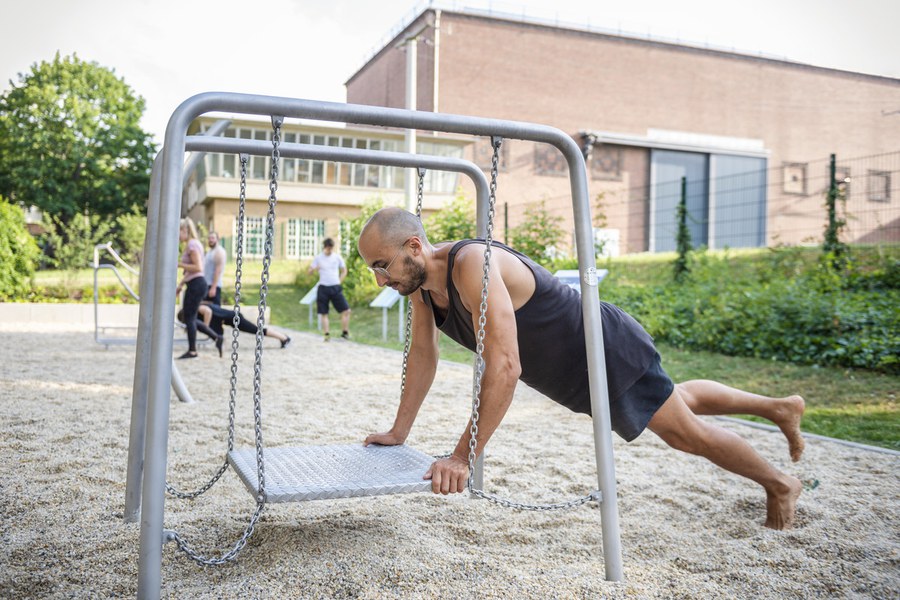
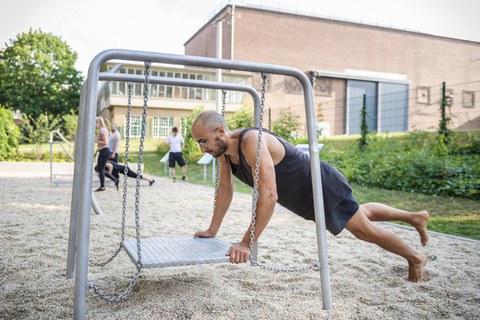
Mitten auf dem Campus gibt es einen Trimm-Dich-Pfad für eine kleine Sportstunde zwischendurch. © Crispin-Iven Mokry
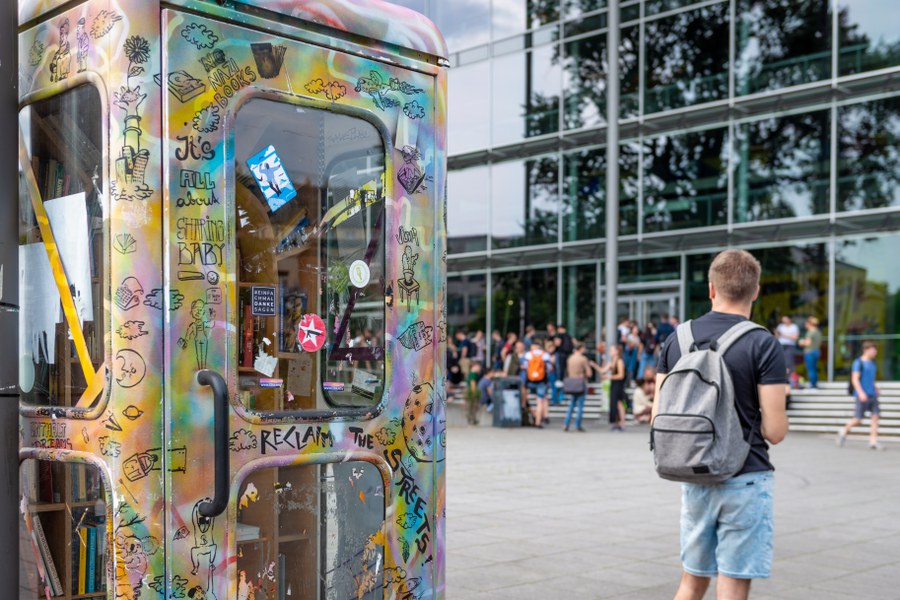
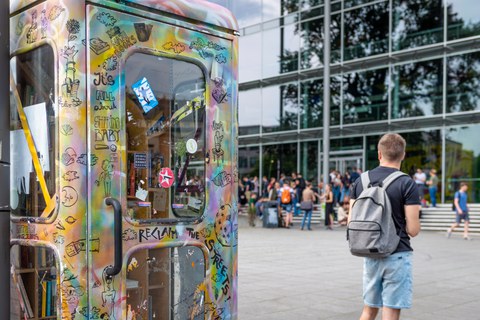
In der Bücherzelle vor dem HSZ kann man Bücher kostenfrei tauschen. © TUD Crispin-Iven Mokry


Hier werden die internationalen Studierenden vom Prorektor für Bildung und Internationales begrüßt. © TUD Michael Kretzschmar
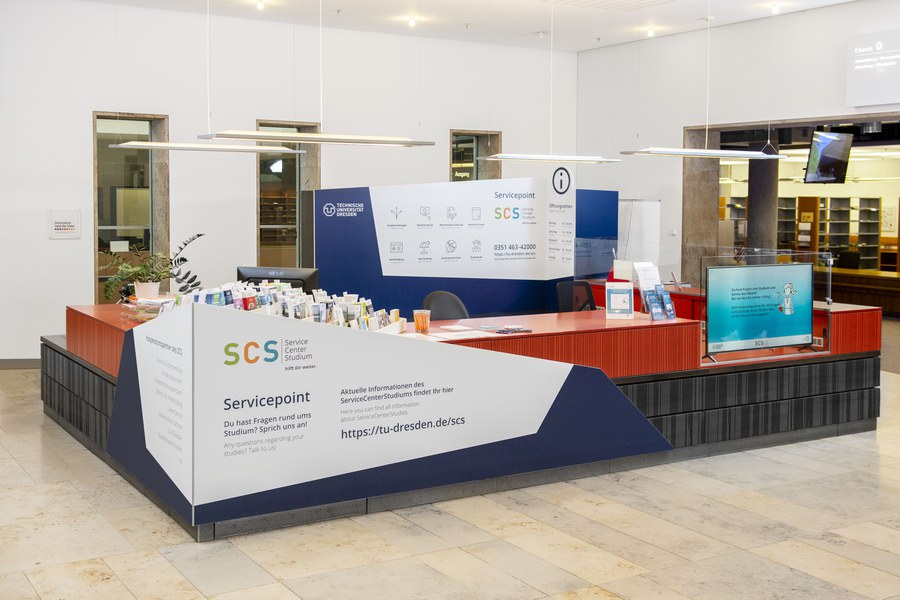
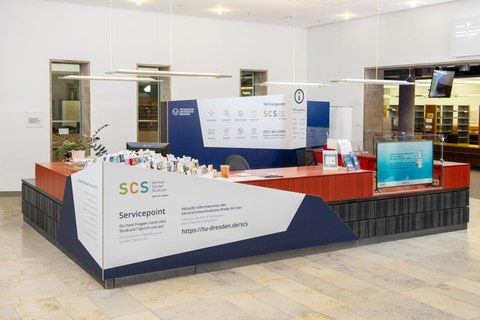
Im Foyer der SLUB befindet sich auch das ServiceCenterStudium. © TUD Crispin-Iven Mokry


So sieht es während einer Vorlesung aus Sicht der Dozierenden aus. © Amac Garbe


Der Andreas-Pfitzmann-Bau, in dem die Informatikfakultät beheimatet ist, hat ebenfalls einen begrünten Innenhof mit Teich, an dem man vor allem im Sommer wunderbar entspannen kann. © TUD Crispin-Iven Mokry
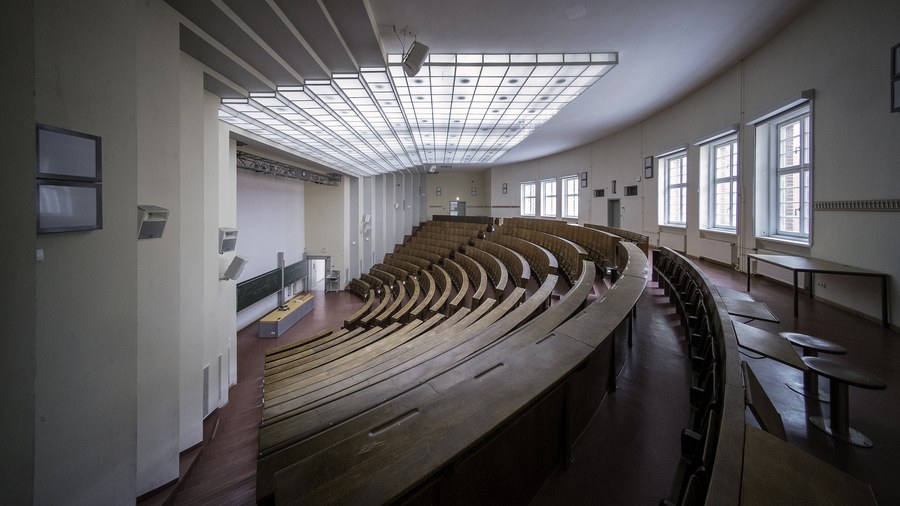
Der Lichtenheldt-Hörsaal im Zeunerbau wird im Volksmund auch "Bombentrichter" genannt. © Nils Eisfeld


Zur Immatrikulationsfeier ist das Audimax - der größte Hörsaal im HSZ - bis auf den letzten Platz belegt. © TUD Michael Kretzschmar
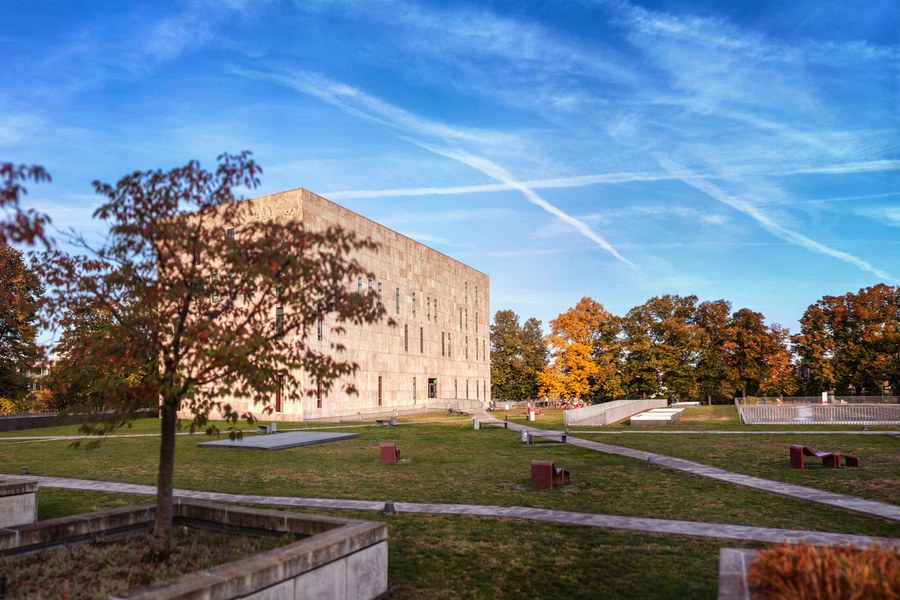
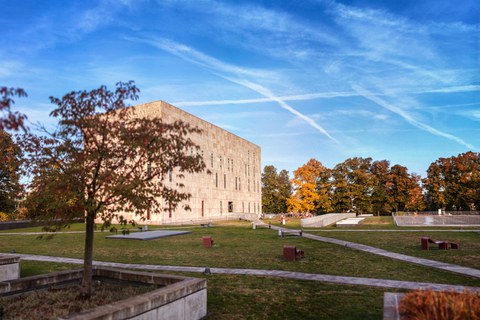
Die Sächsische Landesbibliothek – Staats- und Universitätsbibliothek (SLUB) am Zelleschen Weg ist ein sehr wichtiger Ort für alle Studierenden. © Nils Eisfeld
Application form

Further important information and conditions for the degree program, such as the study requirements, the deadlines and the link to the application can be found in our central study information system (SINS).
- We have summarized all information on deadlines and documents to be submitted on the pages of the SINS (Study Information System).
To apply for participation in the aptitude assessment procedure , you need
- A university degree in the field of education or a related degree program (or proof of having earned at least 80% of the credit points required for graduation) and
Either
- one examination in each of the following four areas, completed with a minimum grade of "good":
- Empirical research methods
- Organizational development
- Adult education/continuing education
- Lifelong learning and educational systems
Or
- Proof of practical professional experience of at least two years in at least one of the four above-mentioned areas, supplemented by relevant further training courses with a total equivalent scope of at least 5 ECTS or 125 working hours and which can be assigned to at least one of the above-mentioned areas in terms of content and level.
If suitability is not evident from the documents, an aptitude interview will be conducted.
Prospective students who have obtained a first professionally qualifying university degree in educational science or a related subject can be admitted to the Master's degree course. Related subjects may include, for example, Sociology, Business Education and Management Training or Psychology, depending on the focus.
Admission can be granted to students who can demonstrate a particular aptitude for the Master's degree program. To this end, two academic achievements graded at least "good" must have been completed in two of the four areas relevant to the Master's degree program. Coursework includes, for example, project work, seminar papers, written presentations, written examinations and modules (partial module achievements if individual proof is available).
In the following table, we have compiled examples of possible course content for each area that can be completed in conjunction with coursework as proof of special aptitude.
Please check your coursework individually to see whether it can be assigned to two of the areas listed below. The table is only a selection of possible course content.
|
Areas |
Possible course content (examples) |
|
Empirical research methods |
[...] |
|
Organizational development |
[...] |
|
Adult education/further education |
[...] |
|
Lifelong learning and education systems |
[...] |
If you have already achieved 80% of the credit points required for a university degree, you can apply for the Master's degree program and will be included in the aptitude assessment procedure. Your university will issue you with a corresponding certificate. Please enclose the original or an officially certified copy with your application documents.
Applications for the Master's degree program are submitted via the central application procedure (TU Dresden online portal or uni-assist).
The documents for the aptitude assessment procedure must be submittedseparately to the responsible admissions committee or the relevant office.
Postal address (depending on applicant group):
-
German citizenship or foreign citizenship with a high school diploma in Germany:
TUD Dresden University of Technology
Faculty of Education
Master's degree course in Continuing Education and Organizational Development
Admissions Committee
Helmholtzstraße 10
01069 Dresden -
Foreign or German citizenship with a foreign university degree:
The application is made via uni-assist e.V.; you will receive further information on the aptitude assessment procedure as part of this.
Submission by e-mail:
The documents for the aptitude assessment can also be submitted electronically as a coherent PDF file by e-mail to the admissions committee . The timely receipt of the complete documents is decisive for meeting the deadline.
Please note that the application to study (enrollment) must be made independently of this via the designated application portals.
Contact and advice
Still have questions about studying or applying? Our student advisor will be happy to help you.
 © PantherMedia/champlifezy
Dr. Christian Müller
Send encrypted email via the SecureMail portal (for TUD external users only).
Overview of other central counseling and service offers at TU Dresden