
Insights and information
Video: Graduate Sarah Andreas
Video TechLA © TU Dresden
In this video, our graduate Sarah Andreas talks about her journey to becoming a teacher at vocational schools. Sarah Andreas explains what motivated her to choose this career and what makes vocational schools particularly exciting to her.
Interviews with Students
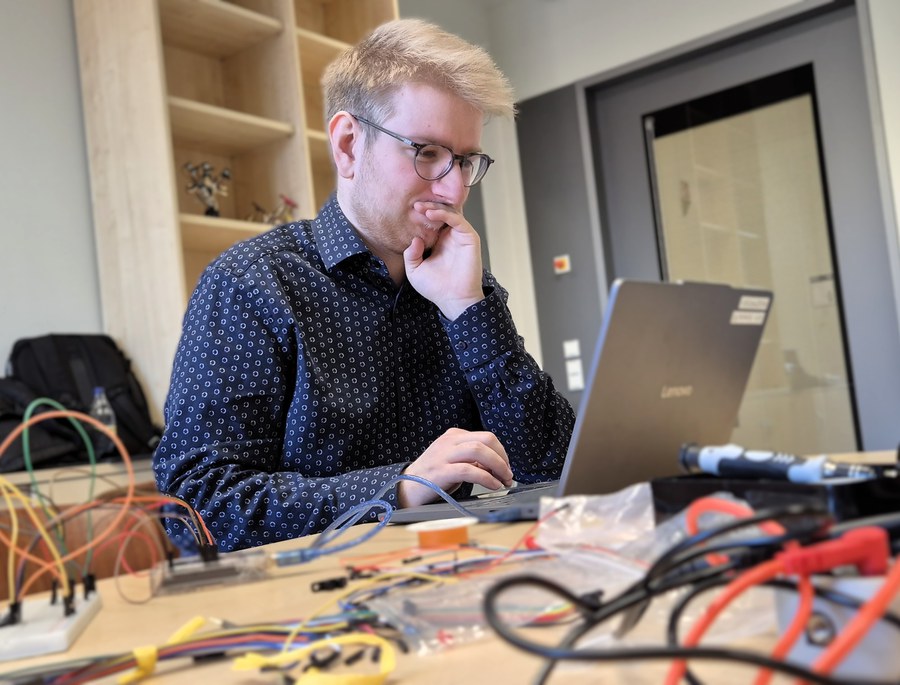
Niculin is in his tenth semester of Teacher Training – Vocational Schools, specializing in the departments of electrical engineering and information technology, as well as social studies, legal education, and economics. In the following interview, he answers a few questions about his daily life as a student.
During my studies, it’s mainly the social interactions and shared experiences outside of class that motivate me. Events like barbecue nights or regular get-togethers, where you can make new friends, are especially enjoyable. But passing exams—especially those where you’re surprised at how well you did—are also among the most motivating moments. The social aspect also plays a major role in the teaching profession. Conversations during breaks are especially valuable, as students show a completely different side of themselves and the focus isn’t solely on performance and grades. In addition, those “aha moments” in class are particularly motivating—when you realize that a student has had a lightbulb moment and finally understands what’s being taught.
One particularly challenging situation was my first attempt at teaching a class during my clinical rotation. Up until then, we had mainly focused on theoretical content, but the practical experience brought with it entirely new challenges. At first, it felt unfamiliar and was exhausting in its own way, since things didn’t always go as the theory suggested. However, this experience was very valuable, as I learned to respond more flexibly and find my own approach to teaching. Looking back, this situation reinforced my choice of career.
I would advise my younger self not to take everything too seriously, but also not to take it too lightly. It's important to find a good balance and maintain a healthy level of stress—one that motivates you but doesn't overwhelm you.

Pascal is in his second semester of Teacher Training – Vocational Schools, specializing in the departments of electrical engineering and information technology, as well as social studies, legal education, and economics. In the following interview, he answers a few questions about his daily life as a student.
For me, the best moments in my studies are when I realize that I’ve understood how electronic concepts fit together. Especially at the beginning, a lot of it seems very theoretical, but when individual concepts come together and you realize you can solve problems on your own, it’s a very motivating feeling. I’m also motivated by the thought of my future career as a teacher, because I’ll not only be working in my field but also passing on knowledge and interacting with people.
Starting college was a challenge for me, especially in electrical engineering. The level and pace are significantly higher than in high school, and especially at the beginning, it wasn’t easy to understand everything right away. I’ve learned to work in a more structured way, to seek help early on, and—most importantly—to keep at it, even when things don’t work out right away. This has made me a little more patient, and I’m now able to approach difficult topics with a more relaxed attitude.
I would advise myself to stay on top of things from the very beginning and not put anything off. Especially in electrical engineering, a lot of things build on one another. I would also tell myself not to be afraid to ask questions or to not understand things right away. That’s just part of the process. I’d also have more confidence in myself, because you can often accomplish more than you think you can at the beginning.

Paul is in his tenth semester of Teacher Training – Vocational Schools, specializing in the departments of electrical engineering and information technology, as well as mathematics. In the following interview, he answers a few questions about his daily life as a student.
During my teaching internships, what motivates me most is seeing the students’ progress—which I, as a teacher, have helped set in motion—and witnessing their enthusiasm, which I have helped ignite. During my studies, what stands out most is the deep understanding of course material gained through the various modules, the friendships formed while learning and understanding together, and the pride I feel from achieving milestones, such as passing modules.
The beginning of college was tough. You generally put a lot of pressure on yourself and are always comparing yourself to others, from whom you expect great things. Then you realize that with hard work, you can do well on exams, and that the others aren’t all that great either. With hard work, you’ll quickly find yourself among the top students.
Hard work will get you through college—so keep at it! And don't let others discourage you. The students you hear the most are the ones who complain the loudest. Keep at it, work hard, and you'll make it!
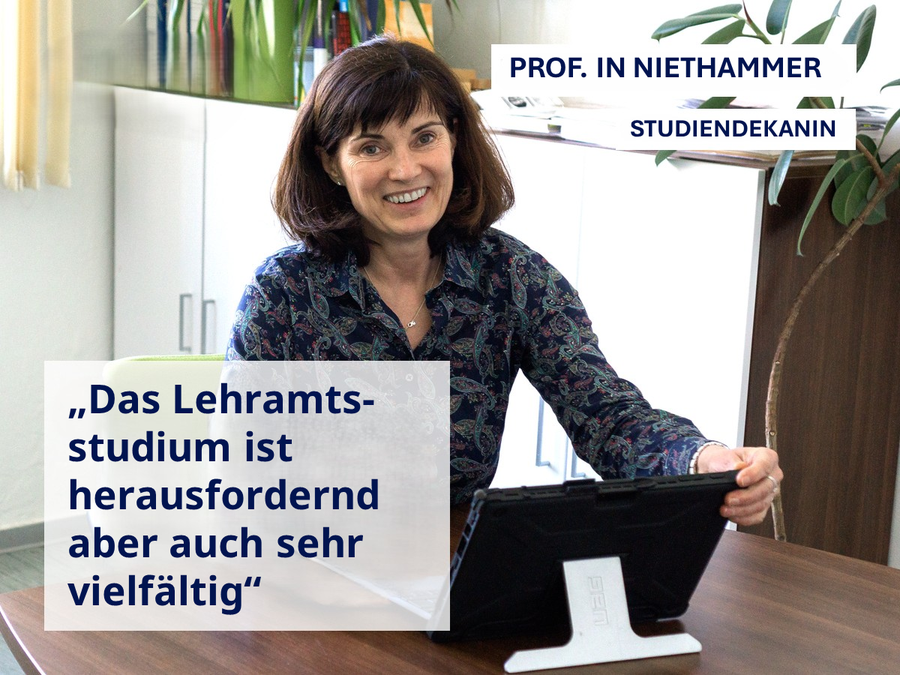
In the following interview, Dean of Studies Prof. Manuela Niethammer answers some important questions about the industrial and technical departments in the Teacher Training – Vocational Schools program.
Good skilled workers and tradespeople need good training. In Germany, this is ensured in particular through the dual system. This means that vocational training combines phases of both company-based and school-based training. Teachers for school-based training need a university degree, which can be obtained at TU Dresden, for example.
The higher education entrance qualification (HZB) is a prerequisite for starting the course (added by Lena). Vocational training or one year of professional experience in the chosen Department is very useful, as the working world of future students must be familiar to the teachers. Accordingly, professional experience is a prerequisite for registering for the first state examination at the end of the course.
The teacher training course is very varied and challenging. It essentially consists of three parts, a first vocational subject, a second vocational subject or a general subject and an educational science part including psychology. The vocational subject and the general subject each consist of subject-specific and didactic modules. All three parts include practical phases at school.
- Exciting and varied professional activities
- Unique combination of technology and education
- Secure career prospects - vocational school teachers in technical professions are always needed