
Aug 04, 2026
#101 A Walk for Democracy
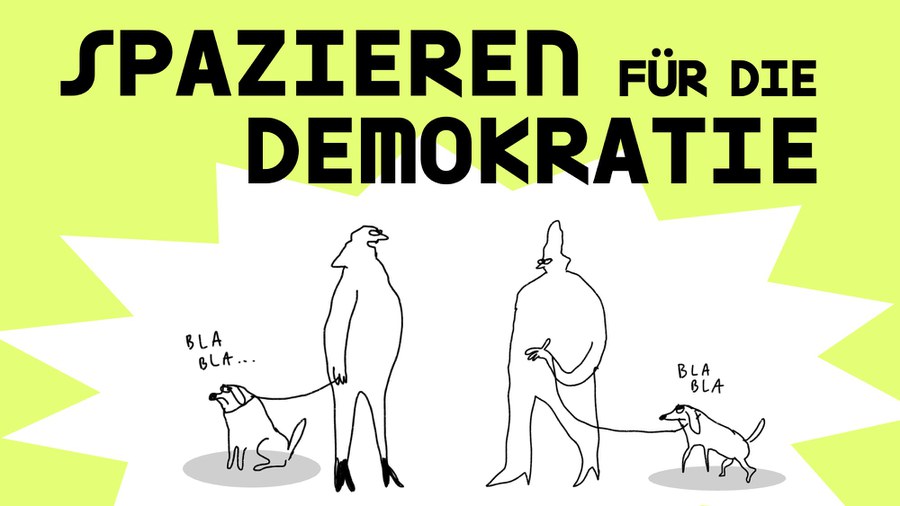
What actually makes a good place for political education? At JoDDiD, we’ve often reflected on so-called “third places” in recent years—places that are easily accessible and free of charge, that people visit in their free time, and that bring together people from very different backgrounds. But does it even have to be a specific location?
In Leipzig, Berlin, and elsewhere, so-called “walking clubs” are currently all the rage: People meet at a set time at a set starting point to set off together from there—and get to know one another along the way. The movement also emerged from a collectively experienced sense of loneliness that people are trying to combat.
We think that anyone who’s ever strolled through their own city like this and met new people along the way can just as easily use the opportunity to talk about more than just the current weather.
For example, where in the city you feel safe—and where you don’t. Which age groups of people you encounter in different parts of the city. Or which areas might be difficult to navigate with a wheelchair or a stroller. We’ve put together a few more questions like these that you could discuss together:
- Which places in the city do you associate with a political memory?
- Who is this street named after—and would you still call it that today?
- Is there a monument, a commemorative plaque, or a Stolperstein here? Who remains visible, and who is forgotten?
- What traces of immigration or the city’s history do you notice on buildings, stores, or signs?
- Where would you like to go, but don’t quite dare to?
- How does a place change depending on the time of day or night you pass through it?
- Are there places where you feel like you’re being watched? By whom?
- Who “owns” the green space next door right now—dogs, children, partygoers, no one, everyone?
A walking club with a political focus needs little more than a set route, a time, and people who are eager to strike up a conversation while walking. If you’d like, you can switch up the question for each leg of the walk or, at the end, draw a small map together with the most memorable answers—and just like that, the walk has turned into a little political urban exploration.
In the end, it’s not the distance that counts, but who walked it and with whom.