
Aug 06, 2026
#102 Political Radio Ballet
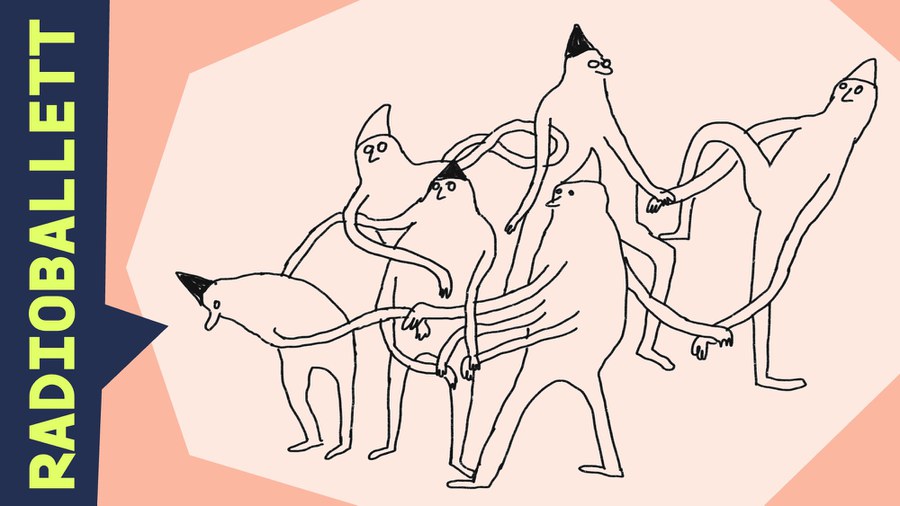
Imagine you’re strolling through the streets of your town or village and suddenly notice a group of people wearing headphones. They seem to be moving completely at random, wandering about and interacting with one another through their movements—but without saying a single word. Then you may have stumbled upon a radio ballet!
We find this art form, practiced by the Körperfunkkollektiv, extremely exciting. It enables exchange and interaction within a group in a spatial and physical way, without the need for speech—as is so often the case in our political education work.
But how exactly does it work? In a radio ballet, participants wear wireless headphones through which they hear a story with built-in instructions. By following these instructions, they bring the story to life themselves—and (if desired) right in the middle of a public space, surrounded by bystanders who have no idea what’s going on. What makes this special is that different participants can be given different instructions. This creates a “smart mob” with artistic merit—a performance that can be unexpected, engaging, challenging, and at times surprisingly intimate.
This is enormously appealing for political education, because it is precisely the breaking of norms in public spaces and the unique interaction among participants that can convey political ideas in a completely new way and, in retrospect, lead to profound conversations.
What might this look like in practice?
Let’s start very simply: Numbers are called out through the headphones. If the number corresponds to the age at which you had your first political experience, you lie down on the floor—until everyone is lying down. Who was involved very early on, and who remained standing until (almost) the very end? Why?
People could act out for each other what politics means to them. How can this be expressed using only one’s own body?
Participants could be asked to approach someone they think embodies a certain trait or has done something specific. For example, someone who has participated in more than five demonstrations, who donates to social causes, or who looks like they have power.
And one last idea: portraying a sense of vulnerability. Two examples: People who wouldn’t feel safe alone at the performance venue gather in a circle. Participants who have ever taken a detour on their way home begin walking around the rest of the group.
These are just initial ideas that can be developed further. After the ballet, the participants will have a shared physical experience they can talk about. Maybe you can get part of the group to dance a “political Bolognese”? Or do a headstand? We’re excited to see what you come up with!