
Jun 01, 2026
Prof. Christian Matthus is the new holder of the Chair of Systems Integration and Scientific Instrumentation
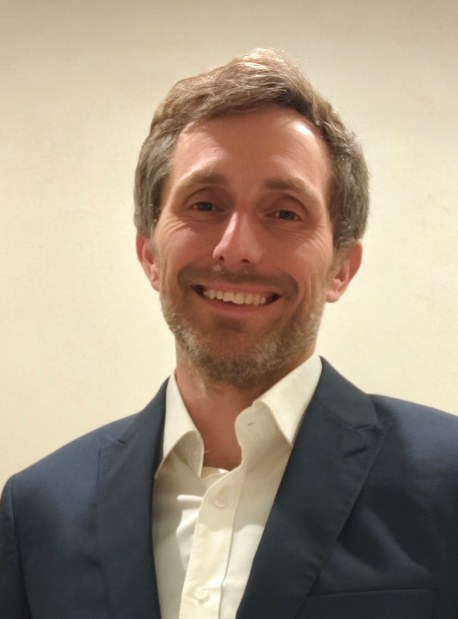
Prof. Christian Matthus
Since May 1, 2026, Prof. Christian Matthus has held the Chair of System Integration and Scientific Instrumentation in conjunction with the position of Deputy Director of the Kurt Schwabe Institute for Measurement and Sensor Technology in Meinsberg.
"I was already very interested in system integration in the context of advanced sensor and semiconductor technologies when I was a student," says Matthus, who studied electrical engineering in Chemnitz and Erlangen, specializing in microelectronics. "As an engineer and scientist, the balance between basic research on the one hand and applied research on the other is very important to me. It is a great success when the transfer of our research results to industry is successful." In the field of applied semiconductor research, Prof. Matthus brings experience from his work at the Fraunhofer Institutes for Electronic Nano Systems (ENAS) and Integrated Systems and Device Technology (IISB). In his doctorate, he investigated novel SiC UV sensors and later worked on SiC CMOS process development. Thanks to the prototype production line (π-Fab), SiC technology from Erlangen is also commercially available. He also worked in Erlangen on sensors and measurement methods, including with 2D materials.
He has been a member of TU Dresden since 2019, where he worked as a postdoc at the Chair of Circuit Technology and Network Theory in Circuit Design. He investigated fast and efficient integrated circuits for sensor applications such as amplifiers, filters and analog-to-digital converters. In recently published work on analog-to-digital converters, circuits were presented that achieve enormous energy efficiency at high sample rates and are therefore among the best in the world. In addition to these circuits in the classic signal path, he also focuses on circuits in new materials and device concepts, such as organic electrochemical transistors (OECT). In this area, he is researching artificial neurons together with Hans Kleemann from the Dresden Integrated Center for Applied Physics and Photonic Materials (IAPP). He would like to further advance the system integration of modern sensor systems, especially in the semiconductor context, through his work at the Kurt Schwabe Institute for Applied Sensor Research and the Institute of Semiconductors and Microsystems at TU Dresden. At the Kurt Schwabe Institute, he wants to strengthen the area of semiconductor technology for advanced bio-sensors together with Director of the Institute of Ulrich Rant. "I am looking forward to discussing these topics with the faculty and hope for fruitful collaborations," says Prof. Matthus, who is keen to maintain links with TU Dresden.
In teaching, he concentrates on component modeling and simulation with a focus on their application for circuit design. "I enjoy imparting such important specialist knowledge to young people. Well-trained engineers with in-depth knowledge of semiconductor components and technology, modeling and circuit design are enormously important for Dresden and Saxony as a research and business location. Silicon Saxony is already the most important semiconductor center in Europe and must be further strengthened in the future," says Matthus.
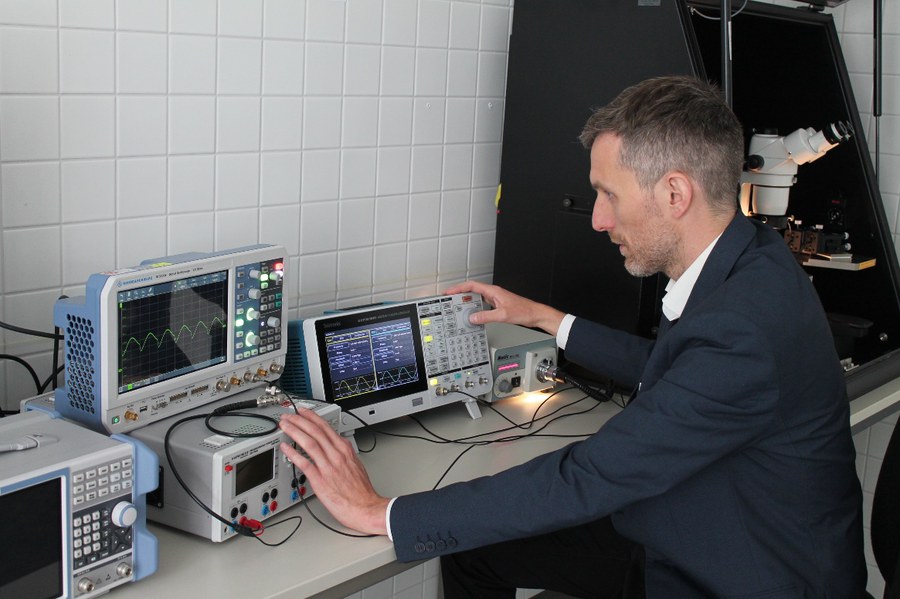
Prof. Christian Matthus
Scientist
NameMr Prof. Dr.-Ing. Christian Matthus
Send encrypted email via the SecureMail portal (for TUD external users only).