
Oct 28, 2026
Sustainable Materials from Mushroom Waste: New Group of Early-Career Researchers, “FUNgiSpace,” at TU Dresden
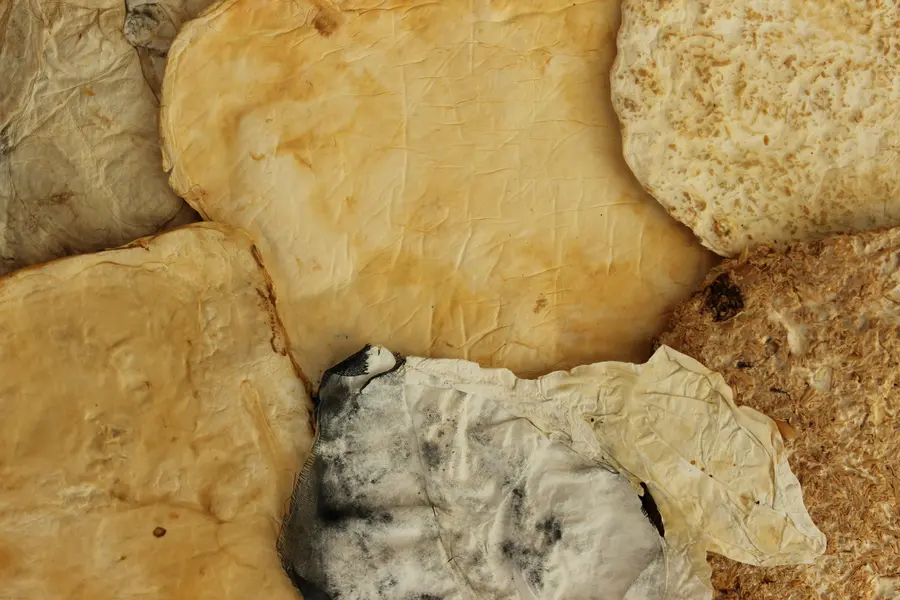
Close-up of the first material samples: fungal mycelium mixed with wood chips and textile carrier materials
On November 1, 2026, “FUNgiSpace” will launch at TU Dresden—a group of early-career female researchers dedicated to developing innovative high-tech materials from waste generated during edible mushroom production. Through October 31, 2028, female scientists from the Chair of Wood Technology and Wood-Based Bioeconomy and the Chair of Space Systems will investigate how these residual materials can be transformed into sustainable materials for lightweight construction, the packaging industry, and even for use in space. The goal of the project is to repurpose a previously unused waste product and thereby contribute to resource conservation.
Most people are familiar with mushrooms as a tasty ingredient in local or Asian cuisine. In mushroom farms, edible mushrooms are grown on wood substrates, which remain after the fruiting bodies are harvested. In Germany alone, approximately 10,000 metric tons of this substrate are generated annually. Studies have shown that this lightweight material—a solid composite of wood chips and fungal mycelium—possesses remarkable properties: It is naturally fire-retardant, water-repellent, and provides both thermal and acoustic insulation. Until now, however, this valuable raw material has been largely unused and is usually disposed of.
As part of the FUNgiSpace project, the researchers aim to use these residual materials as a starting material for entirely new “mycelium-based materials.” To this end, they will be processed in such a way that they can also be used in demanding high-tech applications. Possible applications include lightweight and sturdy components for vehicle interiors, eco-friendly barrier layers for packaging, or even building materials that astronauts could produce in the future on the Moon or Mars directly from locally available rock (regolith) and mycelium. By combining the bioeconomy, cutting-edge materials research, and space technology, functionalized material solutions can be developed that are not only sustainable and biodegradable but can also replace synthetic and non-sustainable materials.
A distinctive feature of the project is the support provided in a targeted manner to seven early-career female researchers, who are receiving comprehensive training in the fields of sustainability and clean technologies. In this way, the project sends a clear signal in support of gender equality, equal opportunities, and securing a skilled workforce in Saxony. The interdisciplinary network of expertise brings together knowledge from materials science, the bioeconomy, aerospace engineering, and design, thereby laying the foundation for innovative solutions.
FUNgiSpace is significant not only scientifically but also strategically: It contributes to the technological and economic strengthening of the European Union by developing resource-efficient technologies, strengthening regional and European value chains, and reducing strategic dependencies.
FUNgiSpace is funded with 1.4 million euros from the European Social Fund (ESF) of the Free State of Saxony.
Contact:
 © R. Windelband | TUD
Ms Dipl.-Ing. Rosa Windelband
Send encrypted email via the SecureMail portal (for TUD external users only).
Holztechnologie und holzbasierte Bioökonomie | MAR 32
Holztechnologie und holzbasierte Bioökonomie | MAR 32