
Mar 18, 2026
Review: The DECHEMA annual meeting of the AuW/ROH, AT and GAS sections on 09-10.03.2026
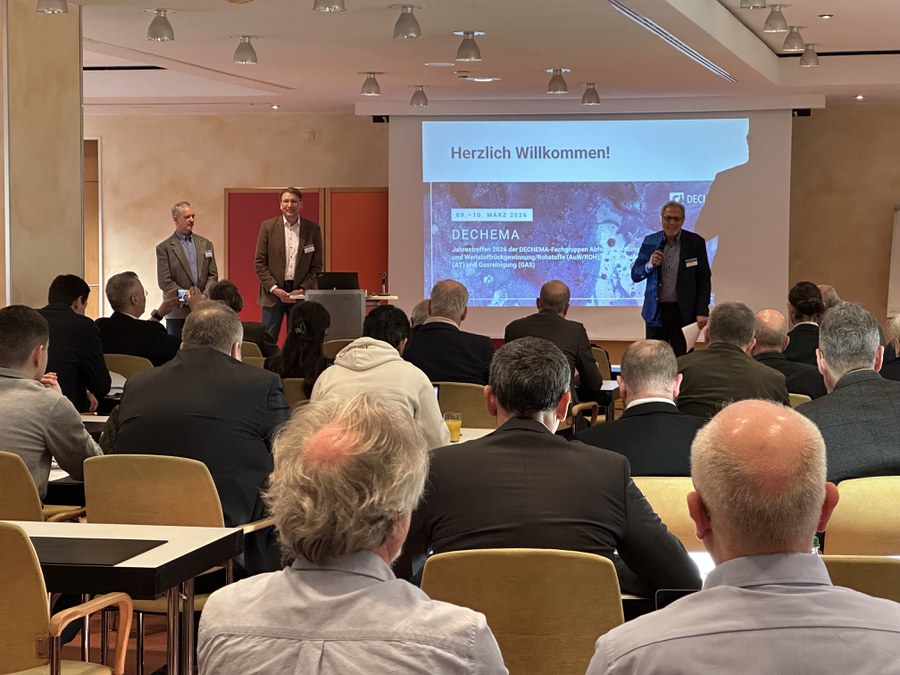
From left to right: Dr.-Ing. Steffen Heidenreich (Pall GmbH), Prof. Dr.-Ing. Michael Beckmann (TU Dresden) and Prof. Dr. rer. nat. Alfred P. Weber (TU Clausthal) jointly open the DECHEMA Annual Meeting 2026.
On March 9 and 10, 2026, the joint annual meeting of the DECHEMA specialist groups Waste Treatment and Resource Recovery/Raw Materials (AuW/ROH), Aerosol Technology (AT) and Gas Cleaning (GAS) took place at the Hotel Elbflorenz in Dresden. A total of 95 participants from science, industry and authorities used the event to discuss current developments, research results and challenges in their specialist fields.
The meeting was organized under the scientific direction of Prof. Dr.-Ing. Michael Beckmann (TU Dresden), Prof. Dr. rer. nat. Alfred P. Weber (TU Clausthal) and Dr.-Ing. Steffen Heidenreich (Pall GmbH).
The first day of the event
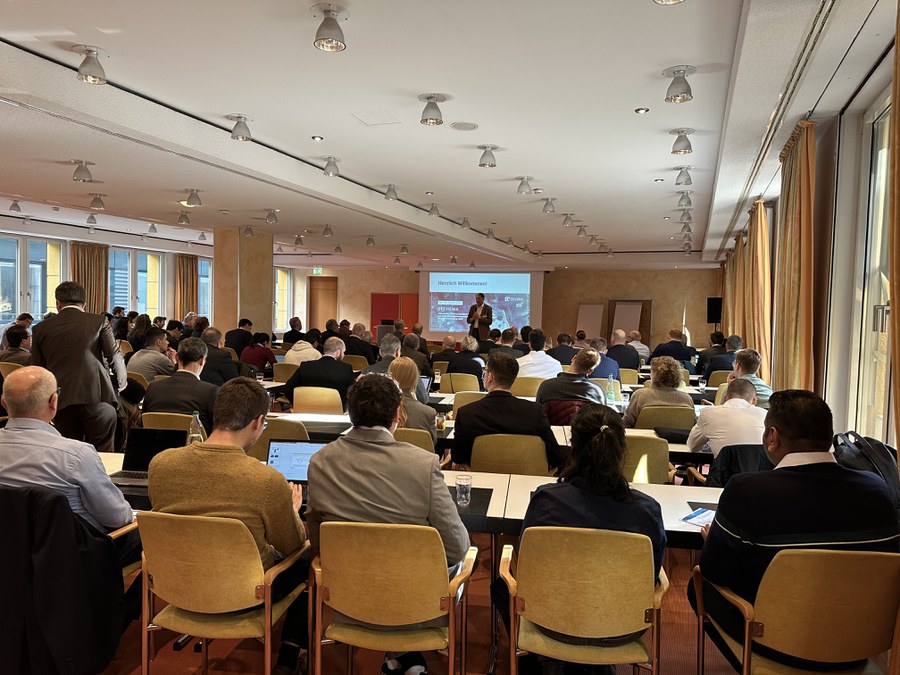
Während der gemeinsamen Plenarveranstaltung der drei Fachgruppen war der Saal beinahe bis auf den letzten Platz besetzt.
The event kicked off with a joint plenary session in which central topics of energy and environmental process engineering were addressed. Among other things, contributions dealt with the determination of energy efficiency in accordance with the 17th BImSchV, the production of multi-component oxides using spray flame synthesis, current market developments in the field of filtration and the recovery of valuable materials from flue gas cleaning residues. Other presentations highlighted the use of high-temperature electrostatic precipitators and modern flue gas cleaning technologies in high-temperature processes.
In the afternoon, the three specialist groups continued their program in parallel sessions.
The programs within the three specialist groups
The Waste Treatment and Resource Recovery/Raw Materials specialist group first devoted a workshop to CO₂ separation in waste incineration plants. In addition to technical issues, economic aspects and results from experimental studies and simulations were also discussed. Another focus was on the circular economy, for example through digital material flow management approaches for electrolysers, new concepts for recycling technical textiles and the evaluation of pollutant accumulations in the European plastics circular economy.
The Aerosol Technology specialist group focused on innovative synthesis concepts for nanoparticles and functional materials, such as the solvent-free production of silicon dioxide in a spray flame reactor or the production of mesoporous cerium oxide nanoparticles using spray pyrolysis. Other contributions dealt with the characterization of aerosols, new methods of signal processing for scattered light aerosol spectrometers and the real-time control of nanoparticle syntheses.
The gas purification specialist group dealt with current research work on particle separation and filtration. Discussions included models for describing filtration processes, experimental studies on soot oxidation in filter channels and new approaches to improving filter efficiency through ionization-induced polarization of filter fibres. Another focus was on electrostatic precipitation processes and their application under different process conditions.
The second day of the event
The second day of the event delved deeper into the topics of the previous day in further specialist group sessions. In the AuW/ROH expert group, PFAS contamination in waste streams and incineration plants as well as the characterization and energetic evaluation of residual materials were discussed in particular. The Aerosol Technology specialist group dealt with transport processes, coagulation and the synthesis of complex aerosol heteroaggregates, for example for catalytic applications or battery materials. The gas purification group focused on coalescence processes in oil mist filters, numerical investigations into droplet dynamics and new approaches to SO₂ separation and catalytic material development.
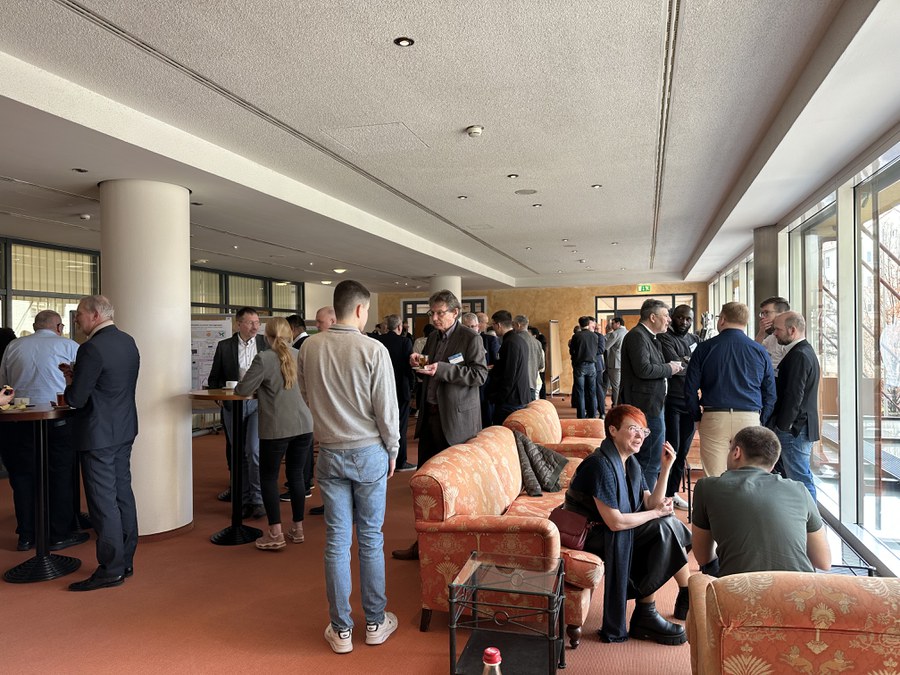
Die Pausen dienten dem regen Networking sowie dem Austausch von Gedanken und Ideen.
The programme was complemented by an extensive poster exhibition in which young scientists presented their latest work on topics such as aerosol characterization, particle synthesis, plastics recycling and emission measurements.
In addition to the scientific exchange, the annual meeting also offered the opportunity for personal networking, starting with the evening meeting of the participants before the event began, during the breaks and, of course, at the joint evening event.
The 2026 Annual Meeting impressively demonstrated the wide range of topics and the close interlinking of the specialist areas of waste treatment, aerosol technology and gas purification. At the same time, it became clear how strongly current challenges - such as climate protection, the circular economy and emissions reduction - are shaping research and development in these areas.
We are already looking forward to next year's annual meeting of the specialist groups and hope that all participants had a good time with us and can now return to their companies and research facilities with fresh ideas.