
Nov 02, 2026
Review: The 30th Impacts of Fuel Quality Conference in Aspen Grove, Utah
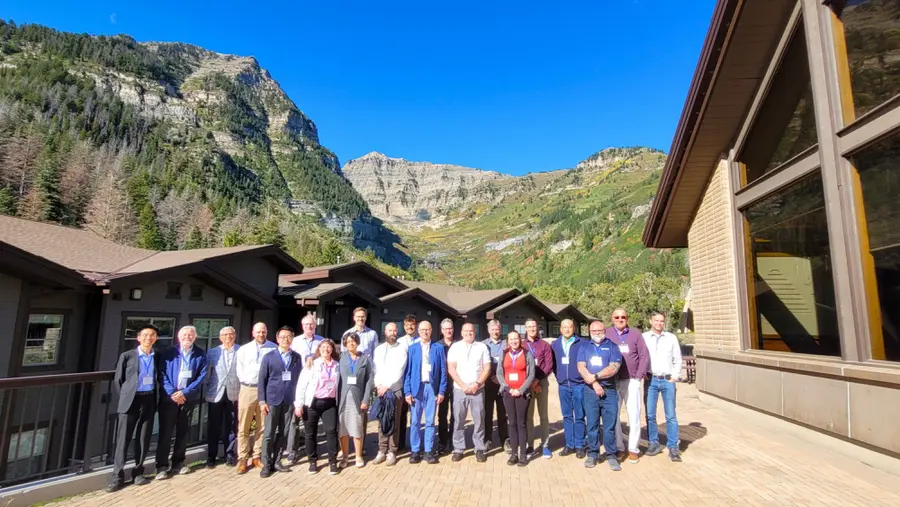
From September 20 to 25, 2026, the 30th Impacts of Fuel Quality Conference (IFQ) took place in Aspen Grove near Provo Canyon in the U.S. state of Utah. Held annually since 1963, the conference brings together international experts to discuss current developments and research findings regarding the properties of fuels and their effects on industrial processes . The Chair of Energy Process Engineering was represented with three conference presentations and showcased recent work from its research.
The conference focused on the diverse challenges associated with the use of conventional and alternative fuels. Topics ranged from biomass, waste-derived fuels, and low-carbon energy sources to combustion and gasification processes, as well as emissions, corrosion, and ash formation. Hydrogen, ammonia, biochar, and technologies for CO₂ utilization and capture were also among the topics covered.
Three presentations on current issues in process engineering
With three scientific presentations, the EVT contributed its research on various aspects of combustion and plant engineering to the conference program.
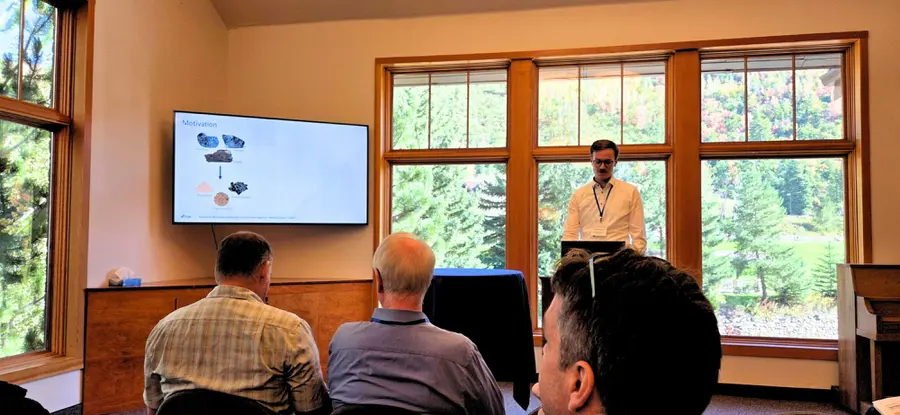
Matteo Giesen, M.Sc, während seines Vortrags auf der IFQ 2026.
In his presentation titled “Numerical Modeling of Biomass Particle Cloud Ignition,” Matteo Giesen, M.Sc., presented the development of a numerical model for the ignition of biomass dust clouds. The model simulates the key subprocesses of ignition, including drying, degassing, gas-phase chemistry, and coke combustion. In addition, the underlying heat and mass transfer processes are taken into account. The modeling helps to better describe the complex processes involved in the ignition of biomass particles.
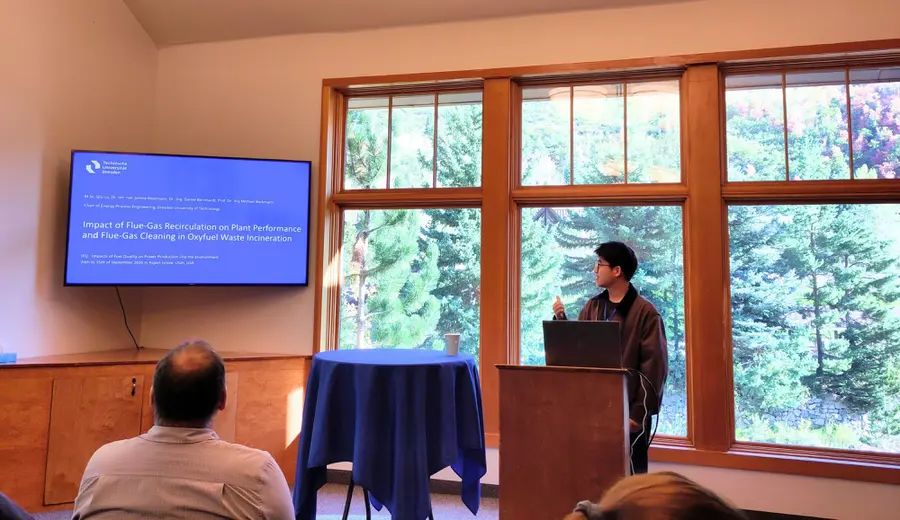
Qiu Lu, M.Sc., präsentiert seine Forschungsergebisse.
Qiu Lu, M.Sc., presented the paper “Impact of Flue-Gas Recirculation on Plant Performance and Flue-Gas Cleaning in Oxyfuel Waste Incineration.” The paper examines the influence of various flue gas recirculation concepts on plant performance and flue gas cleaning in oxyfuel waste incineration. Thus, the work addresses two key aspects of the further development of this incineration technology.
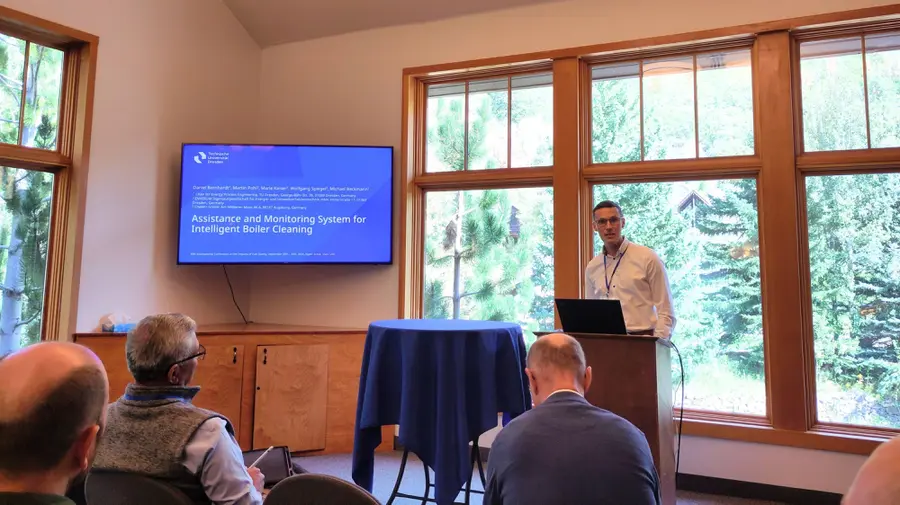
Dr.-Ing. Daniel Bernhardt spricht vor den Teilnehmenden der IFQ.
Dr.-Ing. Daniel Bernhardt presented “Assistance and Monitoring System for Intelligent Boiler Cleaning,” an assistance and monitoring system for intelligent boiler cleaning. The focus is on supporting and monitoring cleaning processes that are critical for reliable and efficient plant operation.
In addition to the technical exchange, there was also an opportunity to explore Utah’s impressive landscape. A particular highlight was the visit to Bryce Canyon National Park with its extraordinary rock formations.
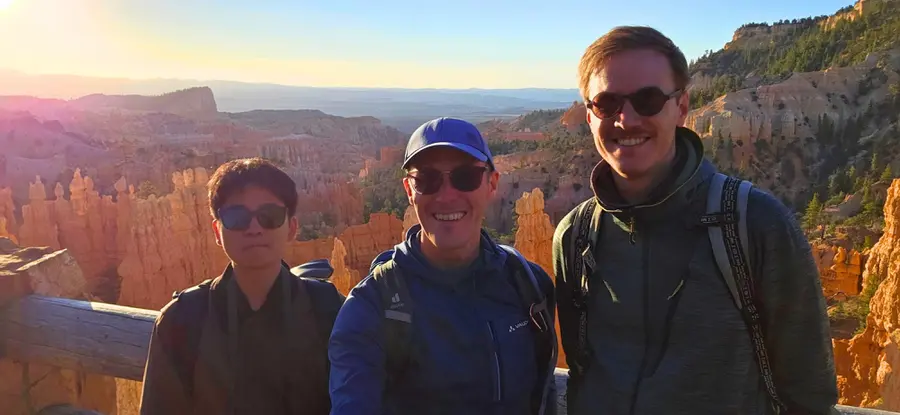
V.l.n.r.: Qiu Lu, Daniel Bernhardt und Matteo Giesen nutzten die freie Zeit nach den Vorträgen für einen Ausflug in die Umgebung.
Dr.-Ing. Daniel Bernhardt Elected to the Executive Committee
A special achievement for EVT was announced at the conference’s closing dinner: Dr.-Ing. Daniel Bernhardt, head of the High-Temperature Process Engineering research group at our Chair of Energy Process Engineering, was elected to the IFQ Executive Committee. This appointment underscores the EVT’s involvement in the international professional community and opens up further opportunities to actively shape technical collaboration and scientific exchange.
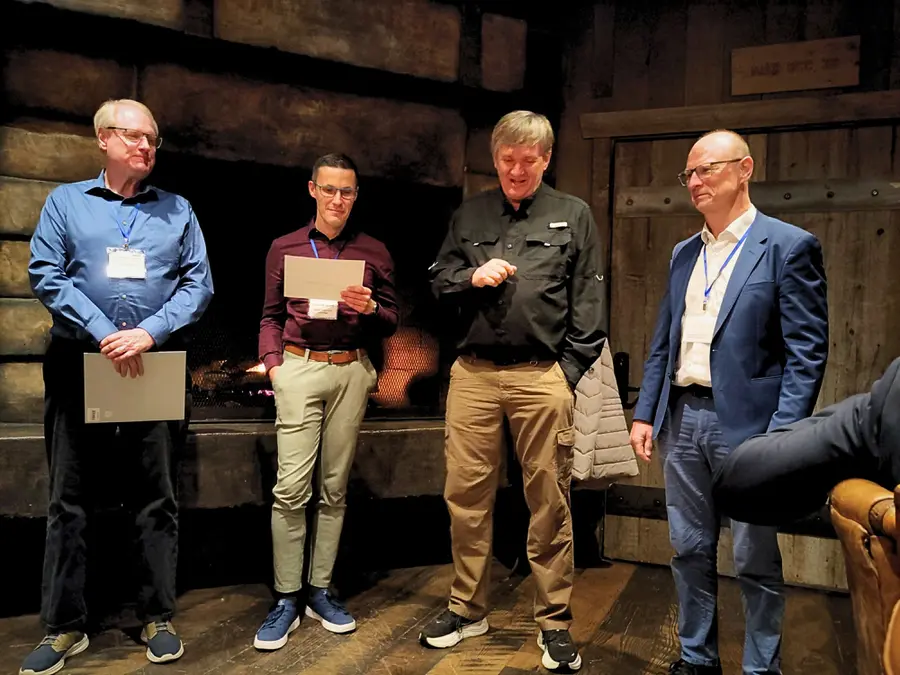
V.l.n.r: Dr. Bradley Adams, Brigham Young University (BYU); Dr.-Ing. Daniel Bernhardt, TU Dresden; Prof. Larry L. Baxter, Brigham Young University (BYU) und Prof. Dr. Franz Winter, TU Wien.
Dresden to Host the Next IFQ in September 2028
There is also an important outlook beyond this year’s conference: The next Impacts of Fuel Quality Conference will be hosted by the EVT in September 2028. This will once again make TU Dresden a hub for international exchange on fuel quality, combustion processes, and their effects on industrial plants.
The 2026 Impacts of Fuel Quality Conference not only provided our advisors with a platform to present their latest research findings to an international audience of experts but also generated important momentum for further networking and future collaboration. We look forward to seeing all participants again in 2028.