
Jun 09, 2026
Prof. Simon Alberti Becomes New Member of the Leopoldina
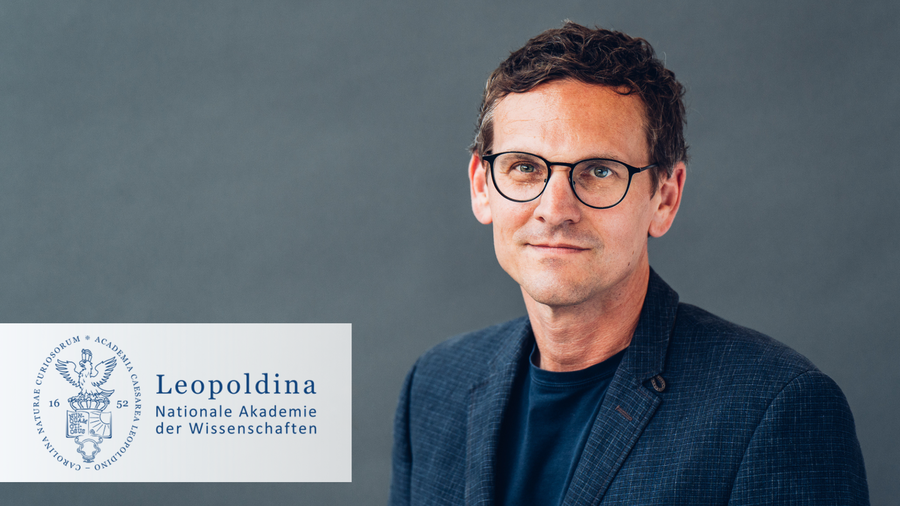
Prof. Simon Alberti
Prof. Simon Alberti has been elected as a new member of the German National Academy of Sciences Leopoldina. One of the most cited scientists in the world, Prof. Alberti is a research group leader at the Biotechnology Center (BIOTEC) and a Professor of Cellular Biochemistry at TU Dresden. His innovative research focuses on the cellular organization and how cells respond to stress.
As a biologist, Prof. Alberti and his research group use biochemical, biophysical, genetic, and cell biological methods to discover the molecular mechanisms that control the internal organization inside our cells.
Cells are filled with cytoplasm, a gel-like fluid. Under the influence of environmental stress such as temperature or mechanical pressure, the cytoplasm changes and reorganizes itself. During this process, specific molecules cluster together to form biomolecular condensates – flexible, membrane-less hubs that help the cell respond to stress.
The goal of Prof. Alberti’s group is to understand how these biomolecular condensates help cells survive and also, how in some cases, they can contribute to diseases. Ultimately, their research lays the groundwork for understanding rare neurodegenerative diseases such as amyotrophic lateral sclerosis (ALS) and frontotemporal dementia (FTD).
Prof. Alberti will bring his expertise in biochemistry to the Academy’s Class II, the group of Leopoldina members specializing in Life Sciences.
Together with other members of the Leopoldina, Prof. Alberti will represent German science on the international stage and provide science-based advice to policymakers and society.
About the National Academy of Sciences Leopoldina
Founded in 1652, the German National Academy of Sciences Leopoldina is a classical scholarly society with around 1,700 members from almost all fields of science. It was named Germany's National Academy of Sciences in 2008. As such, it represents German science abroad and advises politicians and the public.
Leopoldina’s working framework is divided into classes and sections. All academy members are organized according to their field of research in 28 sections, which in turn are assigned to four classes. This grouping into classes, introduced in 2009, promotes interdisciplinary discussion and the participation of members in the Academy's work.
Prof. Alberti’s group website: tud.link/1q3nxn
About the BIOTEC
The Biotechnology Center (BIOTEC) was founded in 2000 as a central scientific unit of the TU Dresden with the goal of combining modern approaches in molecular and cell biology with the traditionally strong engineering in Dresden. Since 2016, the BIOTEC is part of the central scientific unit “Center for Molecular and Cellular Bioengineering” (CMCB) of the TU Dresden. The BIOTEC is fostering developments in research and teaching within the Molecular Bioengineering research field and combines approaches in cell biology, biophysics and bioinformatics. It plays a central role within the research priority area Health Sciences, Biomedicine and Bioengineering of the TU Dresden.
www.tu-dresden.de/cmcb/biotec
www.tu-dresden.de/cmcb