
2026 Dresden Science Night at CMCB
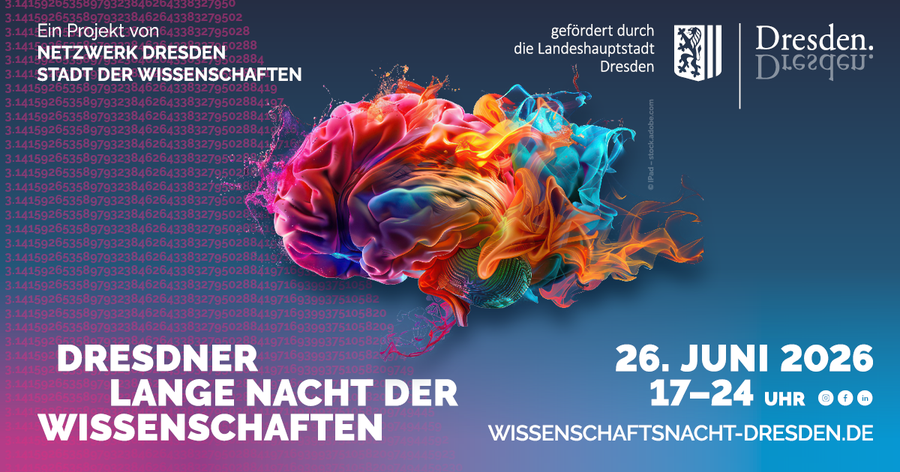
Take part in Dresden Science Night at the Center for Molecular and Cellular Bioengineering (CMCB) of TU Dresden.
Researchers from the B CUBE - Center for Molecular Bioengineering, the Biotechnology Center (BIOTEC), the Center for Regenerative Therapies Dresden (CRTD), the Excellence Cluster Physics of Life (PoL), and partner institutions of the Johannstadt Campus are looking forward to getting you excited about the natural sciences. Various hands-on experiments, lectures, exhibitions, videos, a science slam and much more await you!
All events take place in the CRTD:
Fetscherstraße 105
01307 Dresden, Germany
More information about the program can be found below.
Table of contents

Program (5 p.m. - midnight)
Booths
Presenters:
Ader Group, Center for Regenerative Therapies Dresden (CRTD)
Karl Group, Center for Regenerative Therapies Dresden (CRTD) and German Center for Neurodegenerative Diseases (DZNE)
Description:
The eye - organ of our most precious sense. Learn about its structure and how it changes in degenerative diseases. What are retinal organoids or induced pluripotent stem cells and how can they help researchers to understand diseases and develop therapies? What challenges do blind people face? Come in and explore all of this in our darkroom experience, the walk-in eye model and talk to the scientists.
Presenters:
Albert Group, Center for Regenerative Therapies Dresden (CRTD)
Description:
As the brain develops, nerve cells are formed in the brain from neural stem cells and progenitor cells. Until now, it has been difficult to study this process in humans. New models in neuroscience, so-called brain organoids, now make it possible to study human brain development in 3D in the laboratory. Join us to look at brain organoids under the microscope and learn about exciting applications of these new models.
Presenters:
Albert Group, Center for Regenerative Therapies Dresden (CRTD)
Description:
Every human being consists of a large number of tiny building blocks, the cells. Our brain, which is responsible for our thoughts, feelings, speech and movements, is made up of cells, in particular nerve cells. These in many ways extraordinary cells are only a few micrometer in diameter, but can be a good meter long. Get to know the special properties of nerve cells and make a model of these cells that is as close to the original as possible!
Presenters:
Axolotl Facility
Description:
Hi kids, maybe you've dreamed of seeing a real axolotl? Now's your chance!
Each tour lasts 10 minutes and is suitable for children aged 6-12.
Presenters:
Diez Group, B CUBE - Center for Molecular Bioengineering
Description:
Inside our cells, tiny molecular machines called motor proteins work like delivery trucks. They travel along intracellular highways known as microtubules to get rid of waste, deliver nutrients and all the essential components the cell needs.
Watch how these motors switch tracks to navigate around obstacles and keep everything running smoothly! Explore how scientists use the interactions between these motors and roadblocks to design miniature devices for detecting signs of diseases.
Presenters:
Honigmann Group, Biotechnology Center (BIOTEC)
Description:
All our organs are lined by barrier forming tissues that protect us against pathogen invasion and control which molecules are allowed to go in and out. To this end cells have evolved a special sealing machinery called Tight Junctions, which are able to glue all cells in the barrier forming tissue together without leaving any gaps. Find out how Tight Junction form selective barriers by looking through our microscopes and solve challenging jigsaw puzzles to form a sealed tissue from cells.
Presenters:
Light Microscopy Facility, Center for Molecular and Cellular Bioengineering (CMCB)
Description:
The CMCB Light Microscopy Facility has put everyday items under a microscope to examine them with high magnification. Exciting details now become visible transforming these ordinary objects into fascinating samples.
Bring your own objects (stones, flowers, dead insects. etc.) if you like or prepare fresh samples like your own cells!
Presenters:
Politi Group, B CUBE - Center for Molecular Bioengineering
Description:
Many insects and spiders have structures with unique features that give them incredible abilities. These structures are made of building blocks that organize themselves into complex patters at different levels to eventually function together. Our group studies one of the nature’s most abundant building block called chitin to understand the principles of its organization and bio-chemi-physical interactions.
Immerse yourself in the intricate structures of nature as we delve into the secrets of chitin and its role in shaping the world of arthropods. Learn how to distinguish between male and female spiders, and even create your own souvenir to take home!
Presenters:
Schroeder Group, Biotechnology Center (BIOTEC)
Description:
Join us for a hands-on exploration of the fascinating world of computational biology! We’ll share our latest findings on antibiotic resistance, cancer research, and drug development.
In addition to learning about cutting-edge science, we'll be getting our hands dirty with some fun activities. We'll work together to fold proteins and learn about the important roles they play in our bodies. And for the younger scientists in the crowd, we'll have games that teach them how drugs fight diseases.
Presenters:
Sieweke Group, Center for Regenerative Therapies Dresden (CRTD)
Description:
Step into the fascinating world of the human body and explore the amazing work of macrophages! Discover where these cells live and how they work to keep us healthy. Watch mesmerizing videos and see live macrophages up close through a microscope. Get creative with our interactive children's games! Draw your own macrophage glove and use it to eat harmful bacteria and organisms. Or sculpt your very own macrophage using Play-Doh. Don't miss out on this exciting opportunity to learn more about the incredible world inside our bodies!
Presenters:
Becker Group, Center for Regenerative Therapies Dresden (CRTD)
Description:
Discover the amazing world of zebrafish! See adult and larval fish, watch how they develop from an egg to a free-swimming baby fish, and explore glowing fluorescent fish under the microscope. Try collecting fish eggs yourself, and learn how zebrafish help scientists understand regeneration and development. Experience science up close – fun for all ages!
Presenters:
Andreev Group, Center for Regenerative Therapies Dresden (CRTD)
Description:
Join us for a fun and educational day all about bone health! Discover how osteoblasts and osteoclasts work together to keep our bones strong—and what happens when that balance is disrupted in arthritis. Learn why calcium is essential for healthy bones, how astronauts deal with bone loss in space, and how a balanced diet helps protect your skeleton.
Kids and adults can enjoy games and hands-on activities, including a chance to see real bone cells under the microscope.
Come and explore the fascinating world of your bones!
Presenters:
Bringmann Group, Biotechnology Center (BIOTEC)
Description:
What is the reason that we sleep and what is happening in that resting phase?
The Bringmann laboratory is studying sleep using a tiny worm called Caenorhabditis elegans, which is transparent and only about a millimeter long. Even this small fella shows some behavior that is comparable to human sleep.
At the Bringmann station you can look at these worms using microscopes that scientists use on a daily basis to investigate the mechanisms behind sleep. Become a scientist and observe fluorescent worms in real time.
Presenters:
DRESDEN-concept Genome Center (DcGC)
Description:
Did you know that there are trillions of cells in your body? Each cell contains a 1.8 m long chain of genetic material called the DNA. Each bead of the DNA is called as a nucleotide. There are four different nucleotides (A, T, G, and C) and they are enough to arrange all the sequences that make up the genetic code. Scientists can read this code and step by step understand the genetic basis of life. Learn how we sequence the DNA at the DRESDEN-concept Genome Center and how we help the researchers around us to answer their scientific questions.
Presenters:
iGEM Team of TU Dresden
Description:
At our exhibition booth, we aim to introduce the public to iGEM competition, synthetic biology, and RNA interference (RNAi) through engaging activities such as videos, games, and interactive props. Visitors can participate in a lucky wheel quiz with prizes.
Presenters:
Rodríguez-Muela Group, Center for Regenerative Therapies TU Dresden (CRTD) and German Center for Neurodegenerative Diseases (DZNE)
Description:
In our stand you can have a direct experience of our organoid model for Alzheimer's, Spinal Muscular Atrophy and Amyotrophic Lateral Sclerosis (ALS). You can build up a neural network, or reprogram and differentiate cells. We also have an exciting challenge for you in a pipette tip box refiling competition!
Presenter:
Paul Langerhans Institute Dresden, Center for Diabetes Research
Description:
See with your own eyes how much sugar is in common foods and drinks, you won't believe how much even healthy-sounding foods contain! Kids can play with colored liquid using the same tools as scientists. Learn the trick soft drinks companies use to pack sugar into beverages. Look at the pancreas with a microscope: experts will be there to tell you what you are looking at. View information about the frequency of diabetes in Saxony and what the PLID research team are doing to tackle it.
Vortragende:
PRO RETINA Deutschland e. V., Selbsthilfevereinigung von Menschen mit Netzhautdegenerationen
Beschreibung:
Wie findet man als blinde Person den Weg? Wie kann man trotz nachlassender Sehkraft selbstbestimmt leben? Wer hilft im Alltag, wenn die Augen einen im Stich lassen? Antworten und Beratung gibt es am Stand von PRO RETINA. Beim Sinnes-Parcours erleben Besucher*innen, wie blinde Menschen sich mit Langstock und Bodenleitsystem orientieren und können testen, ob es ihnen mit eingeschränkter Sehkraft gelänge, alltägliche Aufgaben zu bewältigen.
Presenters:
SaxoCell, TU Dresden
Description:
Step into the world of living medicines with a captivating short film that brings CAR-T cell therapy to life, showing how your very own cells can be transformed into powerful treatments. Test your knowledge in our interactive immune cell quiz and discover the unique traits of different cell types. Ever wondered which immune cell is most like you? Come find out!
Presenters:
Schlierf Group, B CUBE - Center for Molecular Bioengineering
Description:
Join us in discovering the amazing world of molecular movements inside cells! Picture tiny particles and molecules always on the move, either pushed along actively or just drifting around because of heat. Scientists have ways to watch it in action!
Just like watching a busy highway system inside a cell, with molecules zipping around like cars on the road, we can watch how DNA molecules travel inside and between neighboring cells. We'll also show you how heat affects what happens inside a cell.
Presenters:
Schneider Group, Center for Regenerative Therapies TU Dresden (CRTD)
Description:
Did you know that most of the cells in your body aren't you? They're your microbiome! Come and meet the microbiome, discover how it keeps you healthy, and learn how to support your "gut" neighbors.
Create your own diverse microbiome, then take home the makings for a yummy bean stew (which will keep your bacteria happy and healthy too). There will also be a microscope to see what your cells look like!
Presenters:
Zlotnikov Group, B CUBE - Center for Molecular Bioengineering
Description:
Step into a hidden 3D world of nature! Using powerful microscopes, we capture real images of tiny structures like butterfly wings, spider fangs, and sponge skeletons. With special red/blue glasses, these images come alive in stunning 3D. Explore shapes, textures, and patterns invisible to the eye, and discover how nature builds incredible materials at the smallest scale. See depth, detail, and beauty like never before.
Presenters:
Center for Membrane Biochemistry and Lipid Research (ZML)
Description:
In ZML we study how the lipids work and how they affect our health. At our stand, you can try your hand at separating colorful molecules using a special technique called thin-layer chromatography, play a board game that's all about lipids, or match your favorite snacks with their nutritional profiles. As a bonus, you'll get to take home some small souvenirs from your experiments. So join us and explore the world of lipids in a fun and interactive way!
Presenters:
Taubenberger Group, Biotechnology Center (BIOTEC)
Description:
We will show a self-built model of an atomic force microscope (AFM) cantilever to demonstrate the measurement principle, along with a video showing the device in action, mapping a tissue to assess its elastic properties at the single cell scale. In addition, we will offer a quiz where visitors probe a gel with their fingers and guess which tissue the gel should reflect with regards to elastic properties (from brain to cartilage).
Votragende:
Hampe Group, Center for Regenerative Therapies TU Dresden (CRTD)
Description:
Take a closer look at one of the body’s most versatile organs: the liver. At our station, you can explore real samples of healthy and diseased mouse liver tissue, revealing how poor diet or alcohol change the organ at a microscopic level.
Fatty liver disease is the most common liver disorder worldwide affecting an estimated 30% of the adult population, and its prevalence is rising, with projections suggesting it could exceed 50% by 2040). What does this mean for our health? Over time, fatty liver can progress to more serious conditions, including cirrhosis and liver cancer, the third leading cause of cancer-related deaths globally.
Test your knowledge with a quiz and discover how research is helping us better understand and protect this vital organ.
Presenters:
Sayed Group, Mildred-Scheel-Nachwuchszentrum (MSNZ), Medizinische Fakultät Carl Gustav Carus
Description:
CRISPR base editors could transform cancer therapy: instead of only attacking tumors, they can directly correct the genetic errors that drive them. Without cutting the DNA, single mutations in cancer-driving can be repaired with high precision. Using patient-derived tumor models, we investigate whether this strategy can lead to more effective, personalized, and longer-lasting treatments.
Talks
The following lectures will take place in the lecture hall on the left side of the CRTD.
Vortragende:
Prof. Dr. Martin Bornhäuser, Universitätsklinikum Carl Gustav Carus Dresden
Beschreibung:
Was sind „lebende Arzneimittel“? Wie kann eine Zelle zum Medikament werden? Und was passiert dabei im Labor? Prof. Dr. Martin Bornhäuser vom Universitätsklinikum Dresden erklärt anschaulich, wie körpereigene Zellen zu modernen Therapien werden können, etwa gegen Krebs. Ein spannender Einblick in die Zelltherapie-Forschung in Dresden – und in eine Medizin, die mit lebenden Zellen arbeitet.
Der Vortrag wird in deutscher Sprache gehalten.
Tours
Visiting the B CUBE - Center for Molecular Bioengineering
Join B CUBE for the Dresden Science Night! Discover the intersection of biology and engineering through 30-minute behind-the-scenes lab tours:
- Diez Group: Discover the tiny transport machines that are the delivery service inside our cells.
- Politi Group: Explore the world of arthropods, chitin structures, and how to identify spider gender.
- Zlotnikov Group: Experience a hidden 3D world through powerful microscopes.
- Zhang Group: Explore drug discovery and 3D printing.
| Time | Group | Language | Age Group | Group Size |
|---|---|---|---|---|
| 18:00 | Diez | German 🇩🇪 | >8 | 12 |
| 18:00 | Zhang | German 🇩🇪 | >8 | 6 |
| 18:30 | Zlotnikov | German 🇩🇪 | >5 | 8 |
| 19:00 | Politi | German 🇩🇪 | >12 | 10 |
| 19:00 | Zhang | German 🇩🇪 | >8 | 6 |
| 19:15 | Diez | English 🇬🇧 | >8 | 12 |
| 20:00 | Zlotnikov | German 🇩🇪 | >5 | 8 |
| 20:00 | Zhang | German 🇩🇪 | >8 | 6 |
| 20:30 | Diez | German 🇩🇪 | >8 | 12 |
| 21:00 | Politi | German 🇩🇪 | >12 | 10 |
| 21:45 | Diez | German 🇩🇪 | >8 | 12 |
| 22:30 | Diez | English 🇬🇧 / German 🇩🇪 |
>8 | 12 |
Visiting the Axolotls
Hi kids, maybe you've dreamed of seeing a real axolotl? Now's your chance!
Each tour lasts 10 minutes and is suitable for children aged 6-12.
Science Slam

It's time for perhaps the coolest form of science: the Science Slam
Various research topics in the life sciences are presented in an entertaining, lively and vivid way, in just 5 minutes each. Clear the stage for the scientists who take up the challenge!
As the audience, you and the jury can decide who wins the Science Slam.
Time: 21:30 - 23:00
Location: CRTD Auditorium
Sponsors of the Science Slam
Children's Program
A scavenger hunt! ️🕵️♂️🔍
Kids can go on an adventure throughout the building, solving tasks at various stations. Along the way, they will collect numbers for a secret code. 🔢🧩
Once all the numbers are there, it's time to crack the code! ️🗝️🧰 Will you open our little treasure chest? 🎁 Get ready for fun and games, and maybe even learn a bit of biology! 🧬🌿
Dear young and old visitors,
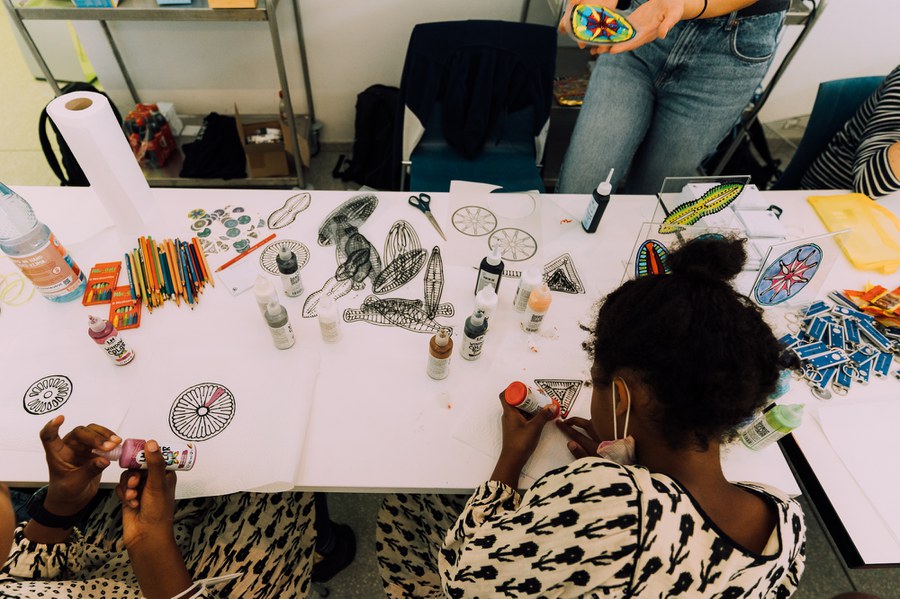
Welcome to our Kids Corner, where you can let your creativity run wild!
Whether you paint salt dough creations, create colorful artwork with window paints, make funny wool fish, craft creative folded animals, or decorate a coloring page, there is something for everyone to enjoy.
Most importantly: Have fun and let your imagination run free!
Before you leave, you can also choose a fun sticker or a cool temporary tattoo to take home with you.
Have lots of fun crafting, creating, and discovering!
Votragende:
Hampe Group, Center for Regenerative Therapies TU Dresden (CRTD)
Description:
Take a closer look at one of the body’s most versatile organs: the liver. At our station, you can explore real samples of healthy and diseased mouse liver tissue, revealing how poor diet or alcohol change the organ at a microscopic level.
Fatty liver disease is the most common liver disorder worldwide affecting an estimated 30% of the adult population, and its prevalence is rising, with projections suggesting it could exceed 50% by 2040). What does this mean for our health? Over time, fatty liver can progress to more serious conditions, including cirrhosis and liver cancer, the third leading cause of cancer-related deaths globally.
Test your knowledge with a quiz and discover how research is helping us better understand and protect this vital organ.
Presenters:
Taubenberger Group, Biotechnology Center (BIOTEC)
Description:
We will show a self-built model of an atomic force microscope (AFM) cantilever to demonstrate the measurement principle, along with a video showing the device in action, mapping a tissue to assess its elastic properties at the single cell scale. In addition, we will offer a quiz where visitors probe a gel with their fingers and guess which tissue the gel should reflect with regards to elastic properties (from brain to cartilage).
Presenters:
Sayed Group, Mildred-Scheel-Nachwuchszentrum (MSNZ), Medizinische Fakultät Carl Gustav Carus
Description:
CRISPR base editors could transform cancer therapy: instead of only attacking tumors, they can directly correct the genetic errors that drive them. Without cutting the DNA, single mutations in cancer-driving can be repaired with high precision. Using patient-derived tumor models, we investigate whether this strategy can lead to more effective, personalized, and longer-lasting treatments.
Presenters:
Bringmann Group, Biotechnology Center (BIOTEC)
Description:
What is the reason that we sleep and what is happening in that resting phase?
The Bringmann laboratory is studying sleep using a tiny worm called Caenorhabditis elegans, which is transparent and only about a millimeter long. Even this small fella shows some behavior that is comparable to human sleep.
At the Bringmann station you can look at these worms using microscopes that scientists use on a daily basis to investigate the mechanisms behind sleep. Become a scientist and observe fluorescent worms in real time.
Presenters:
Ader Group, Center for Regenerative Therapies Dresden (CRTD)
Karl Group, Center for Regenerative Therapies Dresden (CRTD) and German Center for Neurodegenerative Diseases (DZNE)
Description:
The eye - organ of our most precious sense. Learn about its structure and how it changes in degenerative diseases. What are retinal organoids or induced pluripotent stem cells and how can they help researchers to understand diseases and develop therapies? What challenges do blind people face? Come in and explore all of this in our darkroom experience, the walk-in eye model and talk to the scientists.
Presenters:
Albert Group, Center for Regenerative Therapies Dresden (CRTD)
Description:
Every human being consists of a large number of tiny building blocks, the cells. Our brain, which is responsible for our thoughts, feelings, speech and movements, is made up of cells, in particular nerve cells. These in many ways extraordinary cells are only a few micrometer in diameter, but can be a good meter long. Get to know the special properties of nerve cells and make a model of these cells that is as close to the original as possible!
Presenters:
Axolotl Facility
Description:
Hi kids, maybe you've dreamed of seeing a real axolotl? Now's your chance!
Each tour lasts 10 minutes and is suitable for children aged 6-12.
Presenters:
Becker Group, Center for Regenerative Therapies Dresden (CRTD)
Description:
Discover the amazing world of zebrafish! See adult and larval fish, watch how they develop from an egg to a free-swimming baby fish, and explore glowing fluorescent fish under the microscope. Try collecting fish eggs yourself, and learn how zebrafish help scientists understand regeneration and development. Experience science up close – fun for all ages!
Presenters:
Andreev Group, Center for Regenerative Therapies Dresden (CRTD)
Description:
Join us for a fun and educational day all about bone health! Discover how osteoblasts and osteoclasts work together to keep our bones strong—and what happens when that balance is disrupted in arthritis. Learn why calcium is essential for healthy bones, how astronauts deal with bone loss in space, and how a balanced diet helps protect your skeleton.
Kids and adults can enjoy games and hands-on activities, including a chance to see real bone cells under the microscope.
Come and explore the fascinating world of your bones!
Presenters:
DRESDEN-concept Genome Center (DcGC)
Description:
Did you know that there are trillions of cells in your body? Each cell contains a 1.8 m long chain of genetic material called the DNA. Each bead of the DNA is called as a nucleotide. There are four different nucleotides (A, T, G, and C) and they are enough to arrange all the sequences that make up the genetic code. Scientists can read this code and step by step understand the genetic basis of life. Learn how we sequence the DNA at the DRESDEN-concept Genome Center and how we help the researchers around us to answer their scientific questions.
Presenters:
Light Microscopy Facility, Center for Molecular and Cellular Bioengineering (CMCB)
Description:
The CMCB Light Microscopy Facility has put everyday items under a microscope to examine them with high magnification. Exciting details now become visible transforming these ordinary objects into fascinating samples.
Bring your own objects (stones, flowers, dead insects. etc.) if you like or prepare fresh samples like your own cells!
Presenter:
Paul Langerhans Institute Dresden, Center for Diabetes Research
Description:
See with your own eyes how much sugar is in common foods and drinks, you won't believe how much even healthy-sounding foods contain! Kids can play with colored liquid using the same tools as scientists. Learn the trick soft drinks companies use to pack sugar into beverages. Look at the pancreas with a microscope: experts will be there to tell you what you are looking at. View information about the frequency of diabetes in Saxony and what the PLID research team are doing to tackle it.
Presenters:
Rodríguez-Muela Group, Center for Regenerative Therapies TU Dresden (CRTD) and German Center for Neurodegenerative Diseases (DZNE)
Description:
In our stand you can have a direct experience of our organoid model for Alzheimer's, Spinal Muscular Atrophy and Amyotrophic Lateral Sclerosis (ALS). You can build up a neural network, or reprogram and differentiate cells. We also have an exciting challenge for you in a pipette tip box refiling competition!
Presenters:
Politi Group, B CUBE - Center for Molecular Bioengineering
Description:
Many insects and spiders have structures with unique features that give them incredible abilities. These structures are made of building blocks that organize themselves into complex patters at different levels to eventually function together. Our group studies one of the nature’s most abundant building block called chitin to understand the principles of its organization and bio-chemi-physical interactions.
Immerse yourself in the intricate structures of nature as we delve into the secrets of chitin and its role in shaping the world of arthropods. Learn how to distinguish between male and female spiders, and even create your own souvenir to take home!
Presenters:
Schneider Group, Center for Regenerative Therapies TU Dresden (CRTD)
Description:
Did you know that most of the cells in your body aren't you? They're your microbiome! Come and meet the microbiome, discover how it keeps you healthy, and learn how to support your "gut" neighbors.
Create your own diverse microbiome, then take home the makings for a yummy bean stew (which will keep your bacteria happy and healthy too). There will also be a microscope to see what your cells look like!
Presenters:
Schroeder Group, Biotechnology Center (BIOTEC)
Description:
Join us for a hands-on exploration of the fascinating world of computational biology! We’ll share our latest findings on antibiotic resistance, cancer research, and drug development.
In addition to learning about cutting-edge science, we'll be getting our hands dirty with some fun activities. We'll work together to fold proteins and learn about the important roles they play in our bodies. And for the younger scientists in the crowd, we'll have games that teach them how drugs fight diseases.
Presenters:
Sieweke Group, Center for Regenerative Therapies Dresden (CRTD)
Description:
Step into the fascinating world of the human body and explore the amazing work of macrophages! Discover where these cells live and how they work to keep us healthy. Watch mesmerizing videos and see live macrophages up close through a microscope. Get creative with our interactive children's games! Draw your own macrophage glove and use it to eat harmful bacteria and organisms. Or sculpt your very own macrophage using Play-Doh. Don't miss out on this exciting opportunity to learn more about the incredible world inside our bodies!
Presenters:
Center for Membrane Biochemistry and Lipid Research (ZML)
Description:
In ZML we study how the lipids work and how they affect our health. At our stand, you can try your hand at separating colorful molecules using a special technique called thin-layer chromatography, play a board game that's all about lipids, or match your favorite snacks with their nutritional profiles. As a bonus, you'll get to take home some small souvenirs from your experiments. So join us and explore the world of lipids in a fun and interactive way!
Presenters:
Zlotnikov Group, B CUBE - Center for Molecular Bioengineering
Description:
Step into a hidden 3D world of nature! Using powerful microscopes, we capture real images of tiny structures like butterfly wings, spider fangs, and sponge skeletons. With special red/blue glasses, these images come alive in stunning 3D. Explore shapes, textures, and patterns invisible to the eye, and discover how nature builds incredible materials at the smallest scale. See depth, detail, and beauty like never before.