
Oct 09, 2026
TDL ING Inspects Creative Product for Funding
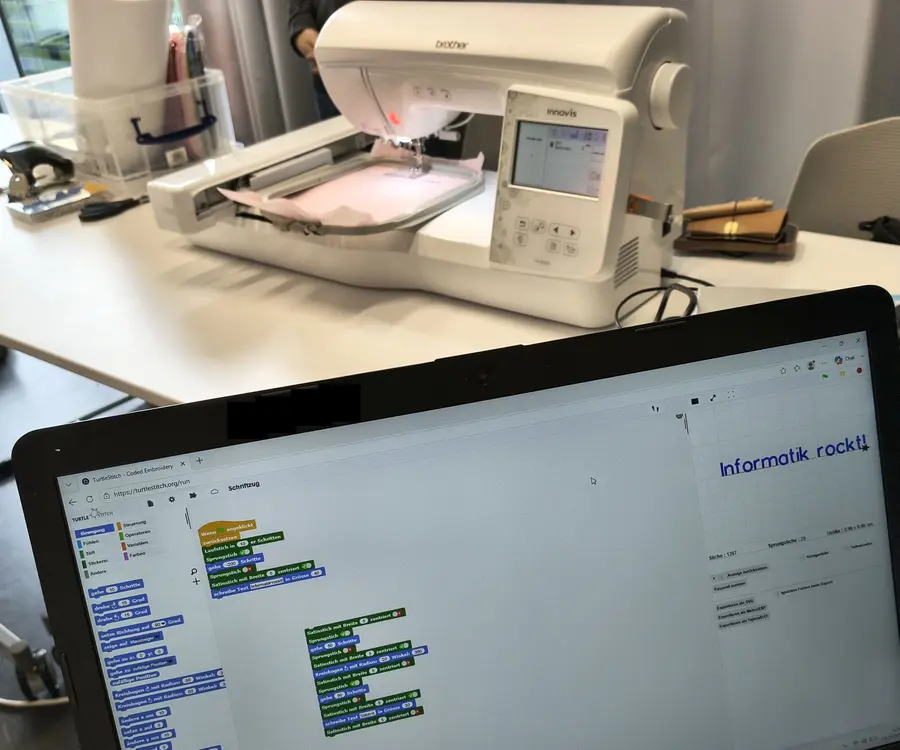
Die Programmierung im Forder- und die ausführende Stickmaschine im Hintergrund
On Wednesday, September 23, the Student Computing Center (SRZ) was officially opened at its new location in the Andreas-Pfitzmann Building.
As part of the welcome address to the more than 70 interested guests, Prof. Dr. Mareen Grillenberger, the director of the SRZ, explained the history and future direction of the SRZ. Dean Prof. Dr. Christine Baier then welcomed the guests and once again emphasized the importance of the SRZ. Finally, Paul Hiller, a teacher at the SRZ, presented the plans for the courses starting after the fall break and opened registration.
Afterward, participants had the opportunity to explore the various classrooms and get a firsthand look at the engaging and interactive course offerings. As part of the “Discovering the Digital World” program—which allows 5th- and 6th-grade students with no prior knowledge to explore the world of computer science—a course titled “Code & Thread: Programming Creative Knitting Patterns with Turtlestitch” will also be offered in the coming semester. As part of the course, interested students can use the block-based programming environment Turtlestitch to design their own embroidery patterns on the computer, which are then transferred to fabric using a computer-controlled embroidery machine.
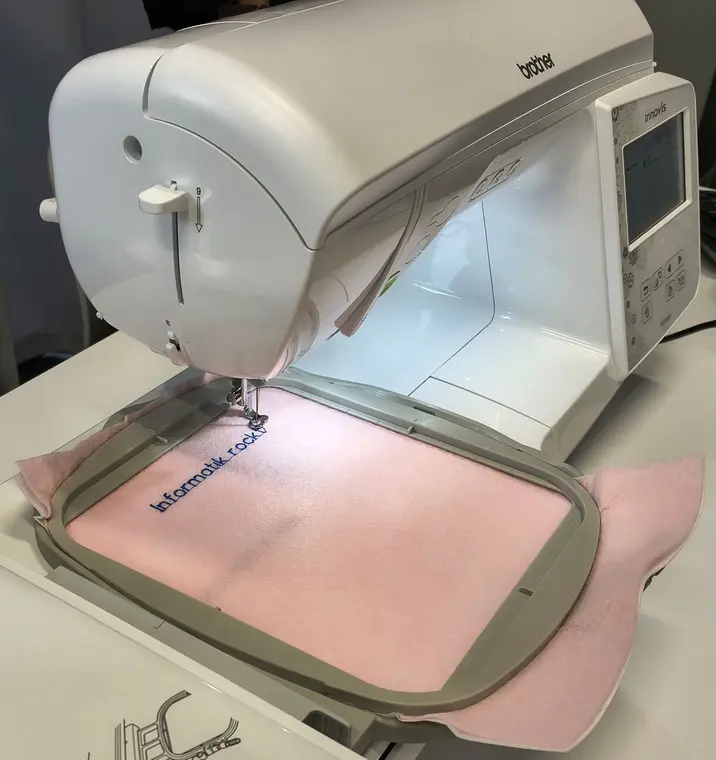
Die Stickmaschine in Nahaufnahme
The Digital Teaching ING team is pleased to have contributed to the financing of the embroidery machines through the “förderING” funding project, which supports teaching innovations as part of the DLL Fund. We were therefore thrilled to see, at the SRZ’s opening, how the SRZ’s instructors were supported through the funding initiative in bringing programming to life in creative ways.
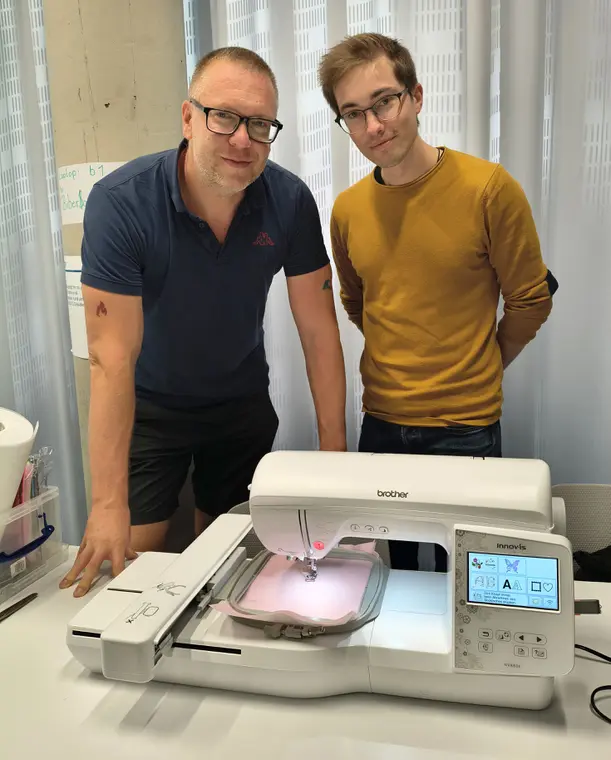
Mitglieder des TDL ING begutachten die Stickmaschine
The focus is on creative, inclusive, and low-barrier approaches to computer science. By directly linking code to visible, tactile results, abstract programming concepts become tangible. In the future, these acquisitions could also benefit student teachers as a creative tool for lesson planning and expand the pedagogical possibilities available to our faculty.