
List of Courses
Winter Term 2026/27
(Last updated: Sep. 2026)
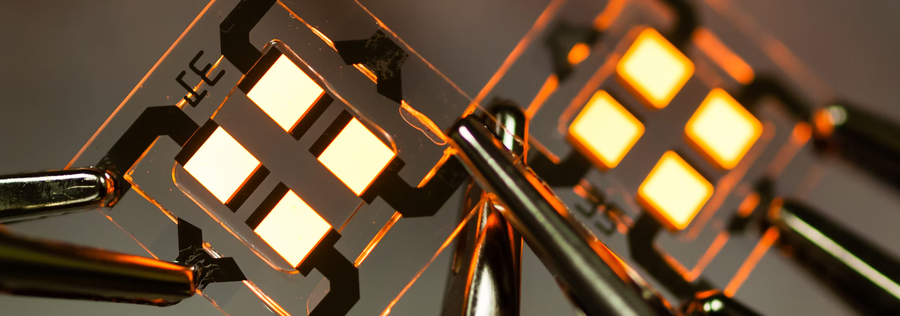
The module focuses on organic semiconductors and optoelectronic devices based on these materials, including organic light-emitting diodes (OLEDs), organic photovoltaics, and organic photodiodes (OPDs). Applications in flexible electronics, biomedical fields (such as sensing and optogenetics), and energy (solar cells) are comprehensively addressed. The module also covers fundamental principles of nanoscience, fabrication methods, and characterization techniques essential for the realization and analysis of these devices.
| Lecturer | Dr. Siddhartha Sagger, Prof. Caroline Murawski |
| Module | EuI-NES-E-OSO |
| V/Ü/P | 2/1/0 |
| Semester | Winter Term 2025/26 |
| Language | English |
| When |
Monday 13:00 - 14:30 |
| Where | ZEU 148 N63 A.001 |
| Materials | Opal |
| Contents |
After completing this module, the students are familiar with:
|
(Last updated: Sep. 2026)
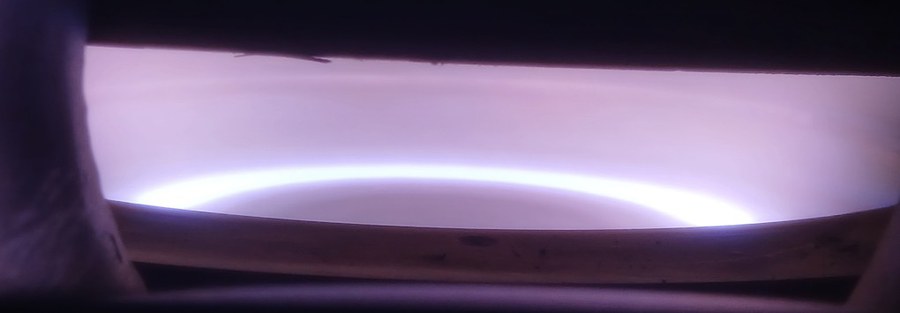
The course covers the fundamentals of vacuum technology, plasma physics, industrial plasma processes, and process tool design, as well as introduces students to basics of thin film growth, provides examples of different types of coatings used today, such as hard coatings and barriers, glass and optical coatings, electronic and functional coatings, organic electronics, as well as plasma-based treatment technologies. The students will gain a fundamental understanding of the physics of plasmas used in industrial processes and tools. Furthermore, they will be able to choose suitable technical plasma sources and plasma process tools for specific applications. In addition, students will become familiar with typical examples for layers and layer stacks used in major application fields for coatings.
| lecturer | Prof. Elizabeth von Hauff, Dr. Agne Zukauskaite |
| Module | ET-12 11 05 & NES-ET-E PlaTe |
| V/Ü/P | 4/2/0 |
| Semester | Winter semester 2026/27 |
| Language | English |
| When | Lecture Thursday 13:00 - 16:20 Seminar Friday 14:50 - 16:20 |
| Where | BAR E85 |
| Material | OPAL, Course Notification |
| Contents |
After completing this module, students will be familiar with:
|
Sommer Term 2026
(Status: Feb. 2026)
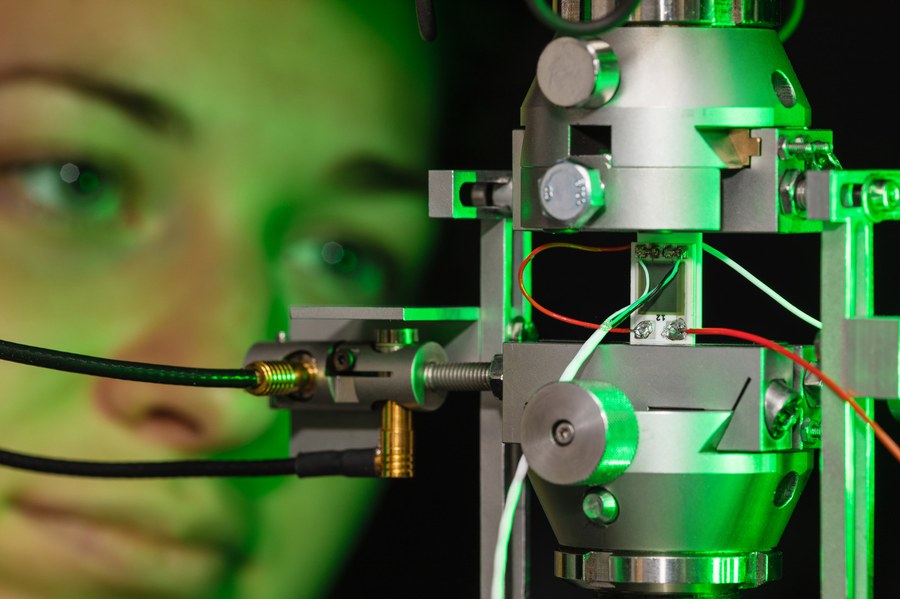
The "Introduction to sensor technology" module lays the foundations for the successful use of sensors in technical and biomedical environments. After looking at general measurement methods, the overarching properties of sensors are discussed and typical specifications in data sheets are explained and scrutinized. In detail, the focus is then on reversible and parametric (measuring) transducers and their applications in force, pressure and temperature measurement, among others. The module is rounded off with insights into current research in the field of sensors and measurement technology.
| Lecturer | Prof. Dr. Thomas Härtling |
| Modules | EuI-MT-E-A11 EuT-ET-C-GT EUI-BMT-C-MAM WW-D-613-SEWI |
| V/Ü/P | (depending on module up to) 2/1/1 |
| Semester | Summer semester 2026 |
| When |
Friday 9:20 - 10:50 (every week) |
| Where | BAR / 0106 / H BAR / I86C / U |
| Material | Opal |
| Contents |
After completing this module, students will be familiar with
|
(Status: April 2026)
Biomedical Sensor Technology part of the course
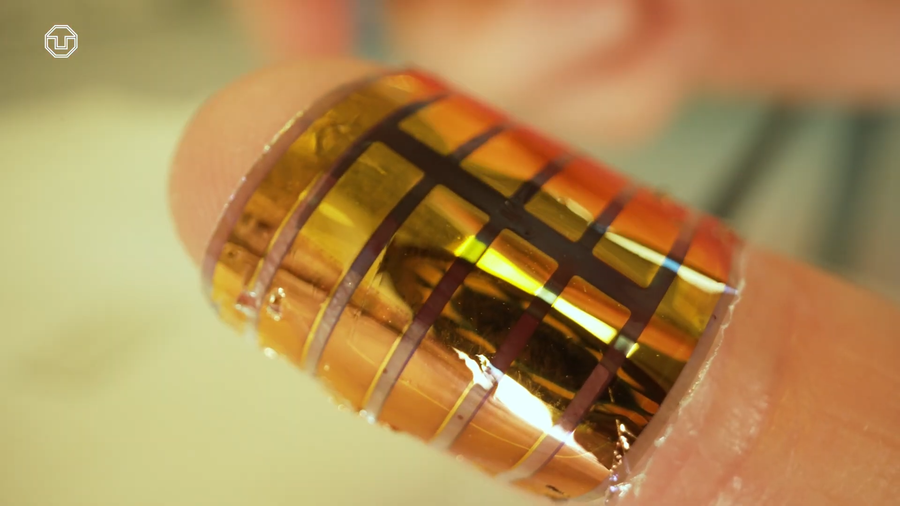
The course covers the fundamentals and applications of modern sensor technology in medicine. The course introduces students to the principles of biomedical sensing and provides a basic understanding of the physical, chemical, biological and optical measurement principles used in biomedical applications. Different types of sensors are introduced, including mechanical, thermal, bioelectrical, chemical and optical sensors, and their use in diagnostics, monitoring and therapy is discussed. Students will learn which sensor and transducer types are suitable for specific applications. They understand their special requirements and limitations. In addition, practical examples such as pulse oximeters, ECG sensors, glucose sensors and implantable pressure sensors are considered. The aim is to prepare students for the development and application of innovative sensor technologies in biomedical research and practice.
| Lecturer | Prof. Caroline Murawski, PD Julia Walther |
| Module | EuI-BMT-E-MSAG |
| V/Ü/S/P | 4/0/2/2 |
| Semester | Summer semester 2026 |
| When |
Lecture Biomedical Sensor Technology Mon 11:10 - 12:40 |
| Where | Lecture Biomedical Sensor Technology TOE/0315/U Lecture Biomedical Optics MTZ / SR4 Seminar TOE/0315/U Practical course by arrangement |
| Materials | OPAL |
| Contents |
After completing this module, students will be familiar with...
|
(Stand: April 2026)
Im Modul „Medizinische Automatisierungs- und Messtechnik“ werden die Grundlagen für den erfolgreichen Einsatz von Sensoren in technischen und biomedizinischen Umgebungen gelegt. Nach der Betrachtung allgemeiner Messmethoden werden übergreifende Eigenschaften von Sensoren behandelt sowie typische Angaben in Datenblättern erläutert und hinterfragt. Im Detail stehen dann umkehrbare und parametrische (Mess)Wandler und deren Anwendungen u. a. in der Kraft-, Druck- und Temperaturmessung im Fokus. Abgerundet wird das Modul durch Einblicke in die aktuelle Forschung im Bereich der Sensorik und Messtechnik.
| Dozent | Dr. Robert Kuschmierz, Prof. Dr. Thomas Härtling |
| Module | EuI-BMT-C-MAM |
| V/Ü/P | (modulabhängig bis zu) 2/1/1 |
| Semester | Sommersemester 2026 |
| Wann |
Freitag 9:20 - 10:50 (jede Woche) |
| Wo | BAR / 0106 / H BAR / I86C / U |
| Material | Opal |
| Inhalt |
Nach Abschluss dieses Moduls sind die Studierenden vertraut mit:
|
(Status: April 2026)
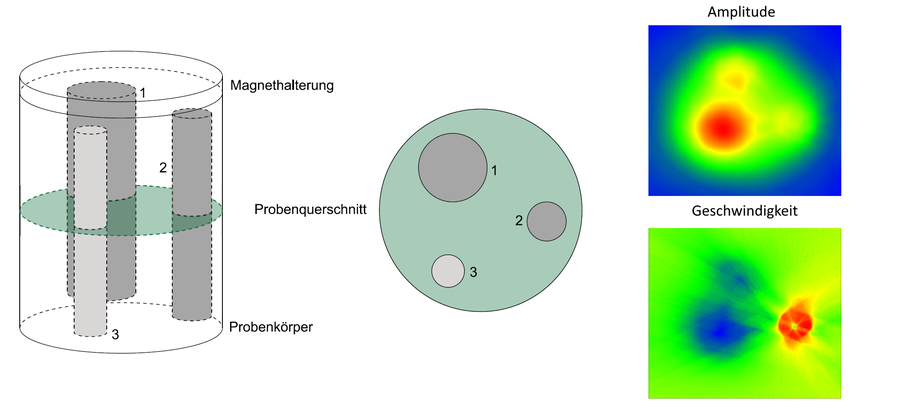
The course covers the fundamentals and advanced concepts of medical imaging and processing. It introduces students to the various imaging techniques used in modern medicine and provides an in-depth understanding of the physical, technical and diagnostic aspects of these technologies.
The lecture provides an overview of classical and modern imaging techniques such as projection X-ray, computed tomography (CT), magnetic resonance imaging (MRI), ultrasound (sonography), scintigraphy, positron emission tomography (PET) and single photon emission computed tomography (SPECT). The underlying forms of energy such as ionizing and non-ionizing electromagnetic waves, sound waves and electrical signals and their specific applications in imaging are explained. Students will also learn about various image processing processes and how these optimize diagnostic significance.
| Lecturer | Prof. Caroline Murawski |
| Module | EuI-BMT-C-MBGV |
| V/Ü/S/P | 2/0/1/2 |
| Semester | Summer semester 2026 |
| When |
Lecture Tuesday 11:10 - 12:40 |
| Where |
Lecture BAR/106/H |
| Materials | OPAL |
| Contents |
After completing the module, students will be able to
|
Winter Term 2025/26
(Last updated: Nov. 2025)
The module focuses on organic semiconductors and optoelectronic devices based on these materials, including organic light-emitting diodes (OLEDs), organic photovoltaics, and organic photodiodes (OPDs). Applications in flexible electronics, biomedical fields (such as sensing and optogenetics), and energy (solar cells) are comprehensively addressed. The module also covers fundamental principles of nanoscience, fabrication methods, and characterization techniques essential for the realization and analysis of these devices.
| Lecturer | Dr. Siddhartha Sagger, Prof. Caroline Murawski |
| Module | EuI-NES-E-OSO |
| V/Ü/P | 2/1/0 |
| Semester | Winter Term 2025/26 |
| When | Monday 13:00 - 14:30 |
| Where | BAR 213H |
| Materials | Opal |
| Contents |
After completing this module, the students are familiar with:
|
(Last updated: Dec. 2025)
The course covers the fundamentals of vacuum technology, plasma physics, industrial plasma processes, and process tool design, as well as introduces students to basics of thin film growth, provides examples of different types of coatings used today, such as hard coatings and barriers, glass and optical coatings, electronic and functional coatings, organic electronics, as well as plasma-based treatment technologies. The students will gain a fundamental understanding of the physics of plasmas used in industrial processes and tools. Furthermore, they will be able to choose suitable technical plasma sources and plasma process tools for specific applications. In addition, students will become familiar with typical examples for layers and layer stacks used in major application fields for coatings.
| lecturer | Prof. Elizabeth von Hauff, Dr. Agne Zukauskaite |
| Module | ET-12 11 05 & NES-ET-E PlaTe |
| V/Ü/P | 4/2/0 |
| Semester | Winter semester 2025/26 |
| When | Lecture Thursday 13:00 - 16:20 Seminar Friday 14:50 - 16:20 |
| Where | BAR E85 |
| Material | OPAL, Course Notification |
| Contents |
After completing this module, students will be familiar with:
|
(Stand: Dez. 2025)
Das Angebot richtet sich an Studierende der Fakultät Elektrotechnik und
Informationstechnik sowie der Fachrichtung Chemie im ersten Studienjahr. In
einer Projektwoche wird eine Aufgabe aus der Arbeitswelt der beteiligten
Fachdisziplinen im interdisziplinären Team gelöst. Die Studierenden lernen die
Auseinandersetzung mit realen komplexen Systemen kennen und bearbeiten
mit ihrem Team im Wettbewerb gegen weitere Teams eine
ingenieurtechnische Problemstellung von der Ideenfindung bis zur
Gesamtkonzeption der praktischen Realisierung. Dadurch werden spätere
Anwendungsfelder des im Studium erworbenen theoretischen Wissens
erlebbar.
| Dozent | Prof. Gerlach |
| Modul | AQUA 2 ‐ Katalog |
| Dauer | 4 Tage Präsenz |
| Semester | Wintersemester 2025/26 / Sommersemester YEAR |
| Wann | vorlesungsfreie Pfingstwoche |
| Wo | Fakultät ET/IT |
| Material | für Studierende, für Fachcoaches, weitere Informationen |
| Inhalt |
Nach Abschluss dieses Moduls sind die Studierenden vertraut mit:
|