
Nov 03, 2026
The Energy Transition in the Classroom: Teachers Experience Research at TU Dresden
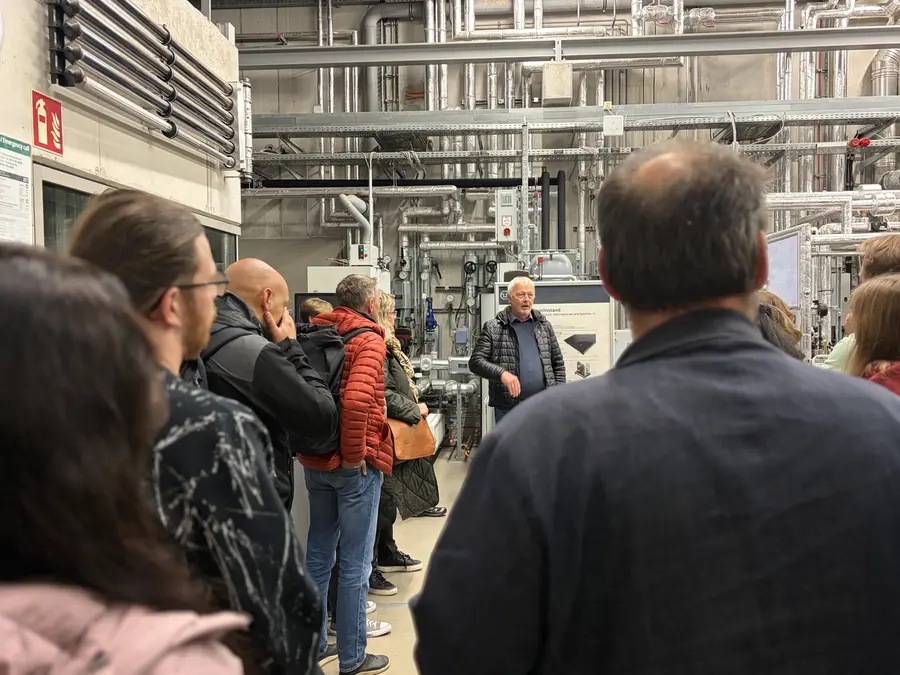
How can the energy transition be implemented from a technical perspective? What challenges arise in energy supply, and what role do efficient technologies for electricity and heat play? Teachers addressed these questions on October 29, 2026, during the professional development workshop “The Energy Transition in the Classroom: Research Meets Instruction” at TU Dresden.
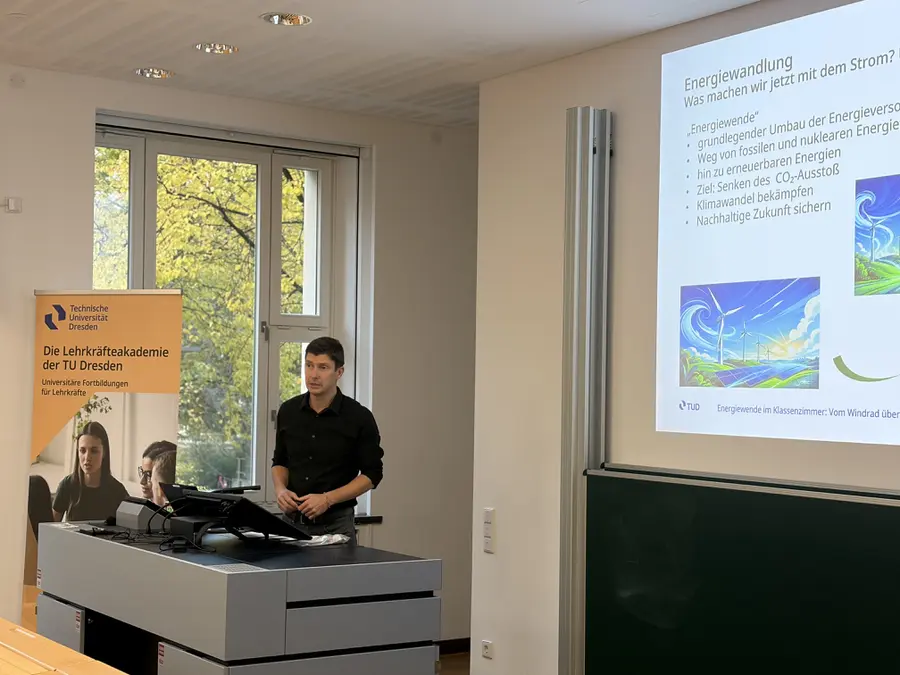
In two scientific presentations, Prof. Christiane Thomas, holder of the Schaufler Chair of Refrigeration, Cryogenics and Compressor Technology, and Associate Prof. Prof. Stephan Schlegel, head of the High-Current Technology Division at the Chair of Components of Intelligent Energy Networks, presented engineering perspectives on the energy transition.
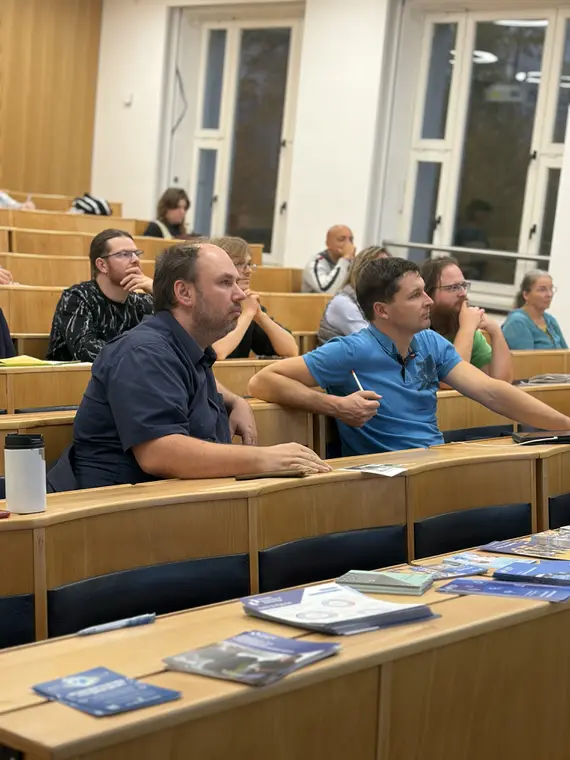
Topics covered included the fundamentals of energy supply, the integration of renewable energies into power grids, and the importance of storage options. Using illustrative examples, they also explored issues of energy efficiency—such as when comparing different propulsion technologies and their overall energy balance. Prof. Thomas delved in particular into the “heat transition” and demonstrated the importance of refrigeration and heat pump technology for a sustainable energy supply. The teachers took the opportunity to ask numerous questions and engage in an in-depth technical exchange.
Experiencing Research Firsthand
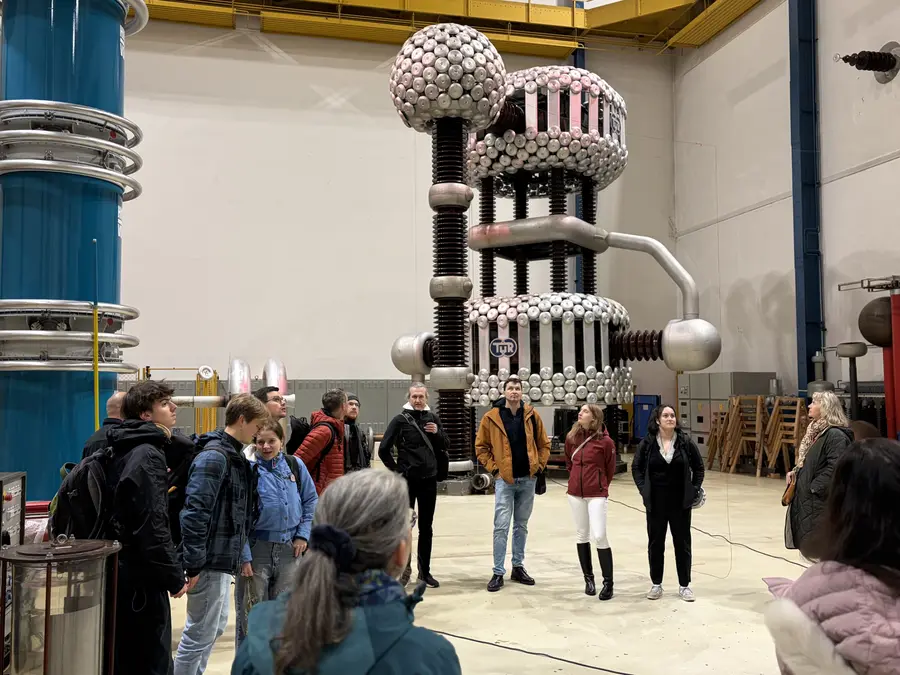
Afterward, participants gained insights into current research environments at TU Dresden during laboratory tours. The program included a visit to the Center for Energy Technology (ZET) with its diverse range of process engineering test facilities, the high-voltage hall, and the laboratories of the Schaufler Chair of Refrigeration, Cryogenics and Compressor Technology. This allowed the teachers to see technical facilities and research infrastructure
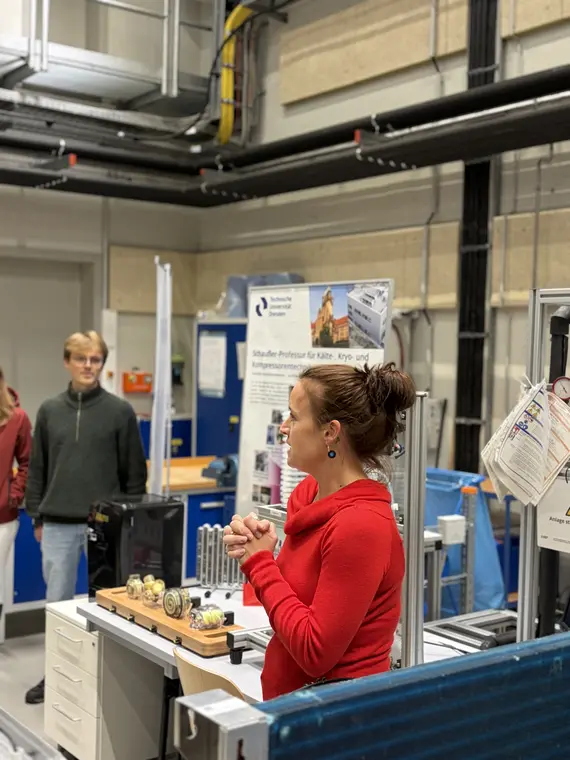
that are rarely directly accessible in regular classroom instruction. In addition to the technical insights, the discussion focused on how the energy transition can be shaped collaboratively in the future and what kind of skilled workers will be needed to achieve this. Engineers are just as much in demand as well-trained skilled workers in the trades and numerous other professional fields.
TU Dresden as a Partner for STEM Education
The training session also provided an opportunity to get to know TU Dresden as an extracurricular learning venue and a partner for school education. The School Liaison Office and the Teachers’ Academy provided information about the university’s other offerings—ranging from workshops and experiments to lab tours and various STEM formats for school classes. This gave the teachers starting points for incorporating research and technical topics into their lessons even beyond the scope of the professional development program.
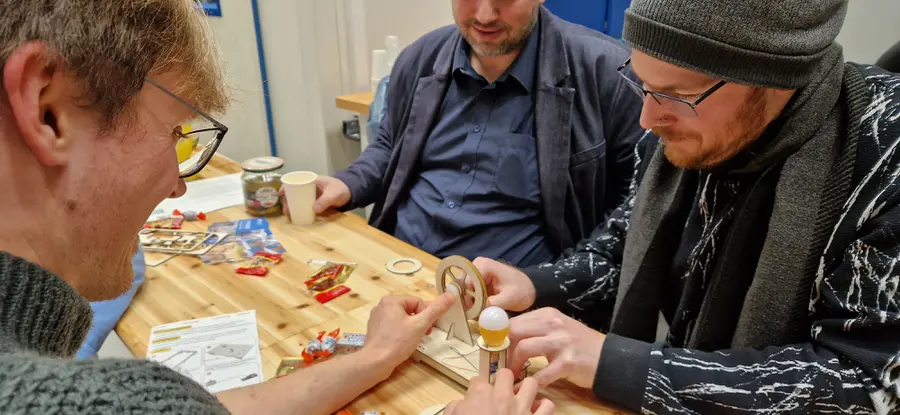
In addition, the teachers were able to try out an interactive educational game from NET—Network Energy Talents— for use in the classroom. Through five tasks, students explore how electricity is generated and transmitted, how the power grid works, and what role transformers play. Among other things, they build a mini-generator, trace the path of electricity all the way to the outlet, and investigate how disruptions in the grid affect the system. The individual stations can be flexibly integrated into classroom instruction or a project day.
The event concluded with a group discussion and conversations in a relaxed atmosphere over a barbecue. The event thus combined scientific insights, practical glimpses into research, and the opportunity to strengthen ties between the school and the university.
Contact:
Koordination Lehrkräfteakademie
NameMs Laura Mitzscher
Send encrypted email via the SecureMail portal (for TUD external users only).
Center for Teacher Education and Educational Research (German abbreviation: ZLSB)
Center for Teacher Education and Educational Research (German abbreviation: ZLSB)
Visiting address:
Zellescher Weg 20, SE 2/21
01217 Dresden