AKR-2 / Reactor Physics
Table of contents

Contact

Research Associate
NameMr Dr. rer. nat. Dipl.-Phys. Daniel Gehre
Nuclear training reactor AKR-2
Send encrypted email via the SecureMail portal (for TUD external users only).
Institute of Process Engineering and Enviromental Technology - Chair of Hydrogen and Nuclear Energy
Institute of Process Engineering and Enviromental Technology - Chair of Hydrogen and Nuclear Energy
Visiting address:
Walter-Pauer-Bau, MOL 310 George-Bähr-Str. 3b
01069 Dresden
Website of Dr. rer. nat. Dipl.-Phys. Daniel Gehre
 © Sven Ellger/TUD
Research Associate
NameMr Juan José Gómez Rodriguez M. Sc.
Send encrypted email via the SecureMail portal (for TUD external users only).
Institute of Process Engineering and Enviromental Technology - Chair of Hydrogen and Nuclear Energy
Institute of Process Engineering and Enviromental Technology - Chair of Hydrogen and Nuclear Energy
Visitor Address:
Görges-Bau, GÖR/113 Helmholtzstr. 9
01069 Dresden
Deutschland
Website of Gómez Rodriguez, M. Sc.
 © Tina Mäntler
Research Associate
NameMr Dipl.-Phys. Alexander Knospe
Send encrypted email via the SecureMail portal (for TUD external users only).
Institute of Process Engineering and Enviromental Technology - Chair of Hydrogen and Nuclear Energy
Institute of Process Engineering and Enviromental Technology - Chair of Hydrogen and Nuclear Energy
Visitor Address:
Görges-Bau, VG1 115 Helmholtzstr. 9
01069 Dresden
Deutschland
Website of Dipl.-Phys. Alexander Knospe
Head of nuclear training reactor AKR-2
NameMr Dr.-Ing. Dipl.-Phys. Carsten Lange
Send encrypted email via the SecureMail portal (for TUD external users only).
Institute of Process Engineering and Enviromental Technology - Chair of Hydrogen and Nuclear Energy
Institute of Process Engineering and Enviromental Technology - Chair of Hydrogen and Nuclear Energy
Visiting address:
Walther-Pauer-Bau, PAU 214/2 George-Bähr-Straße 3b
01069 Dresden
Website of Dr.-Ing. und Dipl.-Phys. Carsten Lange
 © Sven Ellger/TUD
Research Associate
NameMr Vincent Melzer M. Sc.
NAUTILUS
Send encrypted email via the SecureMail portal (for TUD external users only).
Visitor address:
Görges-Bau, GÖR/315 Helmholtzstr. 9
01069 Dresden
Deutschland
Website of Vincent Melzer, M. Sc.
Research Associate
NameMs Elisa Naumann M. Sc.
Send encrypted email via the SecureMail portal (for TUD external users only).
Institute of Process Engineering and Enviromental Technology - Chair of Hydrogen and Nuclear Energy
Institute of Process Engineering and Enviromental Technology - Chair of Hydrogen and Nuclear Energy
Visitor Address:
Görges-Bau, GÖR/314 Helmholtzstr. 9
01069 Dresden
Deutschland
Homepage of Elisa Naumann
 © Tina Mäntler
Research Associate
NameMr Dr.-Ing. Dipl.-Phys. Marco Viebach
Send encrypted email via the SecureMail portal (for TUD external users only).
Institute of Process Engineering and Enviromental Technology - Chair of Hydrogen and Nuclear Energy
Institute of Process Engineering and Enviromental Technology - Chair of Hydrogen and Nuclear Energy
Visitor Address:
Görges-Bau, VG1/115 Helmholtzstr. 9
01069 Dresden
Deutschland
Website of Dr.-Ing. Dipl.-Phys.Marco Viebach
Research Associate
NameMr Dipl.-Inf. Sascha Weichel
Send encrypted email via the SecureMail portal (for TUD external users only).
Visitor address:
Görges-Bau, Room 113 Helmholtzstr. 9
01069 Dresden
Deutschland
Website of Dipl.-Inf. Sascha Weichel
The research and teaching activities of the reactor physics department focus on fundamental reactor physics calculation and measurement methods in the context of ensuring and assessing the safety of existing and new types of nuclear reactors. Within this framework, the training nuclear reactor AKR-2 is used as a measurement platform for the validation of calculation methods and the development of measurement procedures. These research and development efforts contribute to the improvement of the safety characteristics of nuclear reactors, to developing methods for minimizing highly radioactive waste, and to proliferation security.
The focus is on the following topics:
- Stability analysis of existing and future nuclear reactor systems (e.g., molten salt reactors or dual-fluid reactors).
- Contributions to the development of nuclear monitoring systems and the application of noise diagnostic methods to experimentally determined and simulated quantities describing the reactor's state.
- Development and application of methods for nuclear material monitoring and verification to enhance proliferation security.
- Investigations on neutron flux fluctuation patterns.
- Development of experimental methods in the context of new nuclear reactor systems that enable further processing of highly radioactive waste.
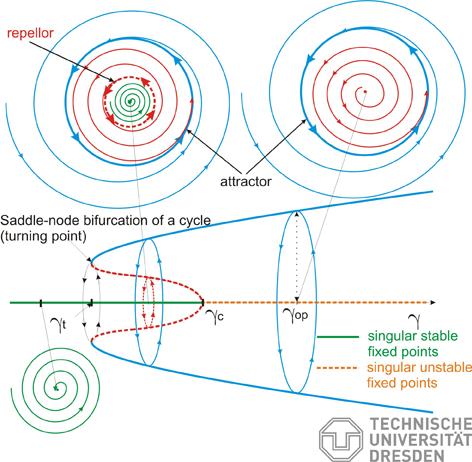
- Application of modern mathematical methods in investigations of the safety characteristics of reactor systems, such as using model order reduction methods and nonlinear dynamics methods, like bifurcation analysis, for stability analyses.
- Establishing a benchmarking platform at AKR-2 to validate reactor physics methods and software tools and prepare for broader use of AKR-2 in research and teaching
Junior Research Group NAUTILUS
The junior research group NAUTILUS deals with the further treatment of highly radioactive waste and reactor safety and aims to develop experimental methods at the training nuclear reactor AKR-2.
Neutron Imaging
Neutron radiography enables non-destructive, qualitative, and quantitative imaging using neutrons.
Further information can be found here.
Student research projects
Current tasks of the Chair of Hydrogen and Nuclear Energy can be found here.
Projects
Publications
2025
-
Neutron transmission experiment with PTFE at AKR-2, 16 Jul 2025, In: Annals of nuclear energy. 224, 111741Electronic (full-text) versionResearch output: Contribution to journal > Research article
-
The Euratom NPHyCo project: Conceptualization, technical work plan and current status, Jul 2025, In: Progress in Nuclear Energy. 185, 105731Electronic (full-text) versionResearch output: Contribution to journal > Research article
-
Measurement of the neutron and gamma spectra at the training and research reactor AKR-2, May 2025, In: Annals of Nuclear Energy. 214, 111194Electronic (full-text) versionResearch output: Contribution to journal > Research article
-
Transients at the nuclear training and research reactor AKR 2: Experiments and time dependent simulations with Monte Carlo Code Serpent, 6 Apr 2025Research output: Contribution to conferences > Poster
-
Validation of the AKR-2 reactor simplified model using OpenMC and Serpent: A deep analysis of the pile oscillator experiment, 6 Apr 2025, European Research Reactor Conference Proceedings . European Nuclear SocietyElectronic (full-text) versionResearch output: Contribution to book/conference proceedings/anthology/report > Conference contribution
-
Impact assessment of the integration of a generic PEM electrolyser facility into Rivne nuclear station, 1 Feb 2025, In: Nuclear Engineering and Design. 432, 113767Electronic (full-text) versionResearch output: Contribution to journal > Research article
-
CORTEX experiments – Part I: Modulation campaigns in AKR-2 & CROCUS for the validation of neutron noise codes, Feb 2025, In: Annals of nuclear energy. 211, 110928Electronic (full-text) versionResearch output: Contribution to journal > Research article
2024
-
CORTEX experiments, Part III: Experimental determination of the zero power transfer function of AKR-2 with reliable uncertainties, 15 Dec 2024, In: Annals of nuclear energy. 209, 110686Electronic (full-text) versionResearch output: Contribution to journal > Research article
-
CORTEX experiments, Part II: Postprocessing of neutron noise time series to determine reliable mean and uncertainties, 1 Dec 2024, In: Annals of nuclear energy. 208, 110704Electronic (full-text) versionResearch output: Contribution to journal > Research article
-
Risk Assessment of the Integration of a Large-Scale Hydrogen Cogeneration Facility Into a VVER Power Plant, 1 Nov 2024, Nuclear Plant Operation and Maintenance, Engineering and Modification, Operation Life Extension (OLE), and Life Cycle. The American Society of Mechanical Engineers(ASME), Vol. 1. 11 p., V001T01A002Electronic (full-text) versionResearch output: Contribution to book/conference proceedings/anthology/report > Conference contribution
 This information is provided by the FIS.
Cooperation partners of the research area "AKR-2" and "Reactor Physics"
Forschungszentrum Jülich GmbH, Das Jülicher Zentrum für Forschung mit Neutronen (JCNS), 52425 JÜLICH
JCNS
Framatome GmbH
Framatome GmbH
Gesellschaft für Anlagen- und Reaktorsicherheit (GRS) gGmbH, Schwertnergasse 1, 50667 Köln
GRS
Paul-Scherrer Institut, Neutron Optics and Scientific Computing Group, at Laboratory for Scientific Developments and Novel Materials , CH-5232 Villigen, Switzerland
PSI
Czech International Centre of Research Reactors
Czech International Centre of Research Reactors
Faculty of Informatics, Masaryk University
Masaryk University, Faculty of Informatics
Helmholtz-Zentrum Dresden-Rossendorf
HZDR – Helmholtz-Zentrum Dresden-Rossendorf
VKTA – Strahlenschutz, Analytik & Entsorgung Rossendorf e. V.
VKTA
University of Liverpool
University of Liverpool
Picture gallery


© bananacut_neutrons_2sigma_day1_KH475.png


© DeepCore-photo.png


© Pile-Oscilator-at-akr-


© pile-oscillator-photo
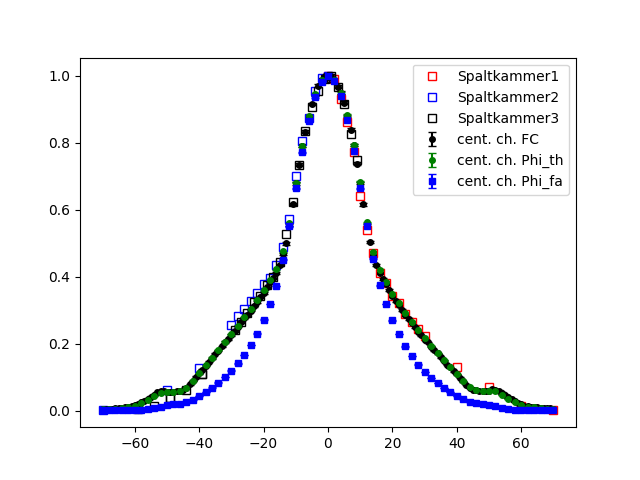
© radFlux.png
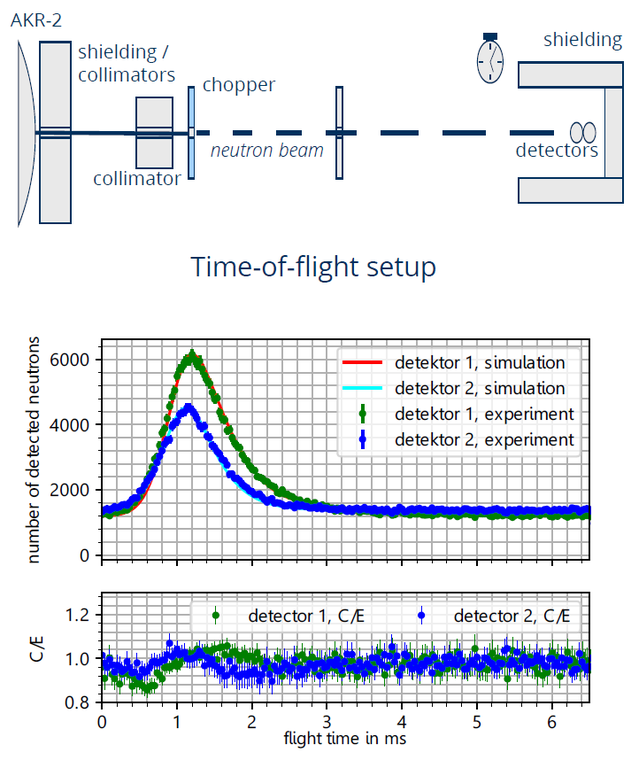
© time-of-flight-at-akr-2.png


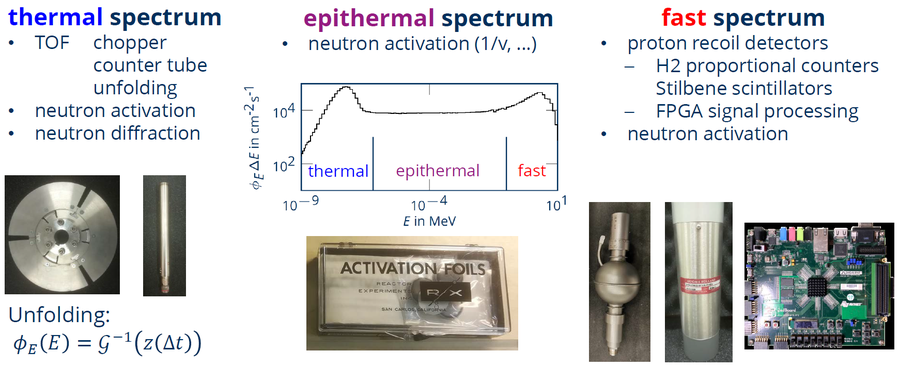
© spectrum-determination-akr-2.png