
Bachelor's/Diploma in Mechanical Engineering
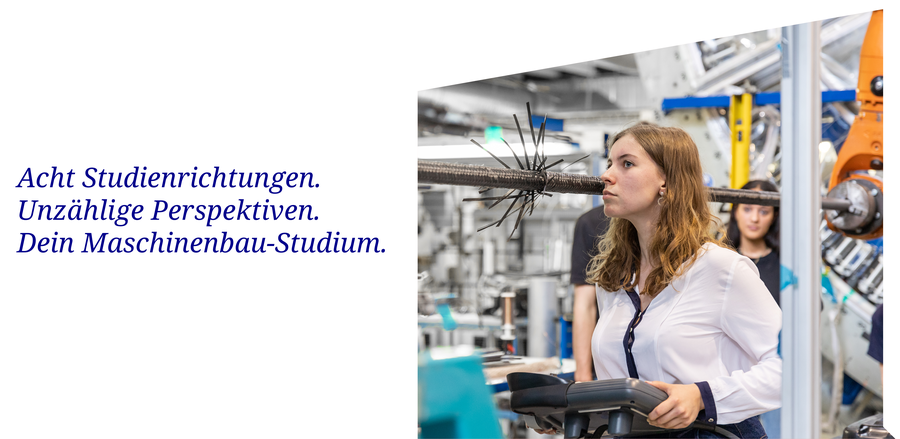
Mechanical Engineering at TU Dresden offers a broad engineering education with a wide range of specializations—from energy engineering and manufacturing to lightweight construction and automotive engineering, all the way to aerospace engineering. During your studies, you’ll work on technical problems in a hands-on manner and develop your own areas of specialization.
Understanding the Program Structure
Discover fields of study
Study Paths and Application
Bachelor's degree (6 semesters)
In the Bachelor's degree course, you will acquire the basic knowledge of mechanical engineering in a compact form. During your studies, you will specialize in one field of study and set your first professional priorities. The short specialization phase allows you to remain flexible. The Bachelor's degree enables you to start your career at an early stage as well as transfer to further Master's courses.
Curriculum Mechanical Engineering_Bachelor.pdf
Master's program (4 semesters)
The Department of Mechanical Engineering is launching a new master’s program with various specializations, offering you a wide range of opportunities for in-depth study and specialization. If you’d like to refine your profile after completing your bachelor’s degree and focus in a targeted manner on certain areas of engineering, you’ll find the right path here.
The focus is on the Master’s in Mechanical Engineering (M.Sc.), which offers a broad, in-depth education with flexible elective options and combines various engineering specializations. In addition, you can choose from specialized Master’s programs with clearly defined academic profiles:
- Resource Efficient Manufacturing and Materials (M.Sc.)
This program focuses on sustainable and efficient production, modern materials, and future-oriented manufacturing technologies—with an international focus and taught in English. - Aerospace Engineering (M.Sc.)
If you’re interested in aircraft, spaceflight, and complex technical systems, this program allows you to deepen your understanding of the fundamentals of engineering and apply them to challenging applications—with flexible study options available in various formats. - Bioinspired Material and Fiber Systems for Medical and Lightweight Applications (M.Sc.)
This research-oriented, English-language master’s program combines materials science and nature-inspired design with applications in medicine and lightweight construction.
All degree programs offer you a solid scientific education with a strong practical focus and prepare you for challenging roles in development, industry, or research.
Diploma program (10 semesters)
The diploma program follows the classic engineering education model. After a broad-based foundation phase, you will specialize in one field of study over several semesters and develop a clear professional profile. A central component of the course is the specialist internship in the 7th semester, which you complete outside the university. You will gain practical experience in an industrial environment and apply your knowledge directly to real tasks. The Diplom-Ingenieur degree is internationally recognized and is equivalent to a Master's degree in terms of qualification.
Curriculum Mechanical Engineering_Diploma.pdf
Diploma postgraduate course (5 semesters)
The diploma postgraduate course is aimed at graduates of related engineering courses who wish to expand or realign their specialist profile. By choosing a field of study, students can specialize in a targeted manner until they graduate with a degree in engineering.
Distance learning
The mechanical engineering degree can also be completed by distance learning.
- Bachelor: 12 semesters
-
Diploma extension: 10 semesters
Further legally binding information and conditions for the individual study paths, such as the study requirements or application deadlines, can be found in the central study information system (SINS) under the respective study profiles.

Foundation Phase (Semesters 1 through 4)
The introductory phase provides a common foundation for all fields of study in mechanical engineering. During the first four semesters, you’ll acquire the fundamental knowledge in mathematics, natural sciences, and engineering that is essential for understanding technical systems.
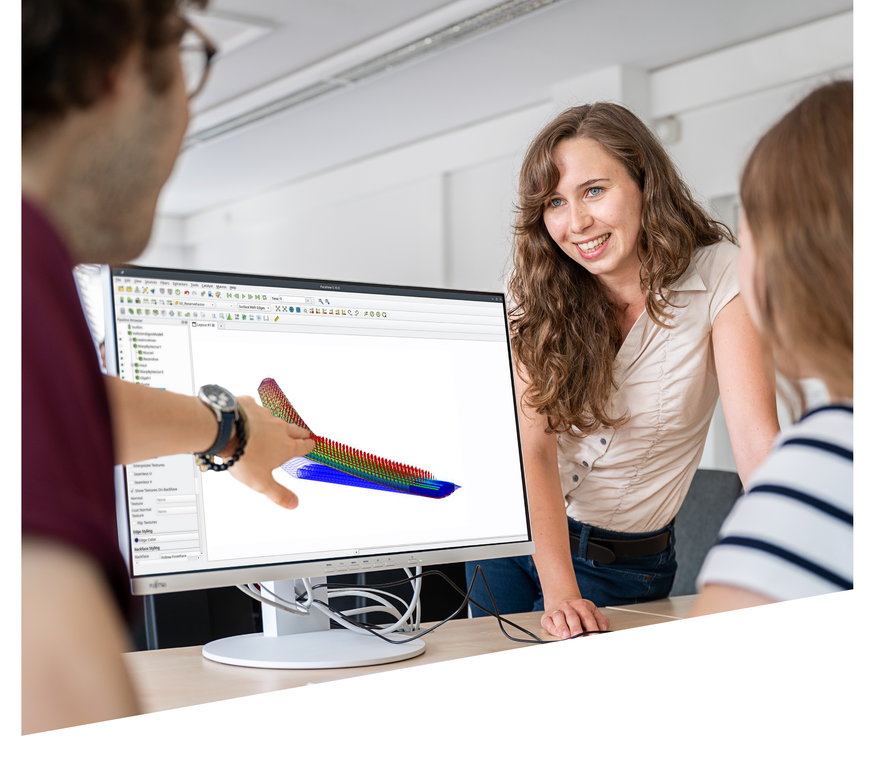
These include, among others, engineering mechanics, thermodynamics, fluid mechanics, and electrical engineering, as well as core areas of mechanical engineering such as design, manufacturing technology, machine elements, and materials science. This broad foundational phase allows you to explore different perspectives in mechanical engineering and later choose a specialization that aligns with your interests.
Advanced Studies
In the advanced studies phase, the foundational education acquired during the introductory phase is combined with application-oriented specialized knowledge. Starting in the fifth semester, you will choose one of eight specializations and deepen your knowledge in line with your interests and career goals.
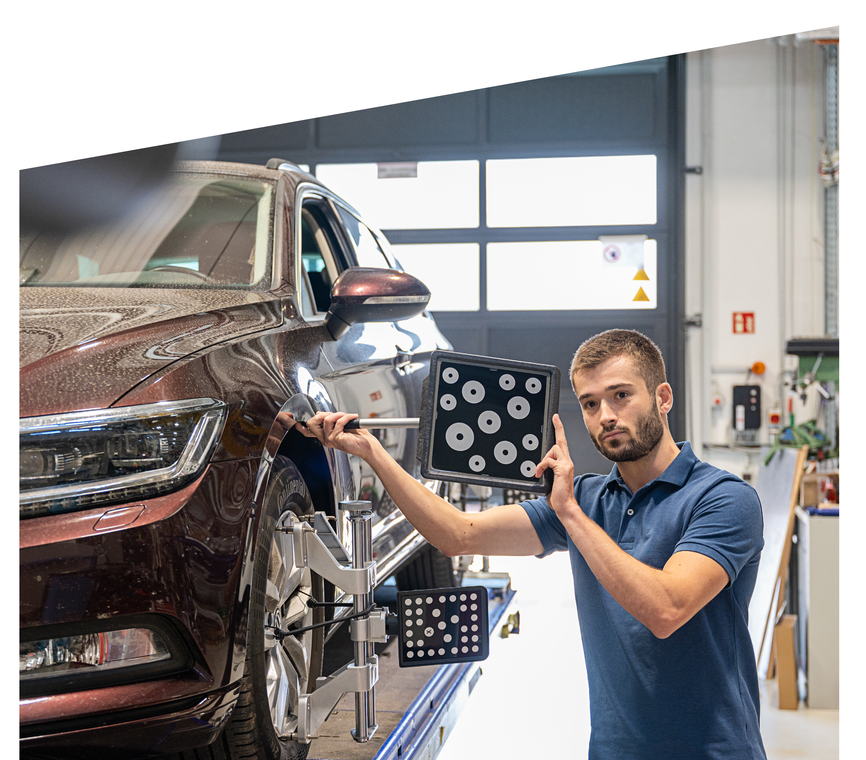
Current developments such as automation, digitalization, and the use of information technology and artificial intelligence are playing an increasingly important role in all areas. At the same time, the focus is on the efficient use of machines and systems, sustainable technical solutions, and the responsible use of resources.
The following specializations are available:
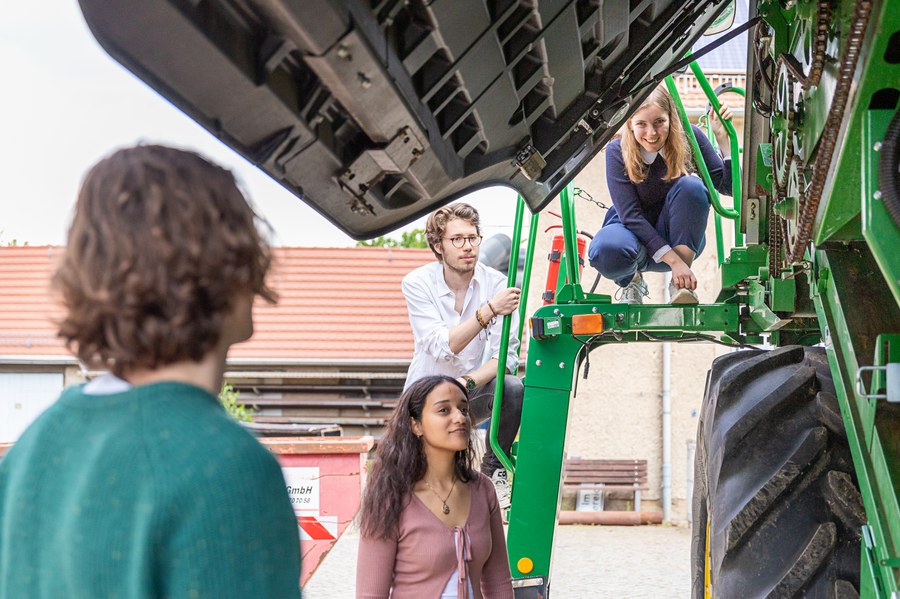
This degree course will provide you with a broad knowledge of the design, calculation and construction of machines and systems. You will deal with the development of machines for specific work processes and learn how to optimize interactions in operation. The course offers you the opportunity to specialize in areas such as construction, product development or industrial design and prepare you for a career in which you actively shape the future of technology.
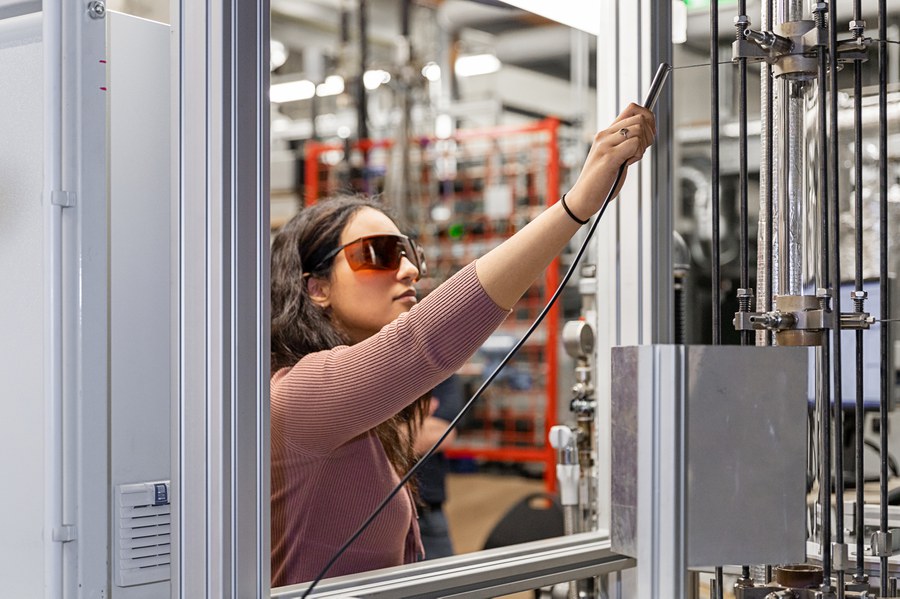
Are you fascinated by the idea of supplying the world with safe, affordable and environmentally friendly energy? Do you value real sustainability? Then energy technology is your thing! From energy machines and building energy technology to renewable energy supply and hydrogen technology - you decide your own focus and learn everything you need for a successful career as an engineer. Imagine you could soon be part of exciting experiments at the Center for Energy Technology or working on the training nuclear reactor! Are you ready to help shape the future of energy? Then choose the energy technology course after your foundation degree and become part of an exciting adventure!

In this field of study, you will deepen your specialist knowledge of vehicle components and subsystems. You will deal with the further development of technical systems, such as drive technology, vehicle dynamics and safety systems. You will also deal intensively with topics such as electromobility, automated driving and sustainable mobility. The course will prepare you to develop and implement pioneering technologies for the vehicle industry.
How can electric cars become more efficient? How can airplanes fly more lightly and in a more climate-friendly way? And how can we build machines that require less material yet are still extremely durable? These are exactly the questions you’ll explore in the Lightweight Construction program.
You’ll learn how innovative materials, intelligent designs, and modern manufacturing technologies work together to develop sustainable products for mechanical engineering, automotive engineering, and plant engineering. You’ll work with high-tech materials such as fiber-reinforced composites and high-performance metals to develop components that are lightweight, stable, and resource-efficient.
The program combines engineering, creativity, and sustainability. You’ll develop solutions for tomorrow’s challenges and gain the expertise that’s in demand across many future-oriented industries—from the automotive industry and aerospace to renewable energy and modern mechanical engineering.
Your future? As a lightweight construction engineer, you’ll develop products that save energy, conserve resources, and make our world more sustainable.

Would you like to work on the next generation of aircraft, satellites and space systems? In this practice-oriented field of study, you will develop innovative solutions for air and space transportation. You will specialize in aircraft technology, space systems or aviation propulsion systems and work on projects such as drones, rovers and satellites. The close cooperation with industry and the focus on aerodynamics, structural engineering and propulsion technology will prepare you perfectly for the future of aerospace.

In this field of study, you will deal with the development and application of manufacturing processes, machine tools and process optimization. You will learn how quality assurance, production metrology, factory and logistics planning and the ergonomic design of production systems are implemented in modern industry. Special emphasis is placed on the automation of processes and the use of artificial intelligence to make manufacturing systems more efficient and sustainable. You will be prepared for the future challenges of intelligent manufacturing in order to develop innovative solutions.
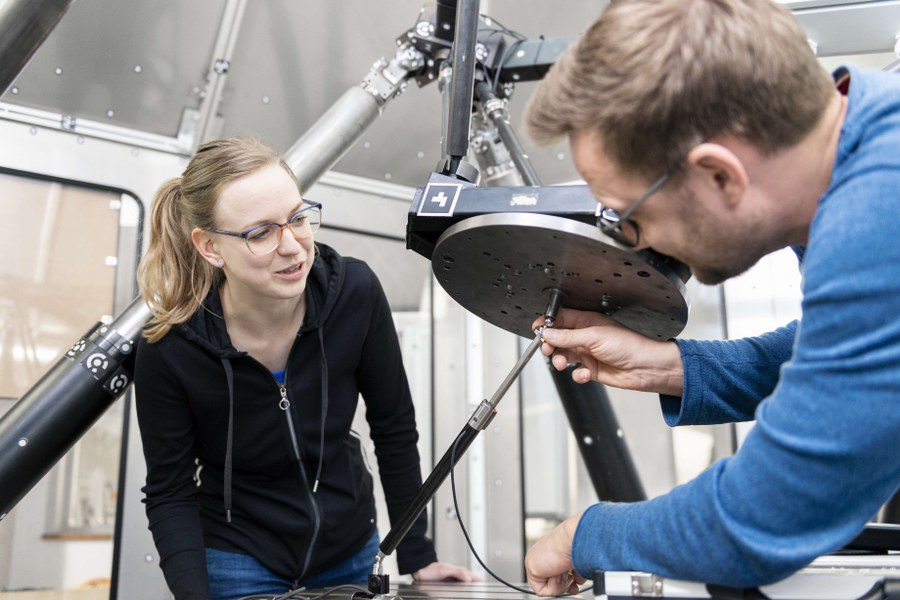

Are you interested in simulation methods in mechanical engineering and want to understand the world of technology at a fundamental level?
In order to design machines and systems, you need to understand the behavior of technical components and systems and how they interact with their environment. This requires knowledge of structural mechanics and fluid mechanics. Analytical and numerical as well as experimental methods are used to solve engineering problems.
The aim is to understand the physical and mathematical principles of mechanical engineering and to learn methods for technical description, calculation, simulation and experimental verification. Solid and comprehensive knowledge is imparted, which enables application in a very wide range of subject areas. At the participating Chairs, students and staff work and research on solutions for current and future challenges in the field of mechanical engineering.

Have you heard about the first woven heart valve or our university's algae films? Then it's time to take a look for yourself in the test halls of the specialization in processing machines and textile machine construction . Here, biomedical high-performance fibers and resource-saving packaging materials could be the focus of your studies. Or are you primarily interested in machines that weave yarn or produce food highly efficiently? There is a wide range of options available to you.
In the Diplom program, the seventh semester is designated in a targeted manner for a mandatory professional internship. No lectures are scheduled during this period, allowing you to gain practical experience over an extended period at industrial companies or non-university research institutions. The approximately 15-week internship allows you to apply theoretical knowledge to real-world projects and supports the further development of your academic specialization. The Diplom program concludes in the 10th semester with the Diplom thesis, while the Bachelor’s program concludes in the 6th semester with the Bachelor’s thesis.
Student Testimonials
Nele, Mechanical Engineering student
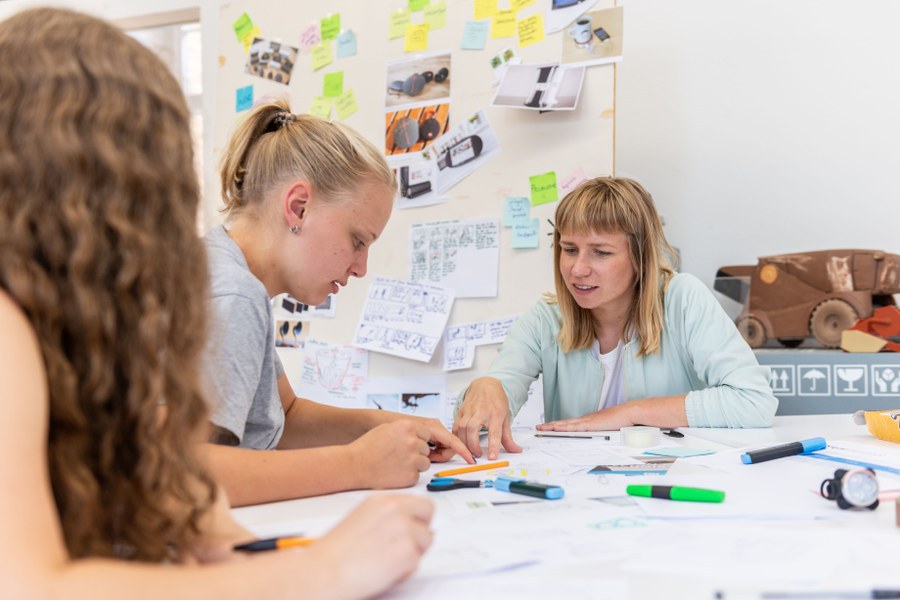
"The reason why I chose mechanical engineering after leaving school? I enjoy mathematics and am very interested in technology. That sounds very crude, but in summary it hits the nail on the head. I'm now halfway through my degree. My basic studies are over. And I can build on the basics, such as mathematics, technical mechanics, design theory, electrical engineering and much more. But there was one subject that was groundbreaking for me that wasn't on the list. Production engineering. The subject really fascinated me and was the deciding factor for me to major in production engineering. What fascinates me about production engineering is the holistic view of a product's life cycle. What parameters need to be taken into account when designing and selecting manufacturing processes? How are the parts manufactured? Which machines can be used to implement production? How long do the individual production steps take? Which parts does a company manufacture itself and which are purchased? Questions upon questions to which I look forward to finding answers in production engineering."
Cliché or truth - seating for Mechanical Engineering students
Do I have to be good at math and physics to study mechanical engineering? How much truth is there in the checked shirt cliché? Students answer these and many other questions in the "Sitzgelegenheit". In this YouTube format, students, employees or alumni of TU Dresden are asked interesting questions from the community.
Uni vlog with Mechanical Engineering student Lukas
Lukas Günther is studying Mechanical Engineering at TU Dresden, majoring in General and Constructive Mechanical Engineering. In the new TU Dresden student vlog, he gives an insight into his numerous hobbies and activities alongside his studies. Lukas talks about the important role agriculture and the technology behind it play in his life, where he volunteers and how he lives out his passion for photography and film.
© TU Dresden 2022
Spoilt for choice with the large selection of degree courses in mechanical engineering at TU Dresden - Q&A with Johannes
Studying mechanical engineering - but what does that actually mean? 🔧 Aerospace engineering, general mechanical engineering, automotive engineering, lightweight construction - so many specializations, but which one is right for me? What prior knowledge do I need for a mechanical engineering degree? Student Johannes gives an insight into his studies at TU Dresden. Professor Brosius provides further information on the degree program in a course introduction
© TU Dresden
Career Prospects in Mechanical Engineering
Mechanical engineering does not lead to a single career path—rather, it opens up a broad spectrum of technical career opportunities. Graduates of TU Dresden develop aircraft structures, optimize production processes using artificial intelligence, work on hydrogen and energy systems, design vehicle components, or simulate complex fluid flow processes. Fields of work range from automated manufacturing and battery technology to semiconductor development and space projects, as well as the integration of mechanical engineering with software development, data analysis, or technical design. The roles are equally diverse—from research and development to simulation, project management, technical consulting, sales, or leadership positions in industrial companies. This breadth stems from the combination of a broad foundational education and the opportunity to develop an individual professional profile through specialized fields of study. In addition to careers in industry and business, paths are also available in research, public service, engineering firms, or self-employment. For those interested in academia, there is also the option of pursuing a doctoral degree (Dr.-Ing.).
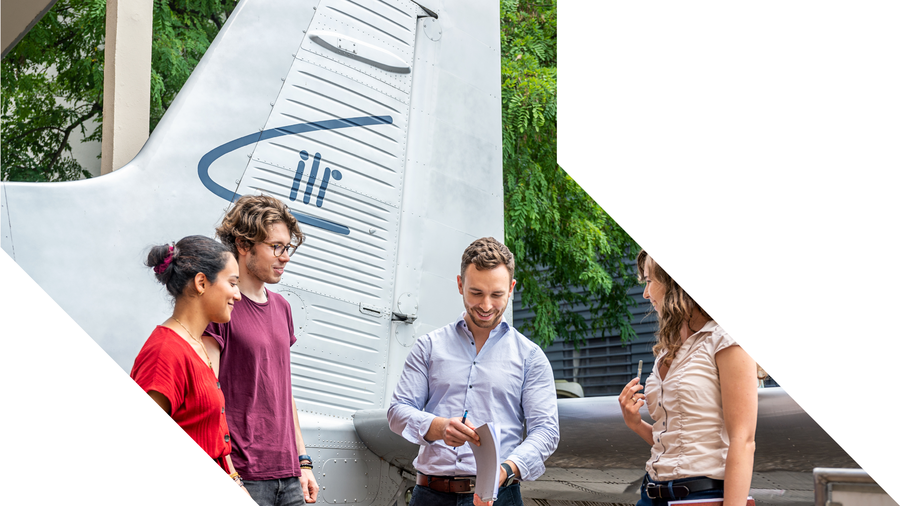
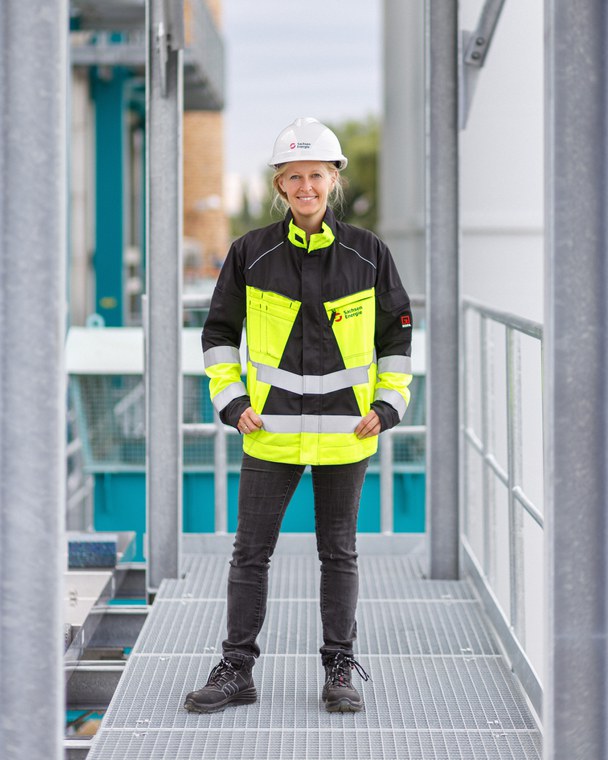
Alumni portrait Dr. Franziska Graube-Kühne (Class of 2012, PhD 2020)
1. What position do you hold and what does your day-to-day work look like?
I am head of the "Technology" department in the Power and Heat division at SachsenEnergie. Our department is responsible for the Dresden district heating network and smaller ones in the region and is the project department for the new construction and maintenance of generation plants for heat or coupled power & heat. We oversee the entire project phase, starting with the development of ideas (e.g. where can we use heat sources for heat pumps) through planning and construction to commissioning and documentation.
2. What fascinates you about your work?
You can do something for the energy transition right at the cutting edge, have an incredibly wide range of technologies and are confronted with strategic and political issues. Above all, there is the question of how to provide affordable green heat with a reliable supply.
3. What experiences from your mechanical engineering studies have benefited you the most in your career?
An understanding of key figures and quick estimation - does that make sense? In what range should a value lie? Can it work that way? - is very often important in order to always have an overview of the multitude of projects and issues. It is important not only to understand that something works, but also how it works, to question everything and also to have a wealth of knowledge across all areas of energy technology - what is the difference between a backpressure turbine and a condensing turbine? How does a natural circulation system work? What types of chillers and heat pumps are there? How can pumps be controlled? I always wanted to know as much as possible, so this helps me now.
4. Did you have a specific career goal during your studies? How did your career develop in comparison?
I always wanted to be an energy engineer. I chose mechanical engineering because it was the home of energy technology. I wanted to help shape the energy transition and I am very happy to be able to actively do this today. In fact, today I am doing exactly what I always wanted to do, I am building green energy generation plants, a little less globally than I had originally planned, but I didn't know how wonderful family life with children would be.
5. What advice would you give other women in engineering for starting their careers?
It is often the case that women and men are still not treated "equally". First and foremost, women have a harder time earning respect, but when they do, it is often even greater than for men. As a manager of men and women, I try to treat everyone fairly, not equally. Mixed teams with men and women work best because they complement each other perfectly. In any case, women don't need to be afraid of not being up to something. If you are enthusiastic about something, then you are usually good at it. Motivation is often more important than other factors. However, if you do experience discrimination or harassment because of your gender, I recommend dealing with it openly. Many people today are much more aware of such issues and will help.
Degree Program Reviews
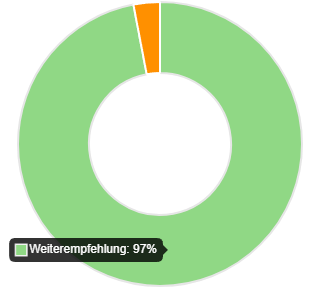
Weiterempfehlungsquote des Studiengangs auf StudyCheck anhand unabhängiger Bewertungen durch Studierende (Stand 16. Februar 2026)
How satisfied are students in the mechanical engineering degree program? Studycheck.de provides independent reviews of the degree program.
Jonas: The initial challenges in the foundational phase seem very difficult, but the subsequent specialization in your area of interest is both fun and motivating. The degree program is very diverse and broad in scope. There are different paths and areas of interest that students can prioritize individually, which is what makes this degree program so unique to me. Internships and research projects prepare students well for the professional world. ( Review from November 10, 2025)
Orientation and Counseling
Want to know if a mechanical engineering degree at TUD is right for you? You’ll find a wide range of optional bridge and preparatory courses, as well as orientation programs, here.
Online Self-Assessment for Mechanical Engineering (OSA-Mechanical Engineering)
The Online Self-Assessment for Mechanical Engineering (OSA-Mechanical Engineering) helps you make an informed decision about your choice of degree program. By completing exercises and answering questions about your expectations for your studies and your learning style, you can determine whether your personal skills, interests, and expectations align with the requirements and actual content of the degree programs.
Click here to access the OSA Mechanical Engineering: OSA MB
If possible, complete an OSA all the way through. As long as you’re registered on OPAL, you can pause at any time. Your progress will be saved, and you can then continue seamlessly. Please print out the feedback at the end of the test. You can also use this feedback to seek advice from the academic advisor for your chosen major. Note: To take the OSAs, you must be registered on “OPAL—Online Platform for Academic Teaching and Learning.” Registering on OPAL
Instructions: Select TU Dresden as your university and click “Login.”
- Select: “Don’t have a university login?”
Note: While the guest login will take you to the TU Dresden OPAL course page, only selected courses will be displayed (the OSAs are not listed). - Click on “Register”
- Sign up with email
Display text: "You need a valid email address to register for the learning platform." You’ll receive an email with a link containing a key that you can use to set up a username and password.
- You will then receive an email with the subject line: Registration Key for the Learning Platform
- Click the confirmation link
- Complete registration by entering your username, name, and password
- Note: Select "TU Dresden" as the institution
- Under “Course Offer,” enter “OSA Mechanical Engineering”
- Start
Note: You can pause or cancel the test, and you can log in again to resume it.
The development of the OSAs was co-financed with funds from the European Union and partially funded by tax revenues based on the budget approved by the Saxon State Parliament.
Academic Advising for Mechanical Engineering
Do you have specific questions about the Mechanical Engineering degree program, the structure of the program, or its areas of focus? The academic advising office is here to assist you with detailed questions about the program and help you figure out which track or specialization is right for you.
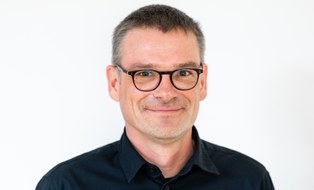 © Tobias Ritz
Studienfachberater
NameThomas Schön
Send encrypted email via the SecureMail portal (for TUD external users only).
Digital Information Sessions During the Application Period
In addition, our digital information sessions in the summer offer a concise, supplementary orientation for anyone who hasn’t yet made a final decision about which degree program to pursue at the Faculty of Mechanical Science and Engineering. You’ll gain a brief overview of the degree programs and can engage directly with us—all in a concise format and with minimal effort. This program complements individual academic advising and is intended as additional guidance for those who would like to get a clearer picture before making their decision.
Still unsure about which program to choose?
If you’re generally considering which degree program to pursue or are looking for support with academic orientation, the Central Student Information and Counseling Service at TU Dresden can help. Here, regardless of your specific degree program, you can get answers to questions about choosing a major, the application process, or making a decision.