
Lighthouse Fellowships
With the Dresden Fellowship Program, TU Dresden has created a successful funding instrument for inviting promising early-career researchers and established top researchers, which contributes to the university’s internationalization in research and teaching. In the current EXU phase, which began in late 2019, our researchers have invited 96 (as of July 2026) international guest researchers and, together with them, have implemented innovative research projects and cooperative activities.
As a measure within the strategic area of activity COLLABORATION of the Excellence Strategy “TUD 2028 – Synergy and beyond,” the Fellowship Program thus strengthens collaborations with international partner institutions at the subject-specific and institutional levels, enriches TU Dresden’s research profile, and enhances its international visibility.
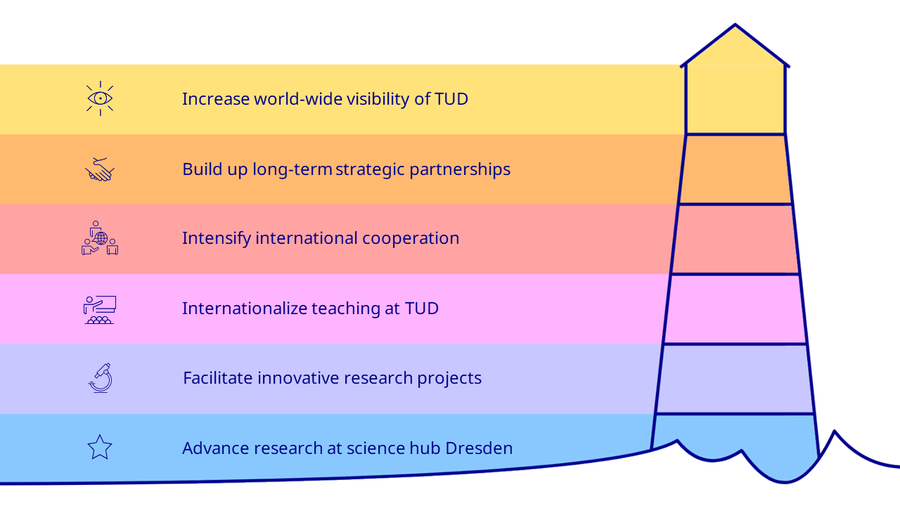
The Fellowship Lighthouses highlight exemplary research stays that have a particularly strong influence due to their diverse activities and their lasting impact on the TUD community and beyond. They exemplify how excellent research requires active internationalization in order to flourish. On this page, discover the diverse facets of international research collaboration in the projects of our Fellows, who, through their commitment and expertise, shape TU Dresden as a hub of top-class international research.
Discover on this page:
Table of contents
Prof. Dr. Douglas Cairns
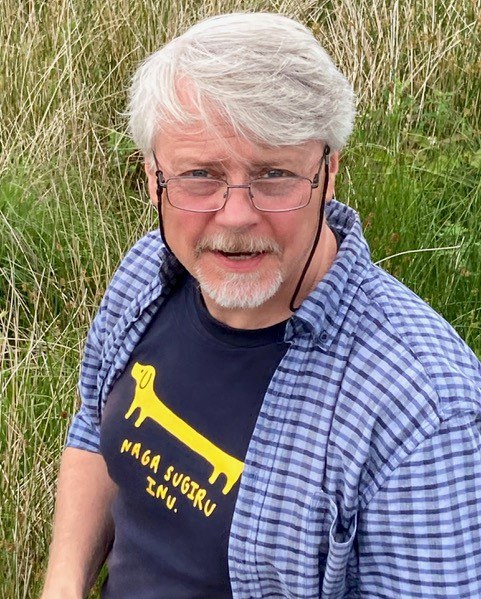
Prof. Cairns is a leading international expert in philological emotion research; his dissertation on shame in Greek culture is already considered a seminal work. His research combines the semantic analysis of ancient texts and their linguistic treatment of emotions with interdisciplinary approaches from psychology, biology, and behavioral science.
“Dresden is a marvelous place to live and work, and the facilities and opportunities provided by TUD are extremely attractive for visiting researchers.” – Douglas Cairns
- Professor of Classical Philology at the University of Edinburgh
- Visiting the TUD as a Senior Fellow:
in 2024 with Jun.-Prof. Dr. Mario Baumann (Institute of Classical Philology, Faculty of Linguistics, Literature and Cultural Studies) and
in 2025 with Prof. Dr. Christoph Lundgren (Institute of History, Faculty of Arts, Humanities and Social Science). Both visits were linked by the common theme of emotions.
During his stay, Prof. Cairns collaborated closely with the ERC Advanced Grant project “Honor in Classical Greece” (University of Edinburgh) and with Collaborative Research Center 1285 “Invectivity” at TU Dresden. Together, they organized two workshops and a conference. In addition, Prof. Cairns supervised a doctoral candidate at TU Dresden, for whom a three-year doctoral fellowship was awarded, and initiated the awarding of three postdoctoral fellowships for six-month research stays at the University of Edinburgh.
For Prof. Cairns, exchange with international colleagues is a central component of his scholarly work. Dialogue about different approaches and perspectives not only enriches his own research but also enables critical reflection on and expansion of familiar methodological and institutional structures.
In his words: “German classical philology continues to set standards in many respects that serve as a guide for colleagues in other disciplines. All good classical philologists need a strong command of German and strong connections to Germany. Dresden is the ideal place to cultivate these relationships—the city combines outstanding academic resources, dedicated colleagues, and a rich cultural environment. Moreover, Dresden is one of the most beautiful and best-located cities in Europe—and thus in the world.”
Prof. Douglas Cairns’s connection to TU Dresden began in 2011 through his contact with Prof. Fritz-Heiner Mutschler, professor emeritus of the Chair of Classical Philology/Latin at TUD. In 2016, Prof. Cairns visited TU Dresden for the first time as a Research Fellow of the Alexander von Humboldt Foundation for a short-term stay.
Upon the nomination of Prof. Dr. Dennis Pausch, he received the Humboldt Foundation’s Anneliese Maier Research Award in 2018, in the amount of €250,000, for a five-year research collaboration with TU Dresden. During this time, he developed a close collaboration with Assistant Professor Dr. Mario Baumann, who nominated him for a Senior Fellowship at TU Dresden in 2025. Furthermore, this collaboration also facilitated his membership in the research networks“AG Sensorium”and the DFG network“In (E)motion: Methodological Approaches to Emotions in the Classical Sciences.”
Prof. Cairns is currently working with colleagues from Glasgow and Marburg on a proposal for a collaborative project that—if funded—will also involve researchers and networks from Dresden.
- 2018: Anneliese Maier Research Award (250.000€) from the Alexander von Humboldt Foundation
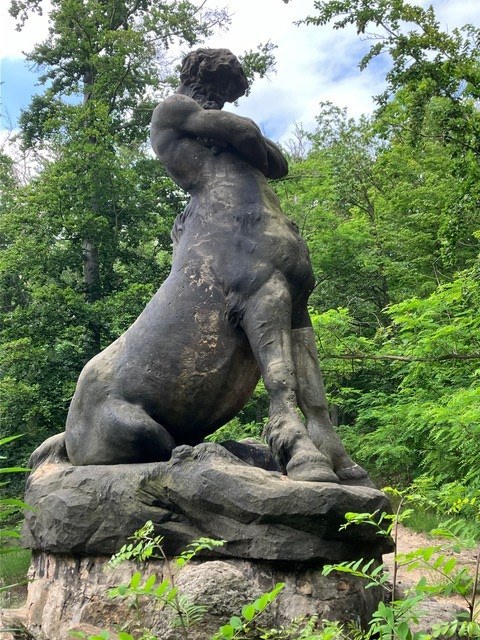
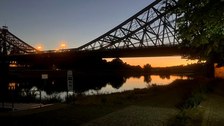
Centaur statue in Dresden's Albertpark © Douglas Cairns
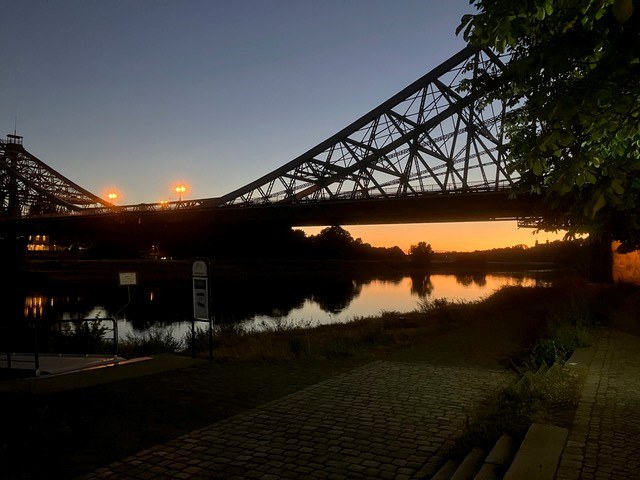
© Douglas Cairns
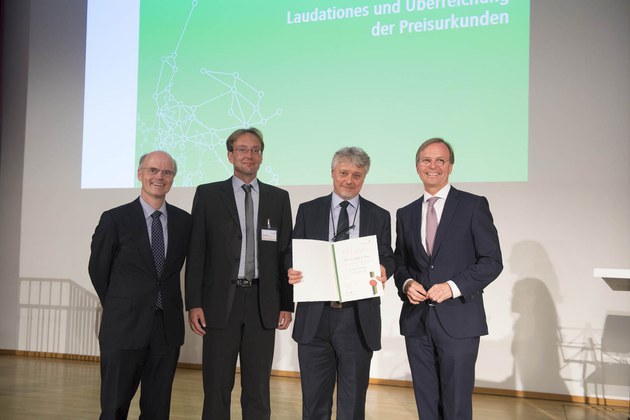
Urkundenübergabe (Personen v.l.n.r.): Generalsekretär d. Humboldt-Stiftung Dr. Enno Aufderheide, Gastgeber Dennis Pausch von der TUD, Preisträger Douglas Cairns, Parlamentarischer Staatssekretär im Bundesministerin für Bildung und Forschung Thomas Rachel © Humboldt Foundation / Jens Jeske

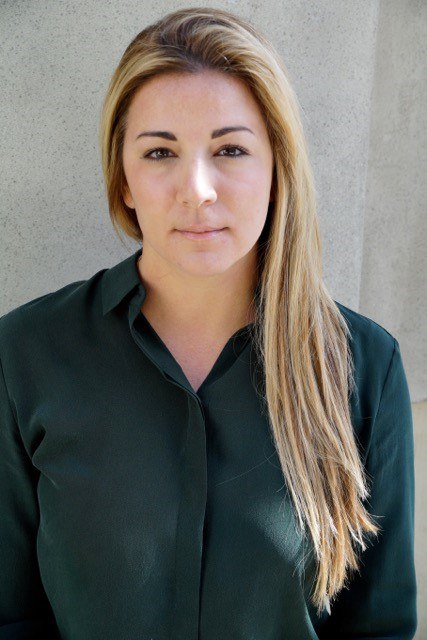
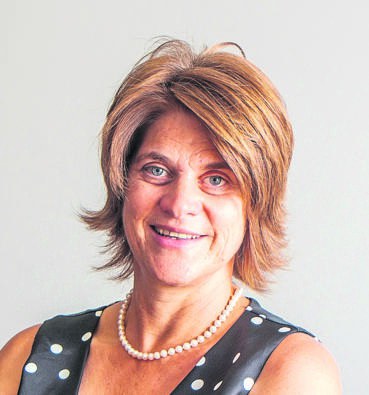
Assoc. Prof. Dr. Alison Sperling
Dr. Sperling ranks internationally among the most renowned scholars in cultural studies in the field of Speculative Fiction Studies. Her research profile is shaped by works on emancipatory visions of the future, queer-feminist Science and Technology Studies, and representations of the climate crisis in literature and art. With her research, she contributes substantially to the internationalization of Speculative Fiction Studies in Germany.
“I’m very grateful to have had this fellowship and for the new networks it opened up for me and for the study of science fiction across regional boundaries and interests. We learn and grow better as a global community than when we’re siloed.” – Alison Sperling
- Assistant Professor at Florida State University
- Visiting scholar with Jun.Prof. Dr. Moritz Ingwersen at the Institute of English and American Studies, Faculty of Linguistics, Literature and Cultural Studies (July 10, 2023 – August 20, 2023)
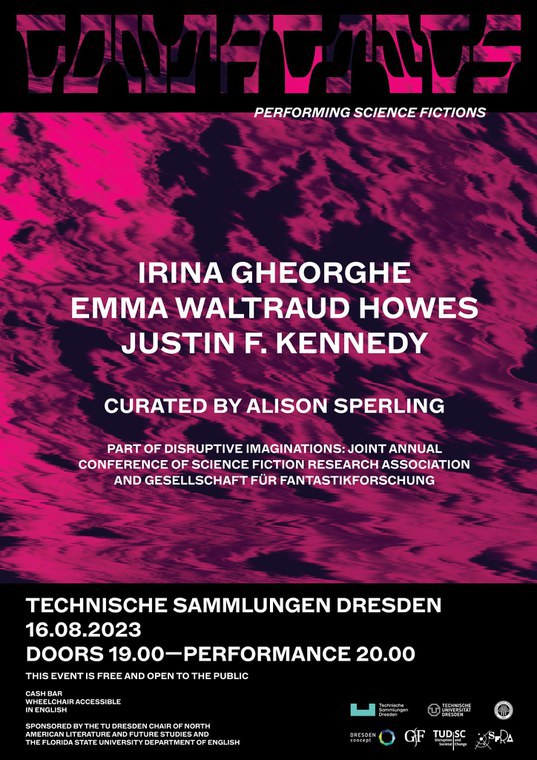
Dr. Sperling and Dr. Ingwersen structured the fellowship so that it could be integrated into the annual conference of the Science Fiction Research Association (SFRA) and the German Society for Fantastic Research (GfF), held in Dresden in 2023. As part of the conference, she curated the evening event Contactics: Science Fiction in Performance with the internationally renowned artists Irina Gheorghe, Emma Waltraud Howes, and Justin F. Kennedy. Together, they presented an impressive show intended for both conference participants and a broader public audience. The event was met with great enthusiasm and sparked lively discussions about what science fiction is and what it achieves outside the rather traditional forms and media that science fiction scholars engage with in their work.
The network of stakeholders working and conducting research in the field of science fiction and speculative fiction in Germany is growing dynamically and relies on international relationships and collaborations. The fellowship was crucial for strengthening international exchange within the science fiction community and for expanding it beyond Dresden’s borders to include contemporary visual and performing arts in Europe.
Dr. Sperling’s collaboration with the TUD Dresden University of Technology has been ongoing since 2021. At the invitation of Dr. Ingwersen, she came to Dresden at that time to present joint conference papers as well as to conduct an online seminar project on the topic of “Global Weirding.” The seminar focused on the history of “Weird Fiction” of the 20th and 21st centuries and was awarded the University Prize for Diversity-Sensitive Teaching in 2022.
This successful collaboration evolved into a long-term and productive partnership, which resulted in a Junior Fellowship in 2023. In 2025, Dr. Ingwersen extended another invitation for her to give a guest lecture as part of his course “Anthropocene Fiction.” Furthermore, Dr. Sperling gave another lecture in a seminar on the topic of “Climate Fiction.” The collaboration continues, and future joint events are already being planned.
- 2022: Recipient of the University Award for Diversity-Sensitive Teaching for the online seminar project on “Global Weirding” (in collaboration with Dr. Ingwersen)
© Alison Sperling
© Johanna Mehl

Dr. Marinda Avenant
Dr. Avenant is an internationally recognized scientist in the field of environmental research. She possesses outstanding expertise in the areas of ecology, hydrology, and biomonitoring. For many years, she has been studying climate-related effects on the ecology of surface waters, such as the species composition of seasonally drying streams.
- Senior Lecturer and Program Director at the Center for Environmental Management at the University of the Free State (UFS), Bloemfontein, South Africa
- Visiting Junior Fellow at TUD with Prof. Dr. Stefan Stolte at the Institute of Water Chemistry (August 1, 2022 – August 31, 2022)
The fellowship was part of a long-term collaboration with partners in South Africa. As early as 2009, environmental researchers from Dresden began collaborating with UFS Bloemfontein to establish a United Nations University (UNU) in Dresden and a corresponding Institute in Maputo, Mozambique. In 2019, Dr. Avenant and Dr. Jungmann organized the Germany–Southern Africa Summer School on topics related to water management.
The international activities of the research group led by Dr. Jungmann (Institute of Hydrobiology) and Dr. Börnick (Institute of Water Chemistry) include research on water resources and water quality in the arid and semiarid landscapes of South Africa. Even in traditionally temperate regions such as Germany, water availability is changing due to climate change. The expertise and strategies of our colleagues from South Africa in dealing with changing water resources in the context of climate change will become increasingly important here.
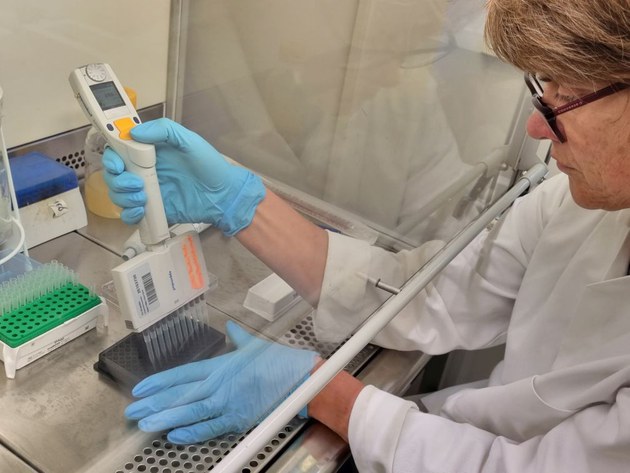
A central component of the fellowship was the intensification and expansion of existing collaboration in the field of surface water monitoring. A key focus was on developing a jointly coordinated strategy for current and future sampling in South Africa. By combining traditional aquatic biomonitoring methods with innovative in vitro bioassays and state-of-the-art chemical analyses, the impacts of climate change on South Africa’s water supply and water quality were analyzed.
In addition to expert discussions, practical laboratory work, and aquatic studies, the fellowship resulted in three joint publications and three project proposals. Furthermore, Dr. Avenant was involved in teaching, including through seminars and colloquia, and delivered a keynote address at the 39th Annual Meeting of the German Society for Limnology.
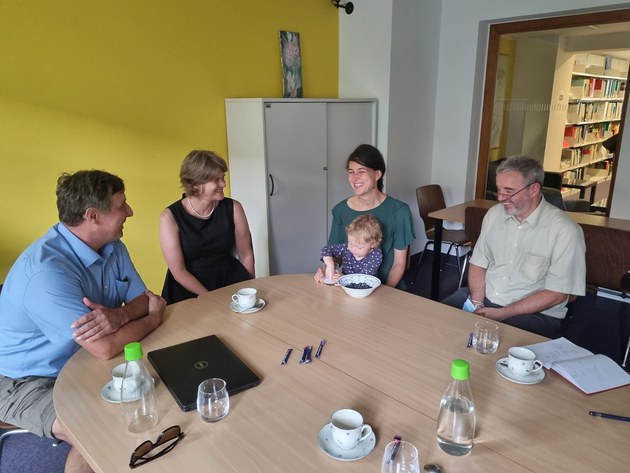
The fellowship also strengthened the exchange of expertise with the University of the Free State, which has long been working on sustainable solutions in water research. The practical, hands-on knowledge in dealing with climate-related extreme events is particularly valuable for TU Dresden. According to Prof. Stefan Stolte, TUD students also benefit from concrete case studies such as those from South Africa (“non-perennial rivers”): “This allows us to illustrate our teaching even more effectively using practical examples. It also highlights just how interconnected and international our own research is. Based on our experience, this is highly valued by the students.”
In March 2023, the final report of the South African research project “Threats of Extreme Weather Events: Improving the Resilience of QwaQwa to the Multiple Risks of Climate Change” was completed. The TU Dresden participated as an external scientific partner and made significant contributions through two monitoring campaigns, analytical studies, and the scientific evaluation of the results.
Another milestone was the publication of a joint scientific paper in 2024, based on the multi-year collaboration and joint research efforts in South Africa. In September 2024, Dr. Avenant returned to Dresden for the annual conference of the German Society for Limnology, delivered a plenary lecture, and used her stay to conduct laboratory work, engage in professional exchanges, and plan further joint projects.
With the help of additional funding from the funding program Internationalization in 2025 at the Institute of Water Chemistry, practice-oriented assessment and protection strategies for temporary watercourses were developed. To this end, additional research institutions (Sol Plaatjes University, Kimberley; University of KwaZulu-Natal) and stakeholders (water utilities, farmers) were integrated into the research activities. Furthermore, a professional network has emerged involving the University of Duisburg-Essen and UFS Bloemfontein.
Supporting early-career researchers and fostering institutional collaboration play a central role. Beyond the fellowship, this led to further opportunities for collaboration, including another fellowship with Dr. Mariana Erasmus. In addition, contacts were established with regional companies in Dresden and South Africa, leading to discussions aimed at initiating joint projects and project proposals.
Between 2023 and 2025, three major project proposals were developed and submitted in collaboration with UFS Bloemfontein. Although funding was not awarded due to intense competition, the extensive application process significantly deepened the collaboration and academic exchange. The insights gained have already been utilized in scholarly articles and exchanges and are intended to be reused in future calls for proposals.
Since June 2026, Dr. Hilmar Börnick has been working as a research fellow at the University of the Free State, thereby creating additional opportunities for joint research projects and the exchange of researchers.
The collaboration with Dr. Avenant and the UFS Bloemfontein remains very active, and the research group at TU Dresden looks forward to deepening this partnership.

© UFS-Kaleidoscope
© Dirk Jungmann
© Dirk Jungmann

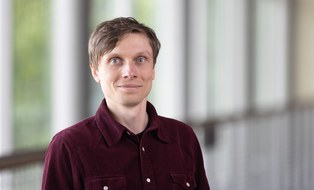 © Sven Ellger/TUD
Advisor
NameAlexander Ling
Dresden Fellowship Program and Eleonore-Trefftz-Program
Send encrypted email via the SecureMail portal (for TUD external users only).
International Office
International Office
Visiting address:
Fritz Foerster Bau, Office 167 Mommsenstraße 6
01069 Dresden
Postal address:
TUD Dresden University of Technology International Office
01062 Dresden
The Dresden Fellowship Program is an initiative within the “TUD 2028 – Synergy and Beyond” Excellence Strategy, under the strategic area of activity COLLABORATION.