
Jul 02, 2026
More Than Just a Campus: How Well-Being Is Transforming Colleges and Universities
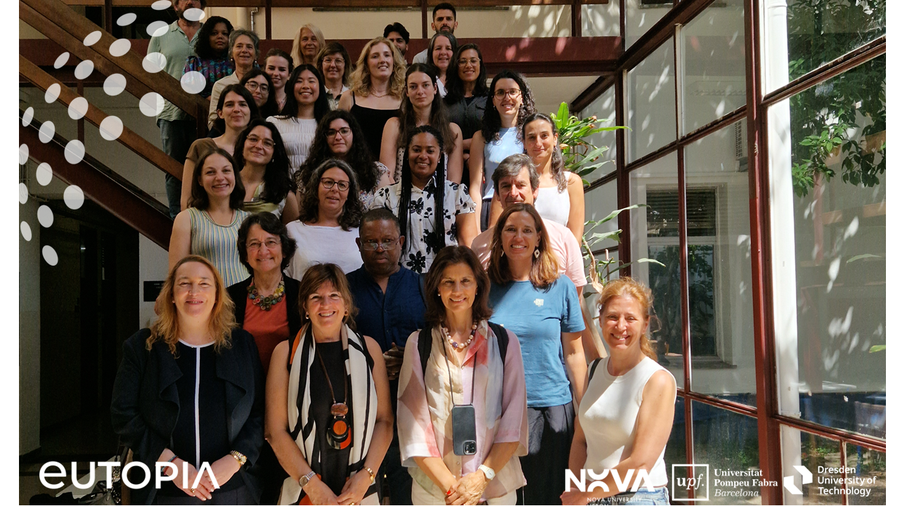
Group photo of the participants in the EUTOPIA event “Sustainable Wellbeing Cultures on University”
Well-being as a strategic priority for universities was the focus of the event “Sustainable Well-being Cultures on University Campuses,” which took place on June 18 as part of the EUTOPIA Connected Community DEAN initiative on the NOVA FCSH campus in Lisbon.
Representatives from various EUTOPIA universities discussed how universities can be places that not only enable academic success but also promote a sense of belonging, participation, and sustainable development.
The TU Dresden (Chair of Business Education and Management Training) co-organized the event. As part of a micro-credential course in the summer semester of 2026, students actively participated in the preparations; three selected students were also able to travel to Lisbon with financial support and experience the conference firsthand. The students described their participation as a true highlight of their studies and particularly emphasized the international exchange, the inspiring atmosphere, and the opportunity to experience research and teaching in an international setting right there in Lisbon.
Eva Pujadas Capdevila, Vice Rector for Social Engagement and Sustainability at Pompeu Fabra University, provided important insights. She advocated for a broader understanding of higher education: universities are not only places for the transmission of knowledge but also social spaces where people learn, collaborate, and take on responsibility. Well-being, she argued, is therefore not a secondary concern but a crucial prerequisite for successful studying, research, and work.
Using the Centre for Studies on Planetary Wellbeing as an example, she presented approaches for integrating well-being more deeply into everyday university life. These included participation, inclusion, a sense of belonging, and the close connection between well-being and sustainability.
The presentations by the NOVA representatives also addressed these topics. It became clear that well-being cannot be viewed separately from teaching, university culture, and sustainable development. Rather, it is a shared responsibility that touches many areas of university life.
The program was complemented by a panel discussion and collaborative workshops with students. The event provided a space for exchange, new perspectives, and exploration of how universities can be designed in the future as spaces for learning, working, and living.