
Inhaltsverzeichnis
Studienvoraussetzungen
• erster in Deutschland anerkannter berufsqualifizierender Hochschulabschluss oder ein Abschluss einer staatlichen oder staatlich anerkannten Berufsakademie in Informatik, Mathematik, Naturwissenschaften, Wirtschafts- oder Ingenieurwissenschaften
• Englischkenntnisse auf Niveau B2 des europäischen Referenzrahmens für Sprachen sowie
• Nachweis besonderen Eignung, das bedeutet, dass Fachkenntnisse auf den Gebieten der Computerprogrammierung sowie der mathematischen und naturwissenschaftlichen Grundlagen vorhanden sind. Insbesondere wird der Nachweis verlangt, dass sequentielle Computerprogramme in einer übersetzten Hochsprache selbstständig implementiert, getestet und angewendet werden können. Zusätzlich werden Kenntnisse auf dem Bachelorniveau verlangt in: Analysis von Funktionen einer und mehrerer Variablen (Ableitungen, Integrale, partielle Ableitungen), Grundlagen der Vektor- und Matrizenrechnung (inkl. Inversion und Zerlegung von Matritzen), Grundlagen der Wahrscheinlichkeitsrechnung (Verteilung, Axiome, Wahrscheinlichkeiten), Algorithmen und Datenstrukturen (Arrays, Listen, Such- und Sortieralgorithmen, Konzept der Komplexität) sowie Kenntnisse auf Bachelorniveau des gewählten Tracks
Der Nachweis der besonderen Eignung erfolgt durch Eignungsfeststellungsverfahren (ggf. mit einem Eignungsgespräch) gemäß der Ordnung über die Feststellung der Eignung für den Masterstudiengang Computational Modeling and Simulation (Eignungsfeststellungsordnung) in der jeweils geltenden Fassung.
Eignungsfeststellungsverfahren
In diesem Studiengang ist die Teilnahme an einem Eignungsfeststellungs- bzw. Auswahlverfahren Voraussetzung für die Immatrikulation. Beachten Sie, dass die Frist zur Antragstellung ggf. vor den Bewerbungsfristen zum Studium liegen kann (s.o. unter Bewerbungsfristen). Über folgende Links erhalten Sie Hinweise zu allen innerhalb der angegebenen Frist einzureichenden Unterlagen sowie zur entsprechenden Ordnung.
- Hinweise und einzureichende Unterlagen
- Hinweise und Eignungsfeststellungsordnung auf der Seite der Fakultät
Hinweise zur Bewerbung
Liegt zum Zeitpunkt der Antragstellung der Nachweis des ersten berufsqualifizierenden Hochschulabschlusses noch nicht vor, wird die Bewerbung auch dann berücksichtigt, wenn bereits 80 % der durch den Hochschulabschluss erreichbaren Leistungspunkte durch Bescheinigung der Herkunftshochschule (Prüfungsamt) nachgewiesen werden. Das entsprechende Formular finden Sie auf den Seiten des Immatrikulationsamtes.
Allgemeines zum Studiengang
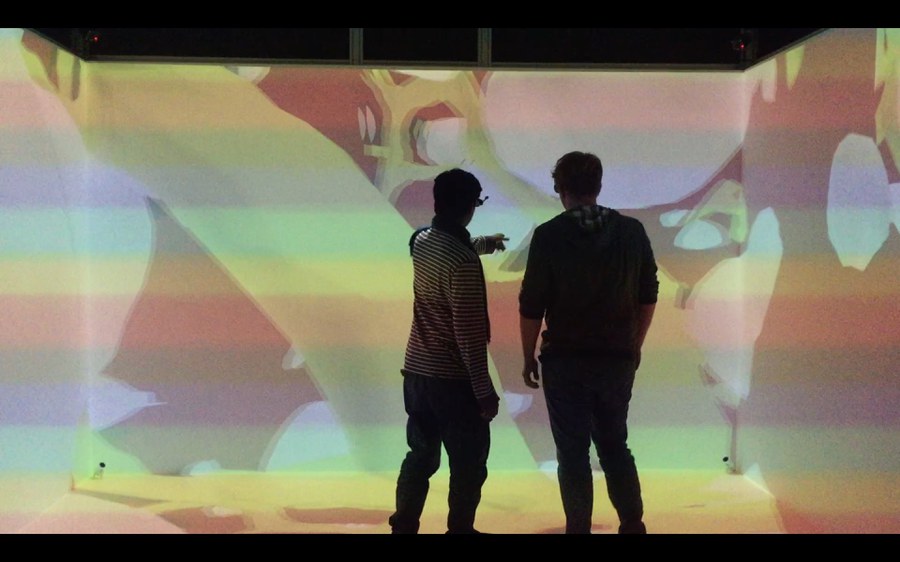
Der Studiengang bietet anwendungsübergreifendes Grundlagenwissen in Computational Modeling and Simulation. Dies beinhaltet sowohl das Bilden und Lernen von Modellen aus Daten (Data Science, Machine Learning, Inference) als auch die Rechnersimulation von Modellen. Anwendungsspezifisches Vertiefungswissen wird forschungsorientiert in einem von sieben Tracks erarbeitet.
Studieninhalt
Mathematische, informatische und naturwissenschaftliche Grundlagen in der starken Betonung rechnergestützter Modellierung und Simulation schaffen die Voraussetzungen für die anwendungsspezifische Vertiefung in einem der angebotenen Tracks. Die Grundlagen umfassen insbesondere: Mathematische und informatische Grundlagen, maschinelles Lernen, Datenanalyse, Parallele Programmierung, Hochleistungsrechnen, numerische Methoden, Wahrscheinlichkeitsrechnung und Statistik, Computergrafik und Visualisierung, Stochastik, Planung und Auswertung von Computerexperimenten, Literatur- und Anwendungskompetenz wissenschaftlicher Methoden.
1. Track Computational Life Science:
Einführung in die Computermodellierung biochemischer Prozesse, Angewandte Bioinformatik, Modellierung und Simulation von biologischen Systemen und Prozessen in Raum und Zeit, statistische Verfahren und Design von Experimenten, Validierung und Verifizierung von Simulationsresultaten, Dynamik von und auf biologischen Netzwerken, mathematische Biologie, rechnergestützte Biophysik, wissenschaftliche Visualisierung in Biologie und Medizin, Teilchenmethoden, Simulation von Reaktionsnetzwerken, Computermodelle in den kognitiven Neurowissenschaften, Simulationsmethoden für Gewebe-Biomechanik.
2. Track Computational Mathematics:
Numerische Analysis, Numerisches Lösen par-tieller Differentialgleichungen mittels Finite-Elemente Methoden, wissenschaftli-ches Rechnen, Rechenmethoden der mathematischen Biologie, mathematische Modellierung, Numerik partieller Differentialgleichungen, wissenschaftliche Pro-grammierung, Optimierungsmethoden, Rechenmethoden für Mehrfeld-Methoden, Numerische Statistik und Monte-Carlo Methoden.
3. Track Visual Computing:
Datenvisualisierung, Algorithmen für Vorwärtsprobleme und inverse Probleme, Design von Benutzerschnittstellen, Computergrafik, Computervision und Bildverarbeitung, Informationsvisualisierung, interaktive Medien und Multimedia, virtuelle Realitäten, fortgeschrittenes maschinelles Lernen und künstliche Intelligenz.
4. Track Computational Modeling in Energy Economics:
Modellierung und Simulation der Strommärkte, Energie-Ökonomie, Simulation volkswirtschaftlicher Energiemarktsysteme, Modellierung von Umweltressourcen und Umweltschutzregelungen, wissenschaftliches Rechnen, numerisches Lösen partieller Differentialgleichungen.
5. Track Computational Engineering:
Numerische Strömungsmechanik, Simulation von Mehrkörperdynamik, Rechenmethoden für Mehrfeld-Probleme, Finite-Elemente Methode in der Mechanik, rechnergestützter Entwurf und Optimierung technischer Systeme.
6. Track Applied Artificial Intelligence:
Machine Learning, Machine Learning Hardware, Computer Vision, Computer Vision Optik und Elektronik, Bildverarbeitung in der Medizin, Robotik, Robotik in der Medizin, Hardware-Software-Co-Design, symbolische, logikbasierte und erklärbare Künstliche Intelligenz, Data Science, Datenbanken oder High-Performance Computing
7. Track Computational Environmental Science and Engineering:
Modellierung und Simulation von Ökosystemen, Analyse von ökologischen Wechselwirkungen, Entwicklung von nachhaltigen Lösungen für Umweltprobleme
Studiendokumente
Die Amtlichen Bekanntmachungen der TU Dresden beinhalten alle veröffentlichten Ordnungen. Benutzen Sie die Suchmöglichkeiten, um die gewünschten Dokumente zu finden: Amtliche Bekanntmachungen
Zusätzlich sind die Ordnungen auf den Webseiten der zuständigen Einrichtung auffindbar.
- Eignungsfeststellungsordnung
- Prüfungsordnung
- Studienordnung
… finden Sie auf der entsprechenden Seite der zuständigen Einrichtung.
Kontakte
Immatrikulationsamt
ServiceCenterStudium
Postanschrift:
Technische Universität Dresden
Immatrikulationsamt
Helmholtzstraße 10
01069 Dresden
- Tel.
- +49 351 463-42000
Sprechzeiten:
Fakultät Informatik
Fachberater
Herr Prof. Dr. Ivo Sbalzarini
Fachberater Track 1: Computational Life Science
Fachberater
Herr Prof. Dr. Niels Schütze
- Tel.
- +49 351 463-36380
Fachberater Track 7: Computational Environmental Science and Engineering
Fachberater
Herr Prof. Dr.-Ing. Roberto Calandra
- Tel.
- +49 351 463-40850
Fachberater Track 6: Applied Artificial Intelligence
Fachberater
Herr Prof. Dr. Axel Voigt
Fachberater Track 2: Computational Mathematics
Fachberater
Herr Prof. Dr. Stefan Gumhold
Fachberater
Herr Prof. Dr. Dominik Möst
Fachberater Track 4: Computational Modeling in Energy Economics
Fachberater
Herr Prof. Dr. Wolf-Michael Beitelschmidt
Fachberater Track 5: Computational Engineering
International Office
International Office
Besuchsadresse:
Fritz-Foerster-Bau (FOE), Mommsenstr. 6, Ostflügel/1. Etage, Raum 178
Postanschrift:
TU Dresden
Internationale Office
01062 Dresden
- Tel.
- +49 351 463-42000
Sprechzeiten:
- Dienstag:
- 13:30 - 15:30
- Donnerstag:
- 13:30 - 15:30
Terminvereinbarung für die Sprechzeiten bitte über den SCS Servicepoint im Foyer!