
Jul 15, 2026
A Year of Research in New York: Insights into Xenotransplantation at Columbia University
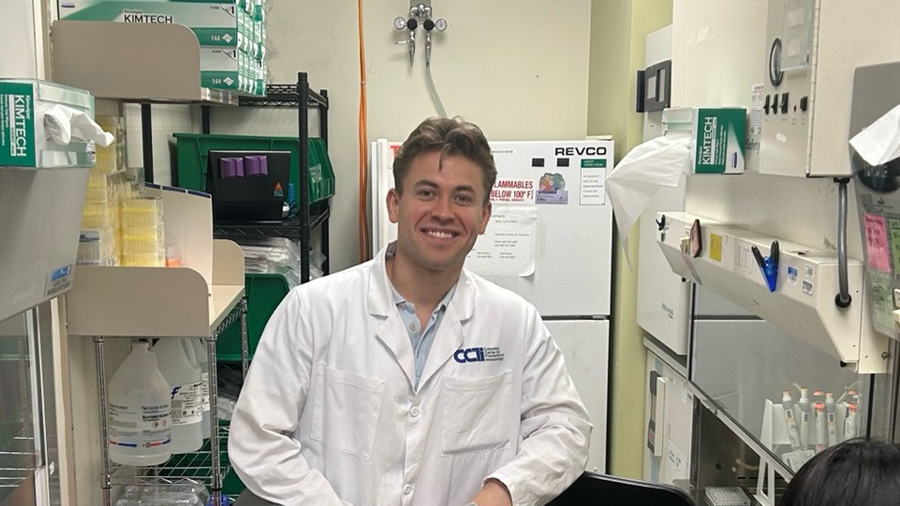
For one year, I had the opportunity to work at Columbia University in New York as part of a research fellowship—a time that had a lasting impact on me, both professionally and personally.
I was part of the Nowak Lab at the Center for Translational Immunology (CCTI), which addresses one of the most pressing problems in modern medicine: the shortage of donor organs. One promising approach is xenotransplantation—the transfer of organs between different species—in this case, from pigs to primates and, eventually, to humans. The long-term goal is to enable a virtually unlimited supply of donor organs.
My own research has focused on the innate immune system, particularly macrophages. While classical transplantation primarily focuses on the adaptive immune system, it is becoming increasingly clear in xenotransplantation that innate immune cells also play a crucial role in rejection reactions. In my project, I established an in vitro model to investigate how macrophages react to pig cells and how this reaction can be influenced by drugs such as rapamycin. Preliminary results suggest that macrophages exhibit complex activation behavior in this context, which cannot be clearly classified into the traditional categories of earlier in vitro experiments.
A large part of my work initially consisted of setting up this experimental system in the first place—a process that required a great deal of patience and perseverance, but which also gave me a deep understanding of scientific work. Particularly challenging was the premature departure of my supervising postdoc, which forced me to quickly work independently and take responsibility for my project. Looking back, this experience proved to be one of the most valuable of my entire stay.
In addition to my own project, I was closely involved in the practical work of the lab. I was particularly impressed by my participation in preclinical transplants, during which I was able to assist with numerous surgeries—including kidney, liver, heart, and bone marrow transplants from pigs to baboons. I had the opportunity not only to assist during the procedures themselves but also to witness the intensive pre- and postoperative care of the animals. This close connection between research and preclinical application was particularly exciting for me and further strengthened my interest in transplant medicine.
The international work environment was also a great enrichment. Collaborating with colleagues from various countries opened up new perspectives for me—both scientifically and personally. In particular, interacting with international fellows broadened my view of different work styles and cultures.
Outside the lab, of course, New York City also offered countless experiences. Despite an often very intense work schedule, there was always time to experience the diversity and dynamism of this unique city.
Overall, the year at Columbia University was an extremely formative experience. It not only equipped me with new scientific skills but also allowed me to grow personally and significantly influenced my future career path.
I am very grateful to the Society of Friends and Supporters of TU Dresden for supporting my project.
Max Boeck