
Prof. Dr. rer. nat. Ursula Köhler
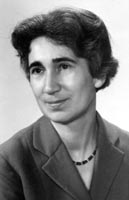
Born: August 6, 1921 in Dresden
Died: June 14, 1995 in Dresden
Faculty: Faculty of Psychology
Academic title: Prof. Dr. rer. nat.
Ursula Köhler completed her schooling at the Staatliche höhere Mädchenbildungsanstalt Dresden-Johannstadt, which she attended from 1932. After graduating from high school, she began studying mathematics at the University of Göttingen in 1940. She then continued her education from 1942 to 1945 at the Technische Hochschule Dresden, where she studied biology, geography and mathematics.
In 1947, Ursula Köhler passed the examination for the higher teaching profession and then worked as an assistant at the Institute of Psychology at the Dresden University of Technology. Alongside her teaching activities, she completed her diploma in psychology in 1952. After completing her doctorate in 1959, she worked as a senior assistant and took on a lectureship in psychology at the TH Dresden in 1960. Between 1960 and 1962, she also worked in the Health and Social Services Department of the Dresden District Council.
In 1978, Ursula Köhler was the first woman to be appointed Associate Professor of Occupational Psychology at the TUD Dresden University of Technology. She held this position until her retirement in 1981.
After the political change in 1989, Prof. Köhler continued to be actively involved in science and university policy issues and campaigned for the pension rights of former university members until her death.
Prof. Dr. Ursula Köhler died in Dresden on June 14, 1995 at the age of 73. She made a significant contribution to teaching and research at the TUD Dresden University of Technology. In her research, she dealt with the work behavior of adults and searched for criteria to analyze and describe it. In doing so, she shaped the methodology of psychological work analysis, particularly in the field of occupational health and safety. As a pioneer in a field dominated by men at the time, her story shows the opportunities that arise from change and how her pioneering work paved the way for future female scientists.