
Dr. Annika Konrad
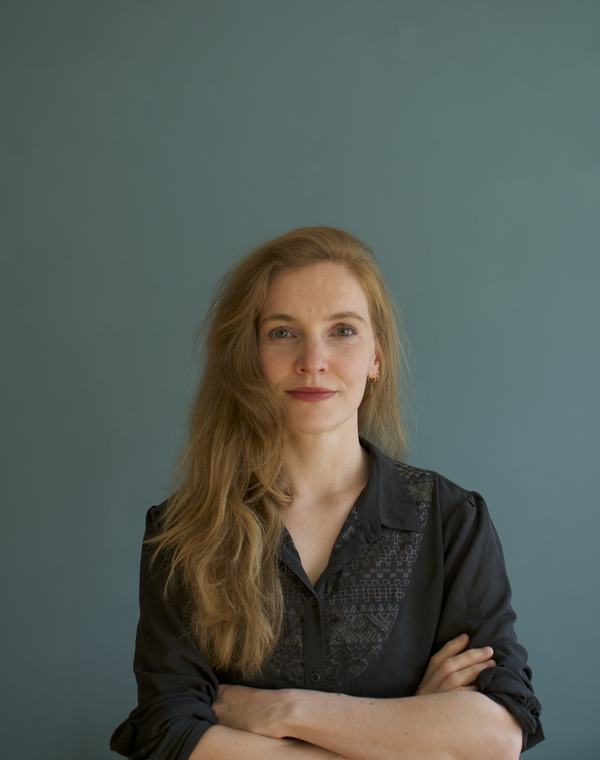
Dr. Annika Konrad draws her motivation for her academic career from her curiosity and interest in scientific processes. Her work as a Research Assistant and her doctoral studies already showed her just how multifaceted scientific work can be. She particularly enjoys the phases of developing new ideas, planning studies, and analyzing data. She also values working with students, which provides an exciting complement and balance to her desk-based work.
Her research as a Research Associate at the Chair of Clinical Psychology and Behavioral Neuroscience at TUD focuses on how empathy contributes to mental health. Using functional magnetic resonance imaging, she investigates the neural basis of empathy as well as changes in empathic processes in individuals with mental disorders.
“What I find particularly exciting about this topic is that empathy is a process we all encounter daily in social interactions, and it holds both opportunities and risks. It is precisely this ambivalence that fascinates me.”
In 2025, she was awarded the KlarText Prize for Science Communication for her clear and accessible communication of complex research.
A defining moment in her professional career was the opportunity to conduct a research fellowship at the University of Cambridge. Being exposed to new topics, working methods, and a different university system enriched Annika Konrad both professionally and personally. The shift in focus during the final year of her doctoral studies also influenced her work and her future research projects.
Among the challenges she faced in her career was balancing her doctoral studies with her concurrent training as a psychotherapist. In addition, fixed-term contracts in academia are often associated with uncertainty.
“I’d like to work in academia long-term, but I don’t have complete control over what happens after my contract ends.”
In dealing with these challenges, exchanging ideas with colleagues was particularly important, but participating in a mentoring program also helped her. Role models, however, also play a significant role:
“I’m particularly inspired by people who radiate genuine enthusiasm for their field while maintaining a certain sense of calm—despite the pressure that prevails in the academic system. I also find it inspiring when women, in particular, demonstrate that family and a career in academia can be reconciled.”
Dr. Konrad is convinced that role models play an important role, especially for young women in academia. They can offer guidance, highlight different ways of working, and demonstrate diverse paths in academia. Dr. Konrad advises young female researchers to be mindful of their own limits, because even though academia offers a great deal of flexibility, there is a risk that the boundaries between work and personal time will become blurred.
“Since everyone has their own work rhythm, comparisons aren’t helpful. What’s far more important is to consciously set aside time for substantive exchanges, to get to know your own strengths, and to actively seek support for areas of personal development.”
Looking to the future of women in academia, Dr. Konrad hopes for greater planning security. After all, fixed-term contracts and the pressure to be geographically flexible often lead to women leaving the academic system. More reliable prospects, on the other hand, would not only facilitate individual planning but also help retain the knowledge and experience already acquired within the academic system.