
Dr. Natalia Rodríguez-Muela
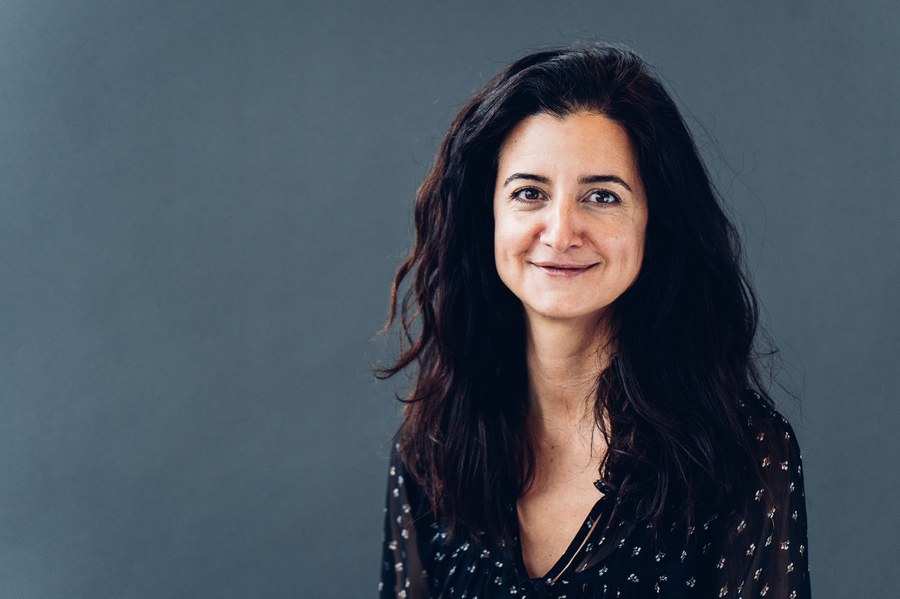
Natalia Rodríguez-Muela knew early on where her path would lead her. For as long as she can remember, she wanted to understand how brain diseases develop. For her, the decision to pursue a career in science was therefore not a search, but a matter of course. Her work is motivated by her curiosity and enthusiasm for her field, in which there is still much to discover.
Dr. Rodríguez-Muela is currently co-affiliated research group leader at the Center for Regenerative Therapies Dresden at TUD and at the German Center for Neurodegenerative Diseases e. V. Together with her team, she is trying to find out what controls the selective degeneration and resilience of certain neurons in neurodegenerative diseases. Using state-of-the-art methods such as genome editing, single-cell analyses, and stem cell models, her team is investigating the causes of selective nerve cell loss. The aim of her research is to use these findings to develop effective treatments and preventive therapies.
An important moment in her career was her decision to complete her postdoctoral training in the field of stem cells. This specialization laid the foundation for her further scientific career. Another milestone was receiving an ERC Starting Grant, which gave her the opportunity to work as an independent group leader.
Her career to date has not been without challenges. Dr. Rodríguez-Muela has experienced age-related prejudice in particular. As a young group leader, she learned that some established scientists underestimate the perspectives of younger colleagues. Balancing motherhood with setting up a laboratory also presented her with a number of hurdles, as there was little structural support available.
Such experiences only strengthened Dr. Rodríguez-Muela. When she did find herself at a loss, she was able to look to her role models for guidance. Her doctoral supervisor and an experienced colleague, who later became her mentor, continue to inspire her: “Their strength, determination, and powerful brains have been my role models.” Rodríguez-Muela believes that role models play an important role, especially for young female scientists. “Looking at them pushes you, it tells you ‘if they could, I can too’”.
She herself would pass on the following advice to young female scientists:
“It will be hard, at times maybe very hard, but if this is truly what you want to do, persevere, don’t give up. [...] If this is what you love, keep on battling and most likely it will work out at the end, and if it doesn’t, you’ll have no regrets.”
For the future, Dr. Rodríguez-Muela hopes that women will not have to constantly prove themselves. They should not feel that they have to be perfect in every role in order to achieve a position that men often hold with lower expectations. Her own experience shows her that women in leadership positions are extremely competent, determined, and effective.
“The percentage of men occupying similar positions with equivalent talent is in my experience significantly lower. We need more women in power.”