
Dr. Rita Mateus
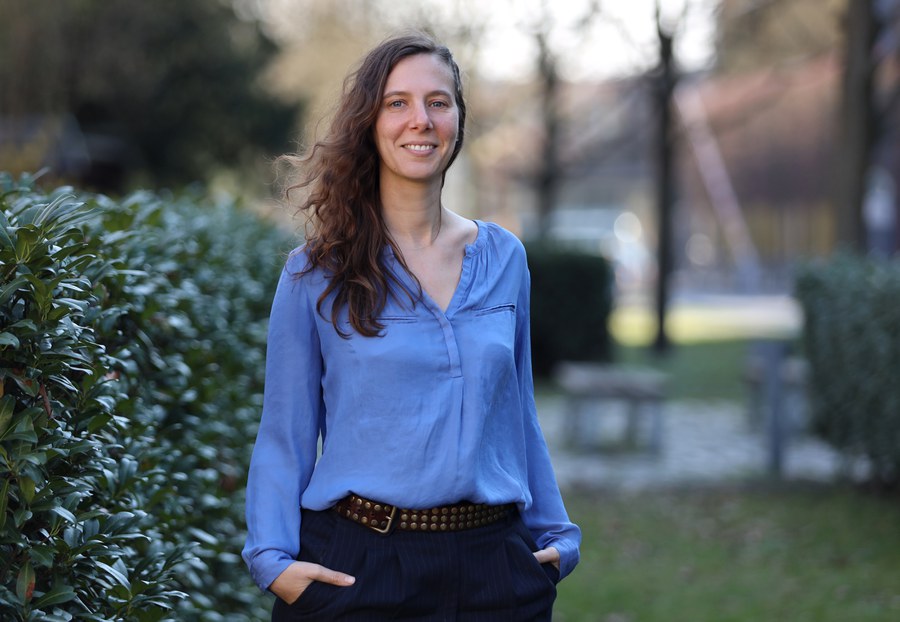
Dr. Rita Mateus grew up on the island of Terceira in the Azores archipelago, in Portugal. She discovered her interest in biology and genetics during high school. She studied at the University of Lisbon, where she completed her master's degree in molecular biology and genetics in 2008. She then went on to earn her doctorate in developmental biology at NOVA University Lisbon, in 2014. As a postdoctoral researcher, she worked at the University of Geneva in Switzerland until 2020, when in early 2021 she took up a position as a research group leader in Dresden. Her research group is based at the Max Planck Institute for Molecular Cell Biology and Genetics and at the Physics of Life Cluster of Excellence within the Dresden University of Technology.
A key moment in Rita Mateus’ scientific career happened at the end of her doctorate, when she had to decide what to do for her postdoctoral research. She was torn between choosing applied research or go deeper into understanding mechanistically how do living systems systems precisely and robustly grow, especially from a physical perspective. Mateus opted for the latter and thus not only learned more about physics of living systems, but also “to communicate in different ways with colleagues trained in very different disciplines from mine. I have found this to be truly enriching.”
Together with her team in Dresden, Mateus is now investigating how size and shape influence the functioning of organs and cells. Using zebrafish as a model system they investigate how cells communicate via mechanical, electrical, and chemical signals to precisely control organ growth. In a second research avenue, they apply similar biophysical principles to understand organelle morphology, specially to answer, “how do zebra fish shine” The group researches how the light-reflecting crystals contained in fish cells are formed, which enable zebrafish camouflage in the wild. Recently in 2025, Rita Mateus’ international and interdisciplinary work was recognized by an Early Career Research Grant from the International Human Frontier Science Program Organization.
Since taking up her research group leader position, and due to the small number of women in comparable leadership positions, Dr. Mateus often takes on numerous additional institutional responsibilities beyond her research. She masters this challenge due to the awareness that diverse points of view are important and influential for effective committee work, occurring at both of her institutions. While she sees positive developments on this front, Dr. Mateus hopes that women and other underrepresented groups will increasingly take on leadership positions in the future.
From her own experience, Dr. Mateus advises young researchers to start applying for grants and developing their own research ideas early on, even if they don't feel perfect yet. In her words,
“An early project draft helps to refine one's ideas over time and set realistic goals. No matter the outcome, it’s about making the most of your ideas instead of discarding them, even if an evaluation panel did not like them”.
Furthermore, she advises to build a strong peer network of trusted colleagues, as this helped her along her career to not only exchange scientific ideas, but also share uncertainties and celebrate successes in a collective, positive way.