
Future Lab: Inclusion 3.0
Date: January 27, 2027
Time: 10:00 a.m.
Location: Dülersaal (M13/DÜLF/U) , Mommensenstr. 13, 01069 Dresden
Join us in shaping the future! The Inclusion 3.0 Future Lab, as a TUD-wide forum, provides a space for dialogue: We’ll look back on past successes in the field of inclusion, examine current challenges, and work together to develop innovative ideas and solutions.
We would like to invite you to mark your calendars for this event.
You will find the registration link both in the event entry itself and here shortly.
Colleges and universities are places of learning, teaching, and research—and at the same time, places that promote and embody social change. Addressing the diversity of their members and ensuring self-determined participation for all have therefore become central tasks of university development, as outlined, among other places, in the Saxon University Development Plan. On the path toward becoming an inclusive university, TUD adopted the second action plan for implementing the UN Convention on the Rights of Persons with Disabilities in November 2022. It was developed through a broad participatory process that explicitly incorporated the perspectives of people with disabilities or chronic illnesses. As a strategic framework document, it serves as a roadmap and guide for action for all university members. While the first action plan focused on taking stock of the current situation and establishing key measures, the second was dedicated to systematization and sustainability. Action Plan 3.0 aims to further entrench inclusion as a principle that applies to all areas of life—its implementation is a long-term, university-wide task. The Inclusion 3.0 Future Lab opens up this ongoing development process to the TUD university community.
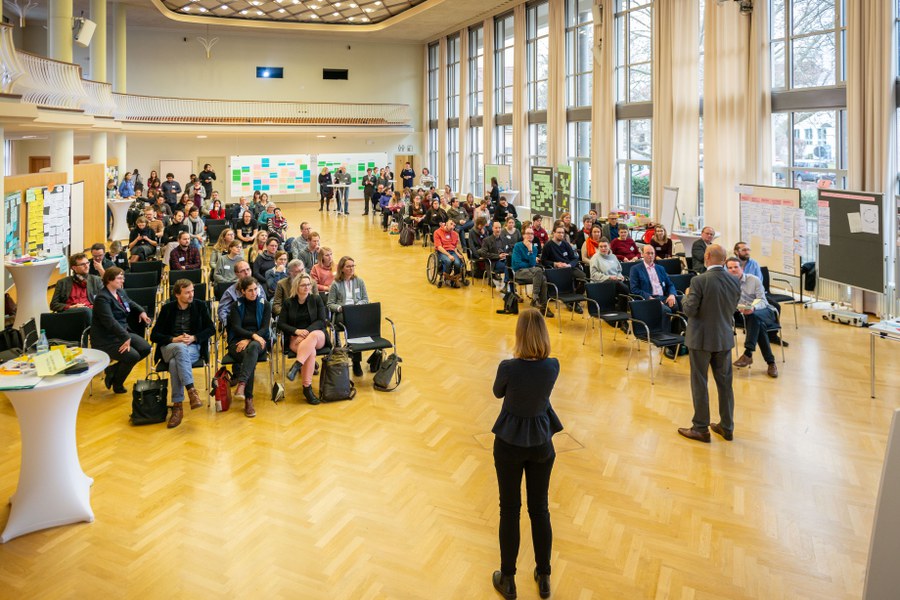
Under the title “Exzellent Inklusiv 2.0,” the 2020 Future Lab provided an opportunity to collectively reflect on TUD’s progress toward becoming an inclusive university and to develop visions for future work in this area. Together with numerous TUD members and external partners (the German Student Services’ Information and Counseling Center for Studies and Disabilities, as well as the Saxony Equal Opportunities Coordination Office), participants exchanged views on challenges, existing services, and ideas for the future in small discussion groups.
Jointly developed goals included, for example, reviewing all materials for accessibility and expanding the counseling and support structures at TUD. These goals were incorporated into Action Plan 2.0.