
Our fields of research
Research field 1: Influence of ecological and evolutionary processes on genetic and eco-physiological diversity in aquatic systems
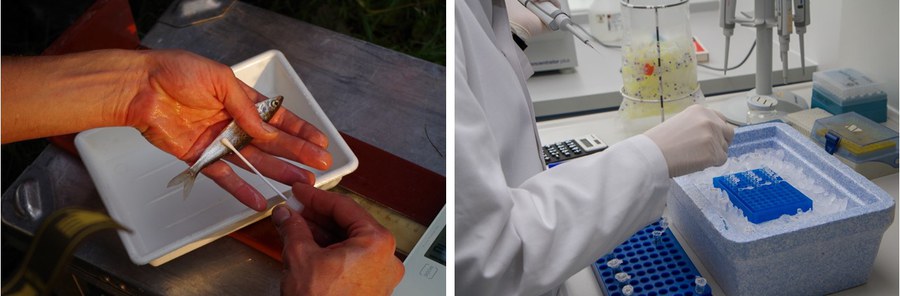
Non-invasive collection of DNA from Thymallus thymallus using forensic swabs (left) and preparation of DNA samples for genetic analysis (right).
The Institute of Hydrobiology investigates ecological and evolutionary processes in aquatic habitats. By combining taxonomy, population genetics, genomics and experimental evolution - in the laboratory and in the field - organisms ranging from bacteria to fish are studied. The aim is to understand their structure and dynamics. Further information on research field 1
Research field 2: Aquatic ecotoxicology - impact analysis and risk assessment of environmental chemicals
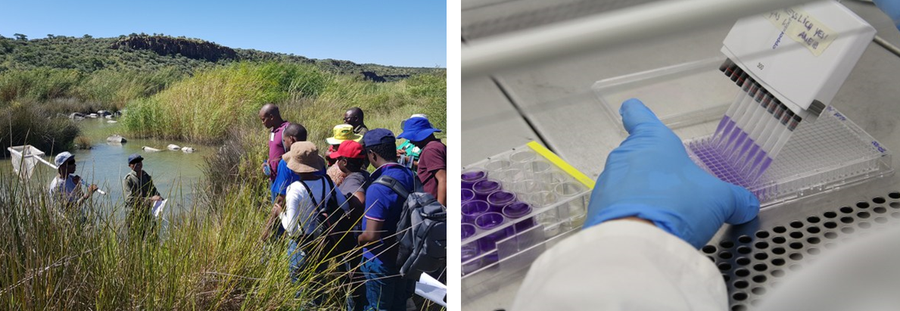
Sampling at Riet River in South Africa (left) and performance of an in vitro bioassay in the laboratory (right).
Ecotoxicology investigates how chemicals damage ecosystems. The increasing production and use of substances inevitably leads to interactions with living organisms. This branch of science evaluates the hazards and environmental presence of chemicals in order to assess risks. Further information on research field 2
Research field 3: Structure and function of lake and reservoir ecosystems and their management, especially under the influence of climate change
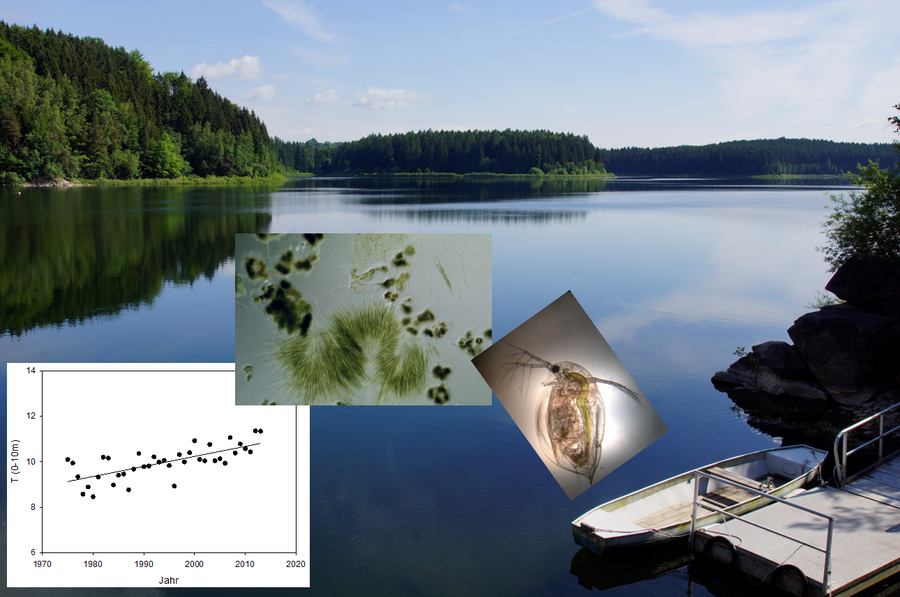
The increase in water temperature affects the interactions in food webs and changes the species composition.
We analyze how climate change influences water temperature and ecological interactions in water bodies. We take into account their geographical location and compare the effects between different water bodies. Our methods include long-term data analysis and mechanistic modeling. Further information on research field 3
Research field 4: Interactions between biological colonization and function of watercourses
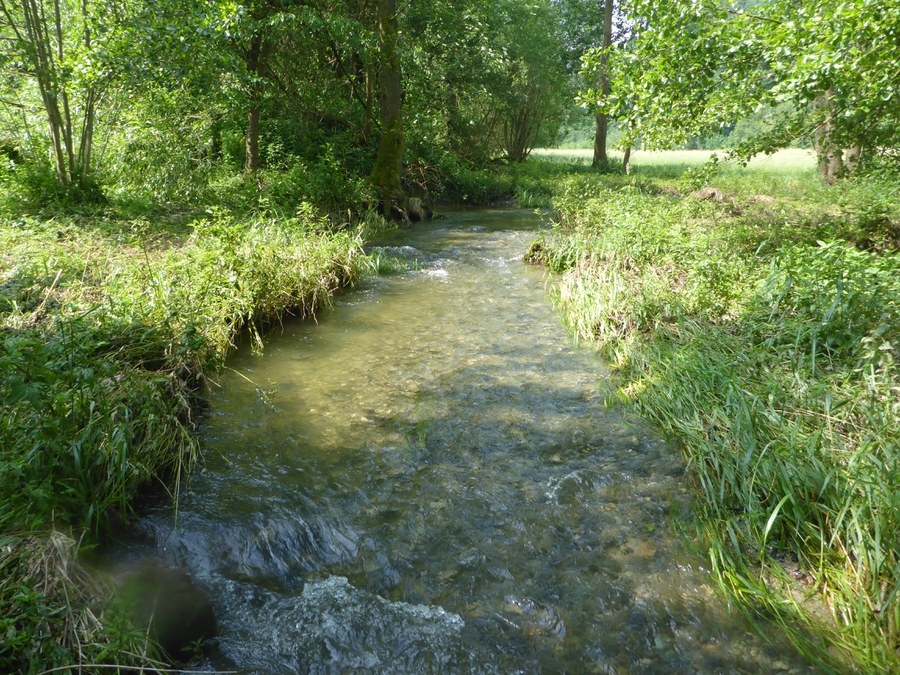
We research applied stream ecology to understand ecosystem processes and biological invasion. This includes accompanying studies, the evaluation of watercourse development measures, the development of adapted management strategies and the analysis of water quality. Further information on research field 4
Research field 5: Mathematical models for water quality management and hypothesis testing
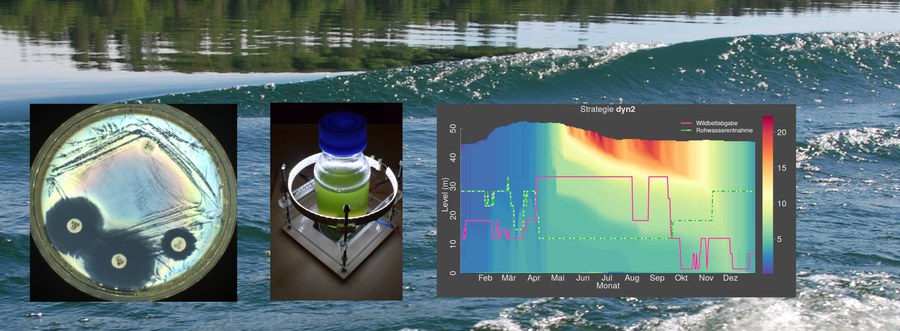
Ecological modelling: from cells to ecosystems.
We use statistical and mechanistic models to analyze hydrobiological systems. We develop our own approaches and use existing models for various scales - from the evaluation of physiological laboratory data to the long-term simulation of rivers and lakes. Further information on Research Field 5
Research field 6: Variability and evolution of antibiotic resistance in the environment
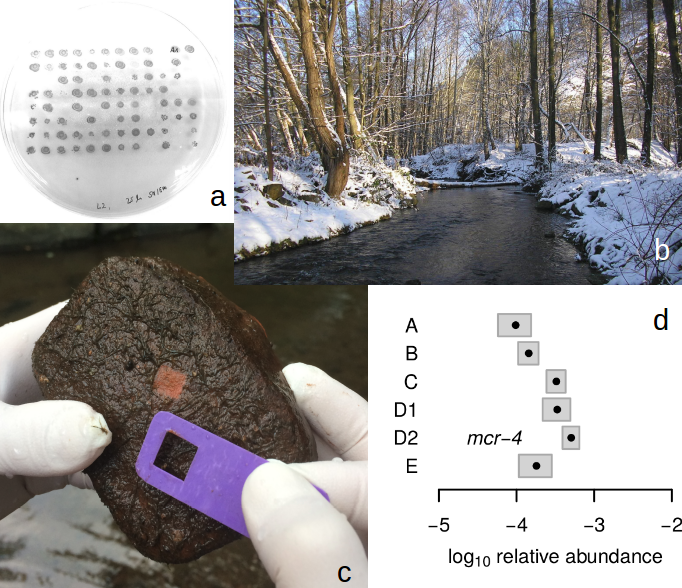
Antibiotic resistance (AR) is increasing worldwide, leading to more deaths from multidrug-resistant bacteria. These resistances spread massively via environmental pathways such as manure and municipal wastewater. Antibiotic resistance genes (ARG) and resistant bacteria (ARB) are considered biological pollutants. The Institute of Hydrobiology investigates ARG and ARB in environmental samples using both cultivation and culture-independent methods. Further information on Research Field 6