
ZIH-Info Nr. 194, Dezember 2025
Editor: Jacqueline Papperitz
Operational readiness at the turn of the year
During the shutdown from December 24, 2025, to January 1, 2026, the ZIH's data communication network and communication, data, and computer services will remain operational. In case of disruptions, we will only respond if there is an immediate need for action, e.g. for email distribution and to limit damage in the event of accidents. Other tickets are processed after the end of the shutdown. Service outages can be reported by email to or by telephone on 0351-463-40000 (voicemail). Please provide a detailed description of the issue. Current fault reports are provided in the TU Dresden operating status. The Service Desk in the Andreas-Pfitzmann-Bau will be open for a shorter period on December 22, 2025 and will remain closed on December 23, 2025. On January 2, 2026, office hours will also be shortened. The media technology lending desk and e-learning support will not be staffed on December 22 and 23, 2025 and January 2, 2026. The current opening hours can be found on the Service Desk website. (Contact: )
Energy efficiency in supercomputing
The European EuroHPC project SEANERGYS "Software for Efficient and Energy-Aware Supercomputers" is developing software solutions for more energy-efficient operation of HPC systems. The ZIH is contributing its many years of expertise in monitoring, data analysis and sustainable HPC operation. It is leading the work package for software development and quality assurance and is involved in the development of central components for system monitoring (CMI) and AI-based analysis (AIDAS). The goal is to develop a software system that optimizes energy consumption and resource utilization in real time, which will be implemented at the participating HPC data centers. SEANERGYS is coordinated by Forschungszentrum Jülich, involves 16 partners from across Europe, and is funded with approximately €32.9 million, half by the EuroHPC Joint Undertaking and half by the participating national funding organizations – in Germany by the BMFTR. (Contact: Dr. Matthias Lieber)
Volkswagen Foundation promotes model reproducibility
Computer models and simulations are central to understanding complex biological processes - from embryonic development to organ disease. However, even published open-source models often become difficult to reproduce over time. To counter this, the Volkswagen Foundation is now funding the "PublicationQuality" project in the "Pioneering projects - impulses for the science system" format. The three-year project, led by the ZIH's Innovative Methods of Computing department, will, among other tasks, develop guidelines for modeling to support authors and for peer review and publication in scientific journals. As a first impulse, the project, together with international partners, will award the "Model of the Year" prize for particularly well reproducible and FAIR published computer models. The deadline for submissions is December 31, 2025. Further information: https://www.dresden-science-calendar.de/calendar/en/detail/22479. (Contact: Dr. Lutz Brusch)
AI research meets practice: Michael Färber in China
How is AI transforming production and research? To explore this question, a delegation led by Michael Färber, Professor of Scalable Software Architectures for Data Analytics at ScaDS.AI Dresden/Leipzig, visited China in November 2025. In addition to industry talks, Prof. Färber also initiated academic collaborations. At Shanghai Jiao Tong University, he presented research on large language models and knowledge graphs, which offer new approaches for scientific text analysis, language simplification, and digital humanities. Opportunities for collaboration were explored with the Faculty of Foreign Languages. At Huazhong University of Science and Technology, Prof. Färber gave a guest lecture on large language models, information retrieval, trustworthy AI as well as traceability and citation ability of AI systems. Further information: https://tud.link/qz76ej. (Contact: Prof. Dr. Michael Färber)
Scholarship holders at the ZIH and ScaDS.AI
Four NHR fellows are currently conducting research at the ZIH and ScaDS.AI Dresden/Leipzig. Their projects range from energy-efficient methods in HPC to reinforcement learning and text processing with large language models. In addition, one Fulbright scholar is working in the field of computational modeling and AI in the ZIH IMC department, where two more young scientists will join the team from April 2026: One will begin her PhD with funding from the NHR Graduate School, the other will continue her studies in the CMS Master's program and will be supported by TUD's FOSTER program. Together, they contribute not only to the development of IT infrastructure and scientific innovations but also to the diversity of ZIH, ScaDS.AI, and the entire campus with their expertise and international perspective from five different nations. Scholarships such as those from the NHR or Fulbright and FOSTER enable talented early-career researchers to take up their research here and thus strengthen interdisciplinary collaboration and scientific exchange. (Contact: Sylvia Weiß)
Information event for decentralized admins
Since 2018, the ZIH has regularly invited the decentralized TUD admins to information events to inform them about the development and operation of central IT services. The 13th round will take place on December 4, 2025. This time, the focus will be on topics such as the status of the group drive migration, Ceph developments and the shutdown of AnyConnect. The aim is to enhance transparency regarding central services for daily needs and to foster exchange. The format has established itself as an important building block for cooperation between ZIH and the decentralized administrators. (Contact: Marco Ziebell)
Workshop: Parallel Programming at the ZIH
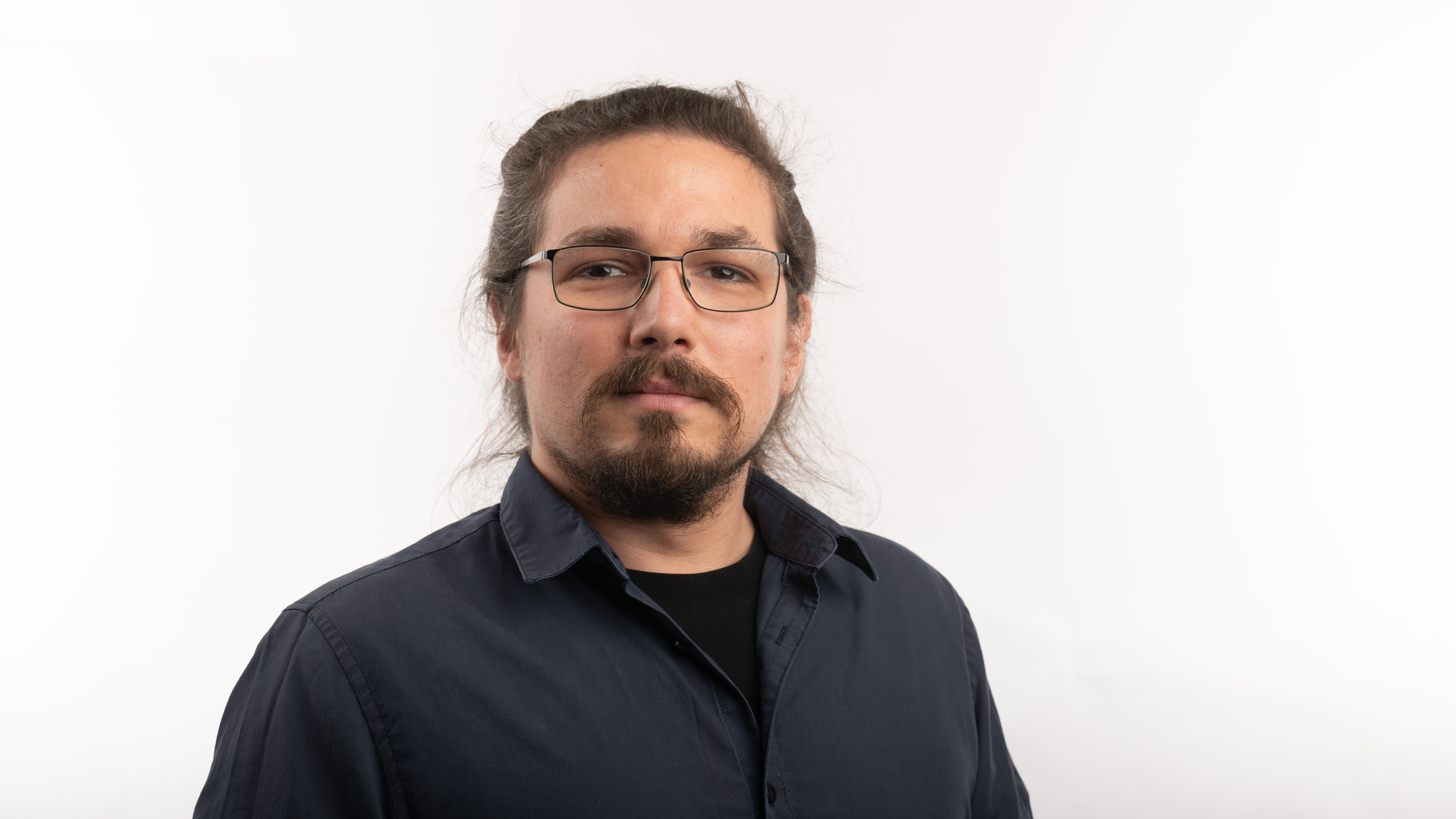
From March 2 to 6, 2026, the training workshop "Parallel Programming with MPI, OpenMP, and Tools" will again take place at the ZIH. Alongside practical introductions and in-depth sessions on parallel programming and software tools, participants will also enjoy an engaging supporting program. The course language is English. Further information and registration: https: //tu-dresden.de/zih/das-department/termine/termine/parallele-programmierung_2026. (Contact: Dr. Hartmut Mix)
INFORMATIK FESTIVAL 2026 at the TU Dresden
From September 22 to 25, 2026, the INFORMATIK FESTIVAL will take place at the Faculty of Computer Science at TUD. Under the motto "Digital Resilience", the Gesellschaft für Informatik e.V. - the largest German professional society for computer science - invites you to discuss how digital systems, applications and organizations can be designed to be resilient and adaptable. All interested parties are invited to actively help shape the festival and submit contributions. The topics range from trustworthy AI to sustainable digitalization and robust architectures. The variety of topics will depend on the community's engagement, and the ZIH and Faculty of Computer Science eagerly await numerous submissions by December 15, 2025. Further information: https://informatik2026.gi.de/CfP.html. (Contact: Prof. Dr. Florian Tschorsch)
The events
- 01. and 08.12.2025, 9:00-13:00: Comprehensible handling of research data as a central component of good scientific practice (workshop in German)
- 04.12.2025, 11:00-12:00: Living Lab Lecture: Computational User Models - From Fitts' Law to Simulated Users that Learn via Experience (ScaDS.AI Dresden/Leipzig)
- 04. and 18.12.2025, each 9:20-10:50 am: OPAL basic course (online)
- 11.12.2025 and 15.01.2026, 9:20-10:50 a.m.: ONYX basic course (online)
- Softphone consultation hour: December 1, 8, and 15, 2025, as well as January 12, 19, and 26, 2026, from 10:00 to 11:00 a.m. (online)
- Open Q&A session for users of the NHR@TUD computing clusters: December 1, 8, 15, 22, 2025 as well as January 12, 19 and 26, 2026 13:30-14:30 (online)
- 14.01.2026, 15:00-16:30: Research data management in working groups - collaborative and sustainable solutions (online lecture)
- 22.01.2026, 9:00-12:00: eLabFTW hands-on workshop (electronic lab notebook)
- 22.01.2026, 9:20-10:50 a.m.: OPAL advanced course (online)
- 28.01.2026, 14:00-16:00: Creation of a data management plan for Horizon Europe projects (online)
- 29.01.2026, 9:20-10:50 am: ONYX advanced course (online)